
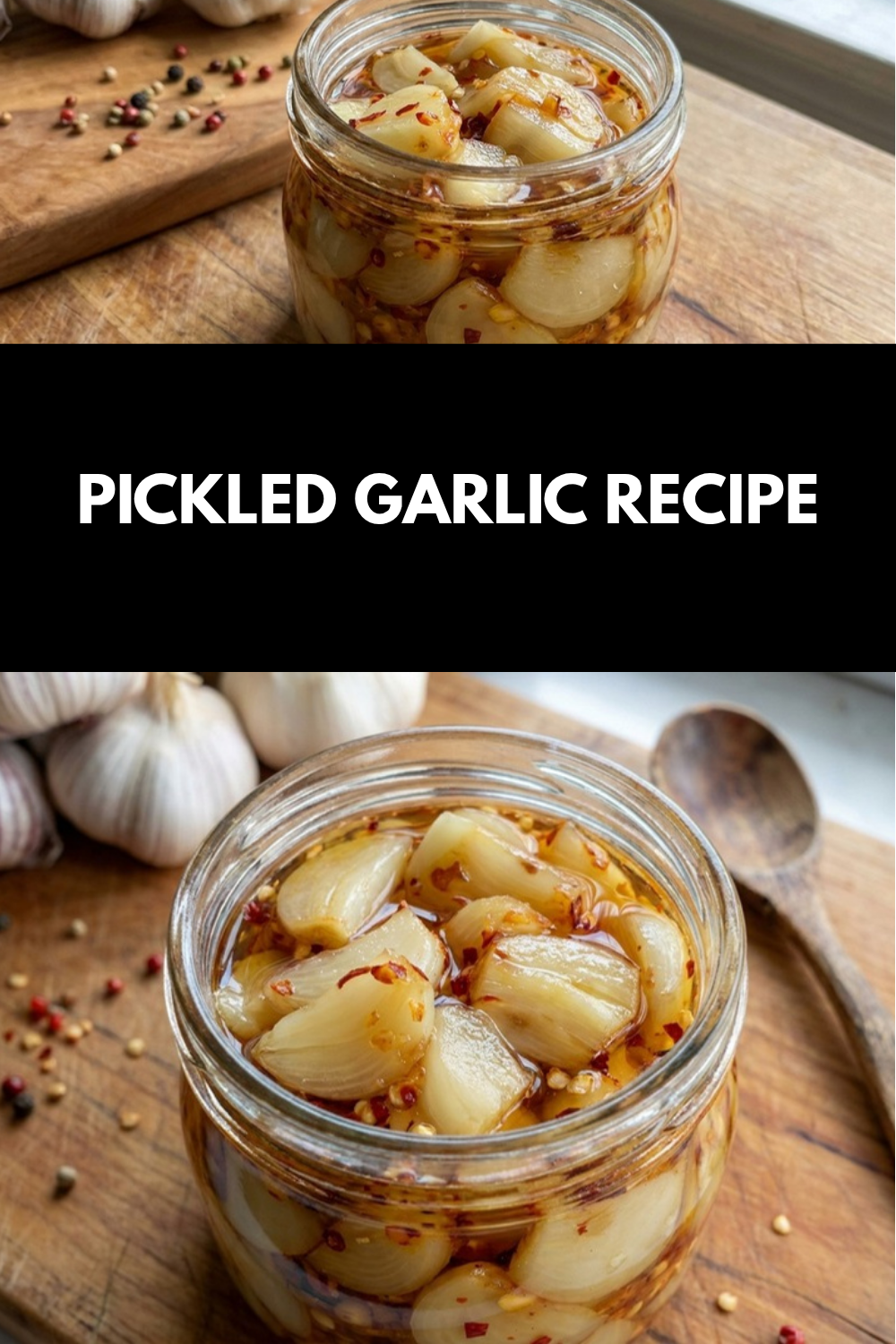
Why You’ll Love This Pickled Garlic Recipe
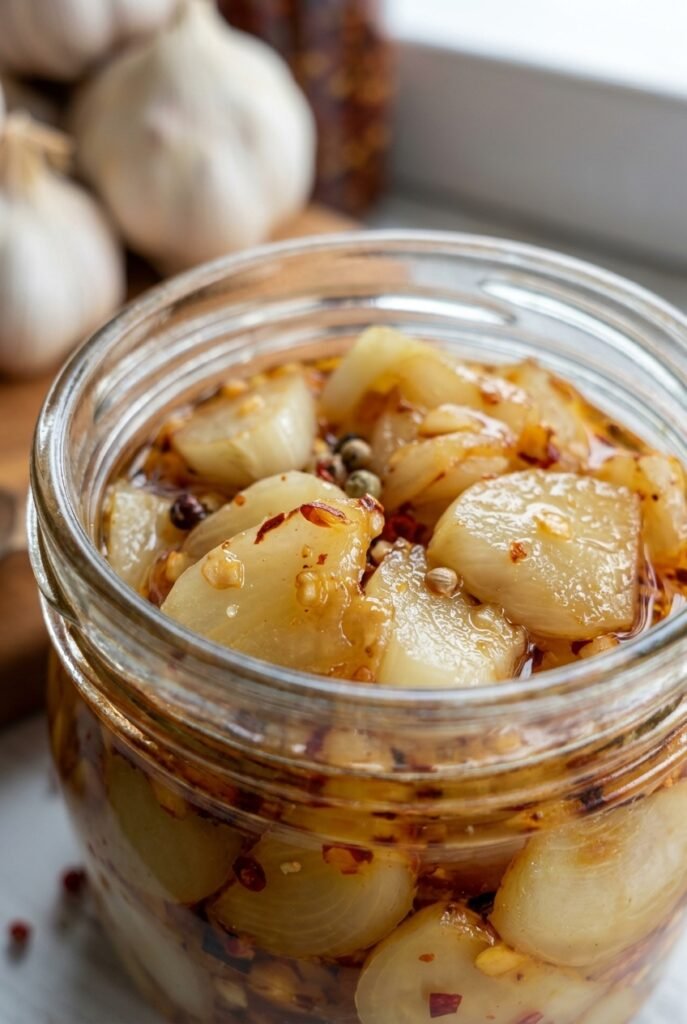
This Pickled Garlic Recipe is a simple fridge pickle that brings bold flavor without a lot of hands-on work. If you like having a tasty condiment ready for sandwiches, salads, grain bowls, or snack plates, this one earns a spot in your refrigerator fast. It is also a smart choice for home cooks who want a recipe that feels practical, not fussy.
- Easy to make: The prep takes about 15 minutes, and the process is straightforward. You boil the brine, pack the jars, and chill the garlic until it is ready to eat.
- Good for many diets: This pickled garlic fits vegetarian, vegan, and gluten-free eating styles. It also has a short ingredient list, which makes it useful for busy parents, students, and working professionals.
- Bright, punchy flavor: The vinegar, dill, and red pepper flakes create a tangy bite with a little heat. Garlic lovers get a savory crunch that works in so many meals.
- Handy for meal planning: A batch makes 4 pints, or 32 servings of 1/4 cup each, so you can keep a jar ready for quick meals all month long.
If you try this recipe, pack the jars carefully to leave enough space at the top, just like when preparing pickled garlic for a simple fridge storage.
For readers who like learning about the ingredient itself, you can read more in this guide to the health benefits of garlic. If you are curious about garlic nutrition in more detail, this recipe also pairs well with practical food planning because the flavor goes a long way with a small serving.
This Pickled Garlic Recipe also suits newcomers who want a low-risk canning-style project without needing full shelf-stable processing. Since it stays in the refrigerator, you can make it with confidence and enjoy it after the flavor has time to settle.
Jump to:
- Why You’ll Love This Pickled Garlic Recipe
- Essential Ingredients for Pickled Garlic Recipe
- Structured Ingredient List
- Special Dietary Options
- How to Prepare the Perfect Pickled Garlic Recipe: Step-by-Step Guide
- First Step: Gather and prep your jars
- Second Step: Make the pickling brine
- Third Step: Pack the garlic and dill
- Fourth Step: Fill with hot brine
- Fifth Step: Remove bubbles and seal the jars
- Sixth Step: Chill and wait for the flavor to develop
- Final Step: Optional water-bath processing
- Dietary Substitutions to Customize Your Pickled Garlic Recipe
- Protein and Main Component Alternatives
- Vegetable, Sauce, and Seasoning Modifications
- Mastering Pickled Garlic Recipe: Advanced Tips and Variations
- Pro Cooking Techniques
- Flavor Variations
- Presentation Tips
- Make-Ahead Options
- How to Store Pickled Garlic Recipe: Best Practices
- Refrigeration
- Freezing
- Reheating
- Meal Prep Considerations
- Nutrition Information for Pickled Garlic Recipe
- FAQs: Frequently Asked Questions About Pickled Garlic Recipe
- Pickled Garlic Recipe
- Ingredients
- Instructions
- Last Step:
- Notes
- Nutrition
- Did you make this recipe?
Essential Ingredients for Pickled Garlic Recipe
Here is everything you need for this Pickled Garlic Recipe. The ingredient list is short, but each item plays an important part in the final flavor and texture. Keep the measurements exact so the brine stays balanced and the garlic stays crisp and safe in the refrigerator.
- 1/4 cup canning salt – Helps season the brine and supports a clean pickle flavor.
- 5 cups vinegar – Forms the pickling liquid and gives the garlic its tangy bite.
- 2 pounds garlic cloves, peeled – The main ingredient, providing the savory flavor and crunchy texture.
- 1 teaspoon red pepper flakes – Adds a gentle heat that balances the sharp vinegar.
- 4 heads dill, or 2 cups fresh dill, coarsely chopped – Brings the classic dill pickle flavor and a fresh herbal note.
Structured Ingredient List
- 1/4 cup canning salt
- 5 cups vinegar
- 2 pounds garlic cloves, peeled
- 1 teaspoon red pepper flakes
- 4 heads dill, or 2 cups fresh dill, coarsely chopped
Special Dietary Options
- Vegan: This recipe is already vegan.
- Gluten-free: This recipe is naturally gluten-free.
- Low-calorie: Keep the serving to 1/4 cup if you want a lighter snack or topping.
When you shop for the garlic, look for firm cloves without soft spots. Fresh dill gives a brighter herbal flavor, while dill heads offer that classic pickle-shop taste. If you want to match the flavor of a deli-style fridge pickle, dill heads are a great choice.
For another helpful ingredient reference, see garlic nutrition facts and health benefits. That can be useful if you are cooking for diet-conscious family members or tracking portions more closely.
How to Prepare the Perfect Pickled Garlic Recipe: Step-by-Step Guide
First Step: Gather and prep your jars
Start by washing and sterilizing 4 pint jars. Let them dry fully before filling. This recipe works best when the jars are ready before the brine comes off the stove, because the liquid should go into the jars while it is hot. Measure out all of your ingredients before you begin so the process moves smoothly.
Second Step: Make the pickling brine
In a saucepan, combine 1/4 cup canning salt with 5 cups vinegar. Bring the mixture to a boil over medium-high heat, then lower the heat and let it simmer for 10 minutes. This creates the brine that will flavor the garlic and help it keep well in the refrigerator.
If you are cooking for a family with mild tastes, you can keep the red pepper flakes on the lower side of the measured amount. If you like more heat, save the full amount for a bolder result. Either way, the vinegar base stays the same.
Third Step: Pack the garlic and dill
Place the 2 pounds peeled garlic cloves into the 4 sterilized pint jars. Leave 1/2-inch headspace at the top of each jar so the brine can cover the garlic properly without overflowing. Then add 1/4 teaspoon red pepper flakes and 1 head of dill to each jar. If you are using chopped dill instead, divide the 2 cups fresh dill, coarsely chopped evenly among the jars.
Headspace matters. Too little space can lead to messy jars, and too much space can affect how the brine covers the garlic.
Fourth Step: Fill with hot brine
Carefully divide the hot pickling liquid between the jars, again leaving 1/2-inch headspace. Pour slowly so the garlic stays packed and the herbs do not float too much. A small funnel can help, but it is not required. Keep the jars upright while you work.
This step is especially helpful for beginners because it keeps the garlic submerged and helps the flavor spread evenly. The hot brine also starts the pickling process right away, which is why the garlic needs time in the fridge afterward.
Fifth Step: Remove bubbles and seal the jars
Use a clean utensil to remove any air bubbles from inside the jars. Wipe the jar rims with a clean cloth so the lids can seal properly. Center the lids on the jars, then adjust the bands until they are fingertip tight. Do not overtighten, since the jars need a little room during processing or chilling.
Sixth Step: Chill and wait for the flavor to develop
Refrigerate the jars for at least 3 weeks before eating. That waiting period gives the garlic time to mellow and absorb the dill and vinegar. The full flavor develops gradually, so patience pays off here. The recipe yields 4 pints, which equals 32 servings of 1/4 cup each.
Final Step: Optional water-bath processing
If you want to process the jars in a boiling water bath, do so for 10 minutes. Even if you process them, they still need to be stored in the refrigerator. This is not a shelf-stable canning recipe, so do not store it in the pantry. The finished garlic and vinegar mixture can be refrigerated for up to 4 months.
The total time is about 45 minutes, plus 12 hours cooling time, and then the full 3-week chilling period. That makes this recipe a great make-ahead project for meal prep, party trays, or homemade food gifts for fridge storage.

Dietary Substitutions to Customize Your Pickled Garlic Recipe
Protein and Main Component Alternatives
This recipe centers on garlic, so there is no protein component to swap the way you might with a stew or casserole. Still, you can adjust the main ingredient if you want a different style of pickle. For a milder bite, use smaller garlic cloves or mix in a few pearl onions with the garlic if your household enjoys mixed pickles. If you want a stronger herbal note, add more dill within the same balance of the brine.
If you are cooking for picky eaters, keep the garlic cloves whole and use the lower end of the red pepper flakes. For people who enjoy stronger flavors, let the garlic sit the full 3 weeks or even a little longer in the fridge, up to the safe storage limit.
Vegetable, Sauce, and Seasoning Modifications
You can change the seasoning profile while keeping the same basic pickling method. Try adding black peppercorns, mustard seed, or a little coriander if you want a different flavor twist. Fresh dill is ideal for a softer, greener note, while dill heads bring the traditional deli taste.
If you want to reduce the chance of blue or turquoise color in the garlic, use kosher or sea salt, stainless steel or enamel cookware and utensils, avoid sunlight, and use distilled water. That color change is normal and safe, but many home cooks still like to avoid it when possible. This is one of those little food science details that helps beginners feel more comfortable with homemade pickles.
Mastering Pickled Garlic Recipe: Advanced Tips and Variations
Once you make this Pickled Garlic Recipe a time or two, small adjustments can help you match it to your taste. The biggest tip is to keep everything clean and consistent. Clean jars, accurate measurements, and the right headspace all support better results. Since this is a refrigerator pickle, there is no rush to make it shelf-stable, but the method still needs careful handling.
Pro Cooking Techniques
Use a stainless steel or enamel saucepan instead of reactive cookware when possible. That helps reduce color changes in the garlic. Pour the brine while it is still hot, and keep the jars covered as they cool to room temperature before moving them to the refrigerator. This supports even flavoring and gives the vinegar time to settle around the cloves.
Flavor Variations
If you enjoy bolder pickles, add a little more dill or a few extra red pepper flakes. For a softer, more herbal profile, try fresh dill instead of dill heads. You can also split the batch and make one jar slightly spicier than the others so different family members can choose their favorite heat level.
Presentation Tips
Pickled garlic looks great served in a small bowl with fresh herbs around it. Add it to cheese boards, chopped salads, or roasted vegetable plates for a neat, colorful touch. The garlic cloves also make a simple garnish for rice bowls or savory toast.
Make-Ahead Options
This is a smart recipe for busy weeks because the garlic can sit in the refrigerator while the flavor develops. Make it on the weekend, then use it through the month for quick snacks and meal add-ons. If you like fridge-friendly recipes, you may also enjoy browsing other make-ahead ideas on the site, such as a sweet treat like homemade lemon curd for a contrasting flavor on your weekly menu.
How to Store Pickled Garlic Recipe: Best Practices
Proper storage matters with this Pickled Garlic Recipe. It is made for the refrigerator, not for pantry storage. Keep the jars chilled after they have cooled, and do not treat them as shelf-stable canned food. The garlic and vinegar mixture can stay in the refrigerator for up to 4 months.
Refrigeration
After the 3-week waiting period, store the jars in the refrigerator with the lids on. Always use a clean utensil when removing garlic from the jar to keep the brine fresh. If you notice a cloudy brine or off smell, discard the jar.
Freezing
Freezing is not the best choice for this recipe because the texture of the garlic can change after thawing. The cloves may become softer and less crisp. For best flavor and texture, keep it refrigerated instead.
Reheating
You do not need to reheat pickled garlic for serving. In most cases, it is served cold or at room temperature. If you are adding it to a warm dish, stir it in near the end so it keeps some of its bite.
Meal Prep Considerations
Use small jars if you want to keep portions easy to manage. A 1/4 cup serving works well for lunches, snack plates, and quick dinners. This makes the recipe useful for meal prep and for people who want a bold flavor boost without extra cooking.
Nutrition Information for Pickled Garlic Recipe
Here is the nutrition breakdown for a 0.25 cup serving of this recipe.
| Nutrient | Amount |
|---|---|
| Calories | 52 |
| Carbohydrates | 10g |
| Protein | 2g |
| Fat | 1g |
| Saturated Fat | 1g |
| Sodium | 7mg |
| Potassium | 124mg |
| Fiber | 1g |
| Sugar | 1g |
| Vitamin A | 35IU |
| Vitamin C | 9mg |
| Calcium | 59mg |
| Iron | 1mg |
This nutritional profile makes the recipe a handy flavor add-on for people who want taste with modest portions. The garlic brings strong flavor, so a small amount can go a long way in meals and snacks.
FAQs: Frequently Asked Questions About Pickled Garlic Recipe
Print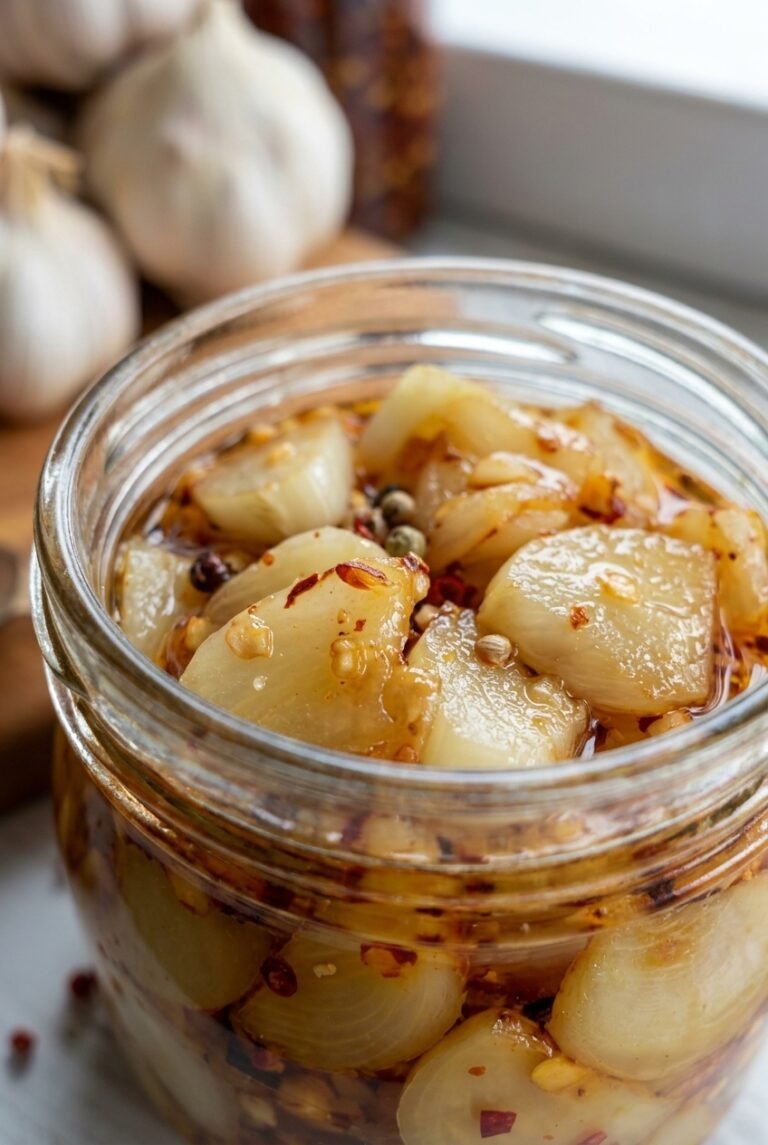
Pickled Garlic Recipe
🧄 Savor tangy, immune-boosting pickled garlic that adds bold flavor to dishes with easy homemade simplicity.
🥫 Fridge-friendly for months, this vibrant condiment elevates salads, meats, or snacks without canning stress!
- Total Time: 45 minutes
- Yield: 32 servings (4 pints)
Ingredients
– 1/4 cup canning salt
– 5 cups vinegar
– 2 pounds garlic cloves, peeled
– 1 teaspoon red pepper flakes
– 4 heads dill, or 2 cups fresh dill, coarsely chopped
Instructions
1-First Step: Gather and prep your jars Start by washing and sterilizing 4 pint jars. Let them dry fully before filling. This recipe works best when the jars are ready before the brine comes off the stove, because the liquid should go into the jars while it is hot. Measure out all of your ingredients before you begin so the process moves smoothly.
2-Second Step: Make the pickling brine In a saucepan, combine 1/4 cup canning salt with 5 cups vinegar. Bring the mixture to a boil over medium-high heat, then lower the heat and let it simmer for 10 minutes. This creates the brine that will flavor the garlic and help it keep well in the refrigerator. If you are cooking for a family with mild tastes, you can keep the red pepper flakes on the lower side of the measured amount. If you like more heat, save the full amount for a bolder result. Either way, the vinegar base stays the same.
3-Third Step: Pack the garlic and dill Place the 2 pounds peeled garlic cloves into the 4 sterilized pint jars. Leave 1/2-inch headspace at the top of each jar so the brine can cover the garlic properly without overflowing. Then add 1/4 teaspoon red pepper flakes and 1 head of dill to each jar. If you are using chopped dill instead, divide the 2 cups fresh dill, coarsely chopped evenly among the jars. Headspace matters. Too little space can lead to messy jars, and too much space can affect how the brine covers the garlic.
4-Fourth Step: Fill with hot brine Carefully divide the hot pickling liquid between the jars, again leaving 1/2-inch headspace. Pour slowly so the garlic stays packed and the herbs do not float too much. A small funnel can help, but it is not required. Keep the jars upright while you work. This step is especially helpful for beginners because it keeps the garlic submerged and helps the flavor spread evenly. The hot brine also starts the pickling process right away, which is why the garlic needs time in the fridge afterward.
5-Fifth Step: Remove bubbles and seal the jars Use a clean utensil to remove any air bubbles from inside the jars. Wipe the jar rims with a clean cloth so the lids can seal properly. Center the lids on the jars, then adjust the bands until they are fingertip tight. Do not overtighten, since the jars need a little room during processing or chilling.
6-Sixth Step: Chill and wait for the flavor to develop Refrigerate the jars for at least 3 weeks before eating. That waiting period gives the garlic time to mellow and absorb the dill and vinegar. The full flavor develops gradually, so patience pays off here. The recipe yields 4 pints, which equals 32 servings of 1/4 cup each.
7-Final Step: Optional water-bath processing If you want to process the jars in a boiling water bath, do so for 10 minutes. Even if you process them, they still need to be stored in the refrigerator. This is not a shelf-stable canning recipe, so do not store it in the pantry. The finished garlic and vinegar mixture can be refrigerated for up to 4 months. The total time is about 45 minutes, plus 12 hours cooling time, and then the full 3-week chilling period. That makes this recipe a great make-ahead project for meal prep, party trays, or homemade food gifts for fridge storage.
Last Step:
Please leave a rating and comment letting us know how you liked this recipe! This helps our business to thrive and continue providing free, high-quality recipes for you.Notes
🧄 Blue or turquoise tint in garlic is normal, harmless; use kosher/sea salt and stainless steel to minimize.
❄️ Always refrigerate; not shelf-stable even if processed—best within 4 months.
💧 Ensure garlic is fully submerged and remove air bubbles to prevent spoilage.
- Prep Time: 15 minutes
- Refrigeration Time: 3 weeks
- Cook Time: 30 minutes
- Category: Condiments
- Method: Pickling
- Diet: Vegan, Gluten-Free
Nutrition
- Serving Size: 1/4 cup
- Calories: 52 kcal
- Sugar: 1g
- Sodium: 7mg
- Fat: 1g
- Saturated Fat: 1g
- Unsaturated Fat: 0g
- Trans Fat: 0g
- Carbohydrates: 10g
- Fiber: 1g
- Protein: 2g
- Cholesterol: 0mg