Pennsylvania Dutch Fasnacht Doughnuts
I always get so excited when Fasnacht Day arrives, because there is nothing quite like biting into a warm, golden brown doughnut that is still dusted with cinnamon sugar.

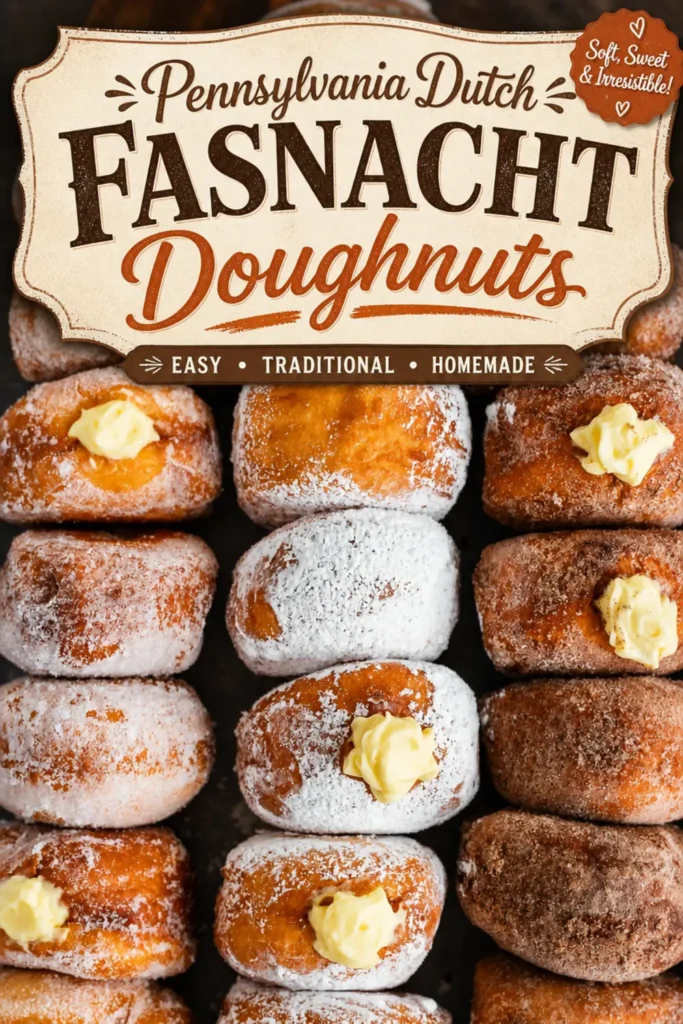
These Pennsylvania Dutch fasnacht doughnuts are deep fried until they turn a medium golden brown, then coated while still warm in granulated sugar, cinnamon sugar, or powdered sugar.
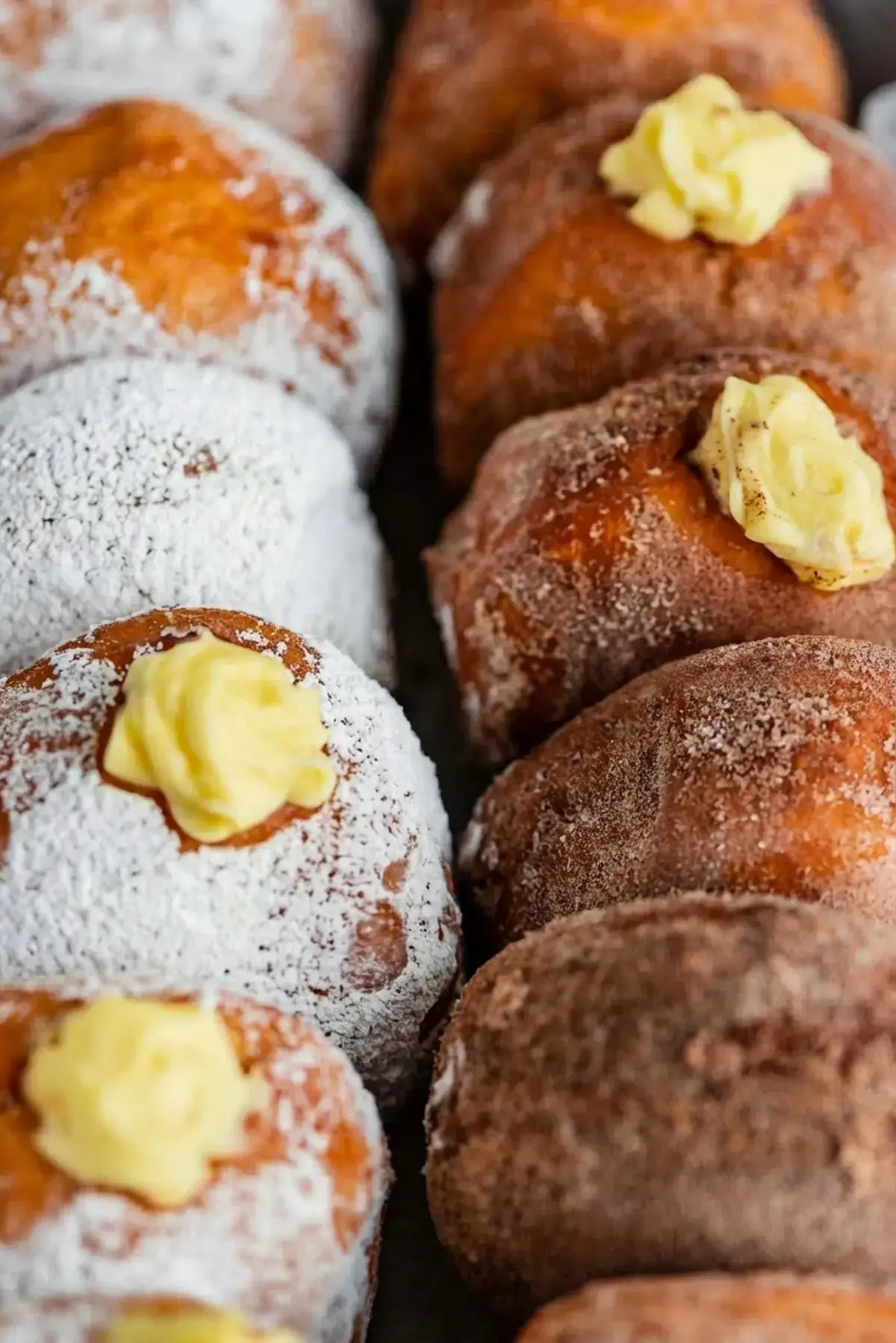
I like to fill about half of the batch with a soft vanilla pastry cream, which makes a simple fried doughnut feel like a bakery treat. This recipe makes 3 dozen, so there is plenty to share with family and neighbors.
Jump to:
- Pennsylvania Dutch Fasnacht Doughnuts
- About the Recipe
- When is Fasnacht Day?
- What Does the Word Fasnacht Mean?
- What is a Fastnacht and How Are They Typically Made?
- 3 Tips for Making the Perfect Fasnacht Doughnuts
- Recommended Donut Making Tools
- More Breakfast Sweets to Enjoy!
- Easy Homemade Donuts from Scratch
- Mini French Breakfast Puffs
- Strawberry Glazed French Crullers
- FAQs
- What is a fasnacht doughnut?
- When is Fasnacht Day?
- How are traditional Pennsylvania Dutch fasnacht doughnuts made?
- What is the difference between a fasnacht and a regular doughnut?
- Pennsylvania Dutch Fasnacht Doughnuts
- Ingredients
- Instructions
- Last Step:
- Nutrition
- Did you make this recipe?
About the Recipe
These fasnachts are made with active dry yeast and cut with a circle cutter that has no center hole, so they come out as solid rounds instead of rings. The coatings include granulated sugar, cinnamon sugar, and powdered sugar, and half of the doughnuts are filled with vanilla pastry cream.
Mixing and frying are quick steps. The rising is where the time goes. The first rise takes 1 to 1.5 hours, until the dough is almost doubled, and the second rise after cutting the shapes takes about an hour.
Prep time is listed as 3 hours with 30 minutes of cook time, and I recommend allowing extra time for coating the doughnuts and filling them with pastry cream.
Because the dough uses 7 1/2 cups of all purpose flour, a stand mixer fitted with a dough hook makes the job much easier.
For the fasnacht doughnuts

| Ingredient | Amount |
|---|---|
| Milk, scalded and then cooled | 2 cups |
| Active dry yeast (2 packages) | 4 1/2 tsp |
| Warm water | 1/2 cup |
| Unsalted butter, melted | 1/4 cup |
| Salt | 2 tsp |
| Granulated sugar | 3/4 cup |
| Nutmeg | 1/4 tsp |
| Eggs | 2 large |
| All purpose flour | 7 1/2 cups |
| Canola oil, for frying | 3 to 4 cups |
| Granulated sugar, powdered sugar, and cinnamon sugar, for coating | as needed |
For the optional vanilla pastry cream filling
| Ingredient | Amount |
|---|---|
| Vanilla pie filling and instant pudding mix (1 box) | 3.4 oz |
| Milk | 1 cup |
| Heavy whipping cream | 1/2 cup |
Instructions for the fasnacht doughnuts
- Scald the milk in a small saucepan, then set it aside to cool.
- Combine the 2 packages of active dry yeast with the warm water in the bowl of a stand mixer fitted with the dough hook attachment. Let the yeast proof for 10 minutes.
- Add the melted butter, cooled milk, salt, granulated sugar, nutmeg, and eggs. Mix on low speed and add the flour one cup at a time until the dough begins to form. The dough will be sticky but should pull away from the sides of the bowl. If it is far too sticky, add 1 tbsp of flour at a time until it is only slightly tacky.
- Turn the dough out onto a clean, lightly floured surface and knead it for about 5 to 8 minutes until smooth.
- Place the dough in a lightly greased medium bowl and flip it once to coat the whole ball. Cover the bowl tightly with plastic wrap, not aluminum foil, and set a clean dry kitchen towel over the top. Let it rise in a warm, draft free spot for about 1 to 1.5 hours, until it is almost doubled in size.
- Punch the dough down gently in the center, turn it out onto a lightly floured surface, and roll it to about 1/2 inch thick with a floured rolling pin. Flour a 2.5 inch circle cutter and cut out the fasnachts, placing them about 1 inch apart on a parchment lined baking sheet. Roll any leftover dough into balls to make doughnut holes.
- Cover the doughnuts with a clean tea or dish towel and let them rest for 1 hour, until they have almost doubled in size.
- Line a large baking sheet with 2 to 3 layers of paper towels, with a cooling rack placed over the top if you like. Set it aside.
- Heat the canola oil in a deep heavy skillet or stock pot until it reaches 365 degrees Fahrenheit. Add the oil before you turn on the heat, and use a candy or deep fry thermometer rather than guessing at the temperature.
- Fry 2 to 3 doughnuts at a time for about 45 seconds to 1 minute per side, turning them with tongs or a slotted spoon. They should be a medium golden brown. At the correct temperature they fry quickly, so pay attention. If you are new to homemade doughnuts, fry one at a time until you get the hang of it.
- Remove the doughnuts from the oil and place them on the cooling rack or paper towels so the excess oil can drain off. Let them cool slightly.
- While the doughnuts are still warm, place 2 to 3 in a large ziplock bag with granulated sugar or cinnamon sugar and toss until coated. For powdered sugar, sift it over the doughnuts on a plate instead.
- Let the doughnuts cool completely before adding the vanilla pastry cream filling.
Instructions for the vanilla pastry cream
- Whisk the vanilla pudding mix and the milk in a medium bowl until the mixture thickens.
- Whip the heavy whipping cream with a hand mixer or a stand mixer fitted with the whisk attachment on high speed for several minutes, until medium peaks form.
- Fold the whipped cream into the vanilla pudding mixture with a spatula until completely blended.
- Fill a large piping bag fitted with the tip of your choice with the pastry cream and pipe it into the doughnuts until they are filled.
A quick note from my kitchen: the dough is supposed to feel soft and a little sticky. If yours is tacky rather than wet, you are right where you should be.
When is Fasnacht Day?
Fasnacht Day is also called Fastnacht Day, Shrove Tuesday, or Fat Tuesday. It is a traditional Pennsylvania Dutch celebration, and it always falls on the last Tuesday before Ash Wednesday. That timing is no accident.
It is the final day of feasting before the season of Lent begins, which is exactly why the day is built around rich ingredients and one big batch of fried dough.
What Does the Word Fasnacht Mean?
The word fasnacht, sometimes written fastnacht, is German for “the night before fast.” Traditionally, Pennsylvania Dutch households made recipes like these on that day to use up sugar and fat, such as lard, before Lent and fasting began. Nothing went to waste, and nothing tempting was left sitting in the pantry for the weeks ahead.
Today the practice looks a little different. A common modern habit is giving up one tempting food item during Lent, whether that is chocolate, soda, or a favorite snack. The spirit is the same though. Fasnacht Day is a cheerful last hurrah before a season of restraint, and a plate of sugared doughnuts is a fine way to mark it.
What is a Fastnacht and How Are They Typically Made?
A fasnacht is a square or triangular doughnut without a center hole, and it is a bit heavier than the light rings you might buy at a shop. Traditionally, fasnachts are deep fried in lard, then sliced open and eaten with butter, molasses, or syrup.
Think of it as a sturdy, lightly sweet fried bread that can handle a generous spread.
There are many variations, and the shapes go well beyond the traditional kind. Some versions use yeast, some use potato flour, and some rely on baking powder. They can be shaped round, cut square, or rolled into doughnut holes. Fasnachts can also be served plain, glazed, or coated in powdered sugar, cinnamon sugar, or regular granulated sugar.

The version I make here lands on the round side. It uses yeast for a soft, tender crumb, and a circle cutter gives every doughnut a neat shape.
I still keep one foot in tradition by frying them at 365 degrees Fahrenheit and coating them while they are warm.
If you want to try the old fashioned route, split a plain fasnacht open and spread it with butter and molasses instead of rolling it in sugar.
3 Tips for Making the Perfect Fasnacht Doughnuts
After making these a few times, I have three tips that make the whole process smoother.
Tip 1: Scald the milk first. Most fasnacht doughnut recipes call for scalded, then cooled milk, so this is the very first thing to do. Get the milk going before you touch anything else, because it needs time to cool down before it meets the yeast. Warm is good. Hot is not.
Tip 2: Scald it properly. To scald milk, bring it to almost a near boil, then let it cool. That near boil is the whole point. Scalding helps make yeast recipes fluffier, and it gives the dough a softer texture than cold milk straight from the fridge would.
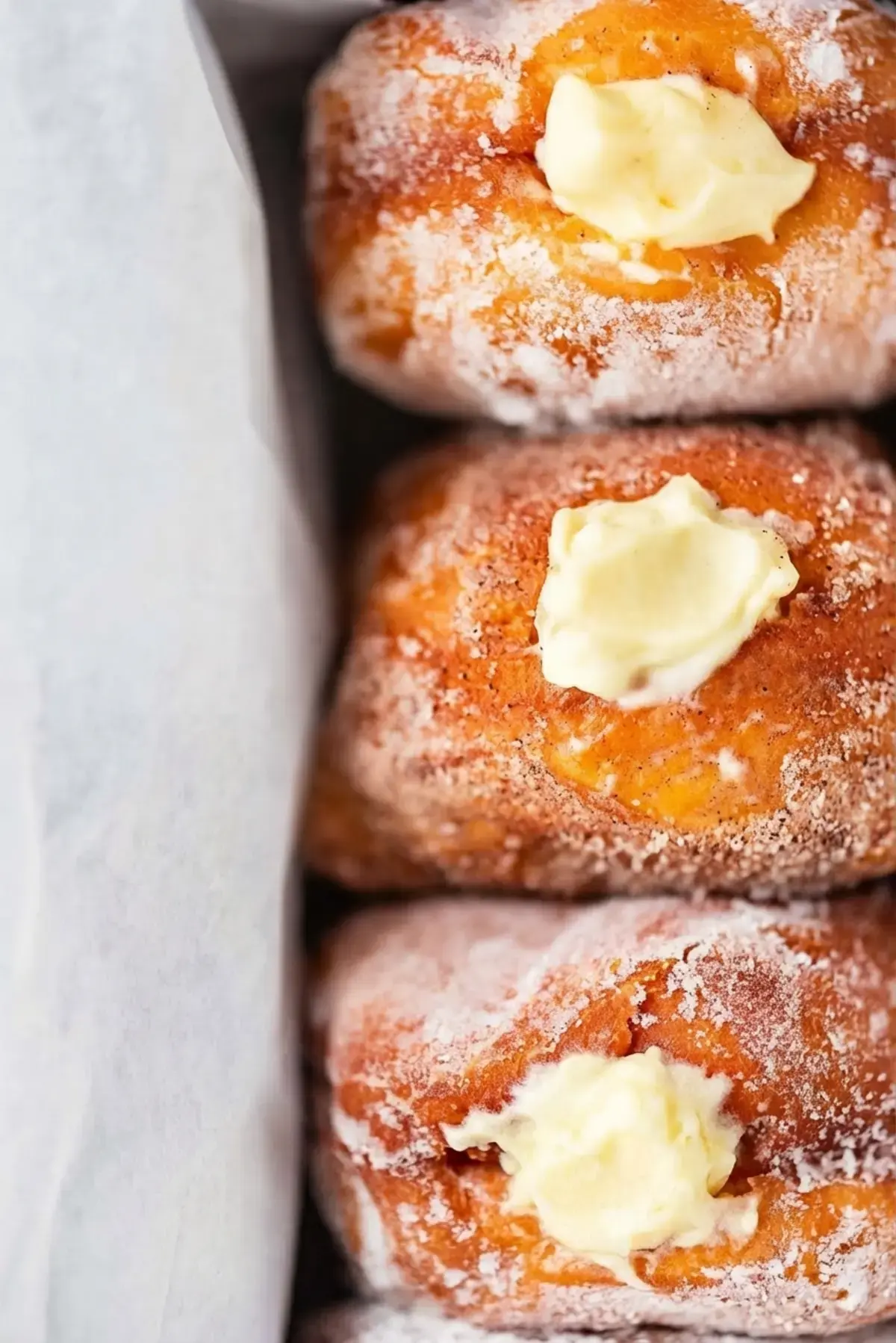
Tip 3: Use a butter knife to make the filling hole. If you are adding vanilla pastry cream, insert a butter knife into the side of a cooled doughnut and gently turn it back and forth to open up a pocket inside.

Wiggle it a little rather than pushing straight through. Once the opening is there, the piping tip slides in easily and the cream stays where you put it.
Do not rush the milk. Scalding and cooling it is the one quiet step that decides how fluffy your fasnachts turn out.
Recommended Donut Making Tools
You do not need a drawer full of specialty equipment, but a few tools make this recipe much easier.
- A 2.5 inch circle cutter. This is the size used in the original recipe, and it gave about 32 doughnuts, so the yield is generous. A different size circle cutter or a standard doughnut cutter also works.
- The top of a drinking glass. If you do not own a cutter at all, press the rim of a glass into the dough. It is a simple substitute and it does the job.
- Large ziplock bags. These are my favorite way to coat doughnuts with granulated sugar or cinnamon sugar. Place 2 to 3 doughnuts in the bag and toss until they are covered.
- A sifter. Powdered sugar is different. Sifting it over doughnuts on a plate gives a light, even dusting instead of a thick clump.
- A large piping bag and a 1M piping tip. This is what I use for filling the doughnuts with vanilla pastry cream. A smaller tip may be used instead, though the wider tip makes quicker work of it.
- A candy or deep fry thermometer. This one is not optional in my book. It is the only reliable way to know the oil has reached 365 degrees Fahrenheit.
- A deep heavy skillet or stock pot. You need enough depth for the doughnuts to float and fry evenly.
- A cooling rack and paper towels. Two to three layers of paper towels, with a cooling rack over the top, lets the excess oil drain away.
A few small habits matter too. Flour your cutter between cuts so the dough does not stick and drag. Space the cut doughnuts about an inch apart on the parchment lined baking sheet, because they will grow during the second rise.
Keep a pair of tongs or a slotted spoon nearby for turning the doughnuts in the oil, and set your coated doughnuts on parchment so they do not stick to the counter.
More Breakfast Sweets to Enjoy!
If you enjoy a homemade treat with your morning coffee, these other recipes are worth a look.

Easy Homemade Donuts from Scratch
For a simpler take on fried dough, this version trims the long yeast schedule and gets you to the finish line sooner.

It is a friendly place to start if you are new to frying.
Mini French Breakfast Puffs
A bite sized breakfast treat that fits neatly on a holiday brunch table next to a platter of fasnachts.
They are easy to pass around and easy to eat.
Strawberry Glazed French Crullers
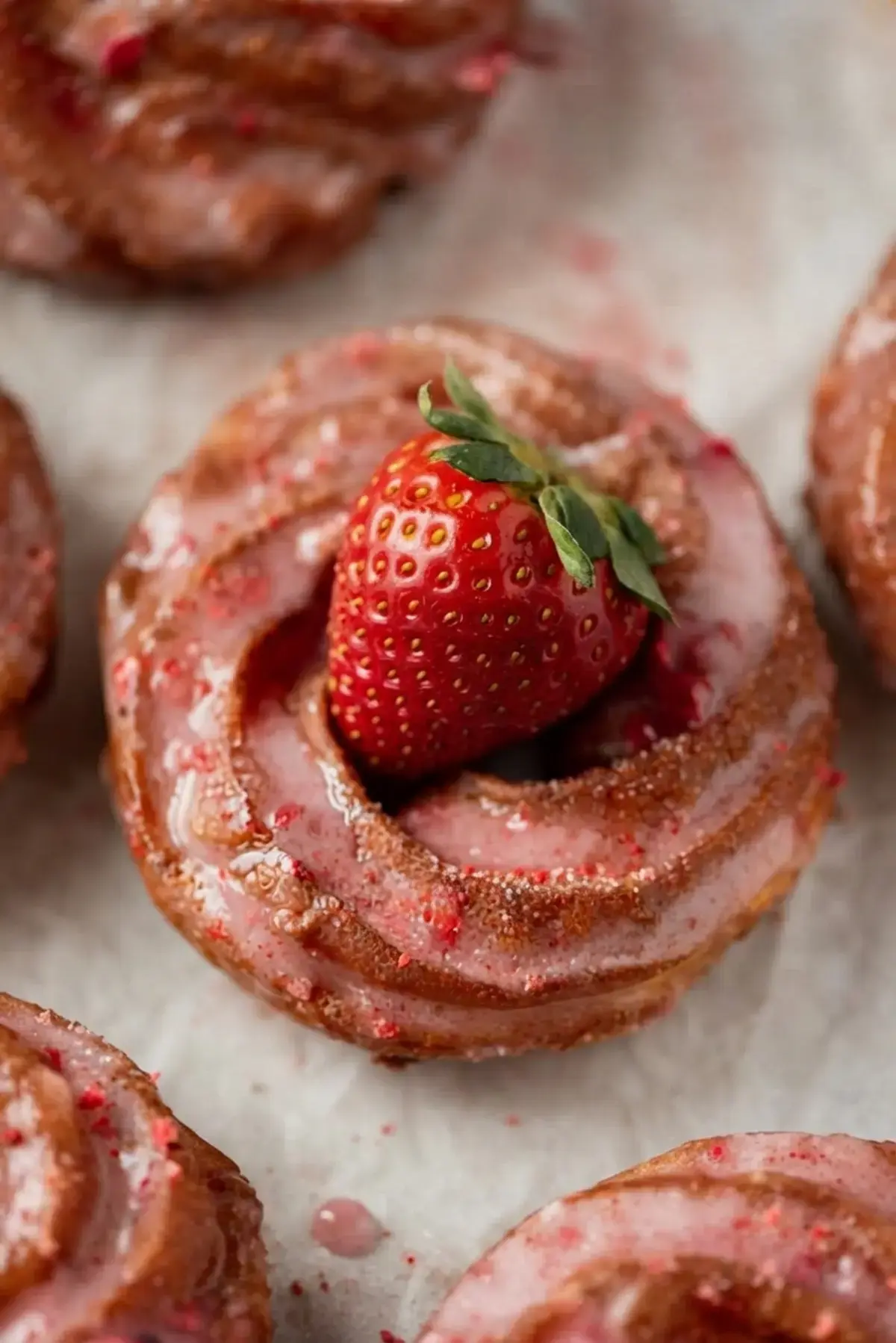
Crullers with a strawberry glaze are a lovely contrast to the heartier fasnacht. They are the kind of thing that disappears quickly when guests are around.
Whichever one you choose, the fun of Fasnacht Day is in the ritual: a warm kitchen, a batch of dough rising under a towel, and a plate of sugared doughnuts that everyone reaches for at once. Happy frying!
FAQs
What is a fasnacht doughnut?
When is Fasnacht Day?
How are traditional Pennsylvania Dutch fasnacht doughnuts made?
What is the difference between a fasnacht and a regular doughnut?

Pennsylvania Dutch Fasnacht Doughnuts
Pennsylvania Dutch Fasnacht Doughnuts I always get so excited when Fasnacht Day arrives, because there is nothing quite like biting into a warm, golden brown doughnut that is still dusted with cinnamon sugar. These Pennsylvania Dutch fasnacht doughnuts are deep fried until they turn a medium golden brown, then coated while still warm in granulated sugar, cinnamon sugar, or powdered sugar.
- Total Time: 4 hours 30 minutes
- Yield: 3 dozen 1x
Ingredients
Pennsylvania dutch fasnacht doughnuts
2 cups Milk, scalded and then cooled, scalded and then cooled
4 1/2 tsp Active Dry Yeast, 2 packages
1/2 cup Warm Water
1/4 cup Unsalted Butter, melted
2 tsp Salt
3/4 cup Granulated Sugar
1/4 tsp Nutmeg
2 large Eggs
7 1/2 cups All-Purpose Flour
3–4 cups Canola Oil, for frying the Fasnachts
Granulated Sugar, for coating
Powdered Sugar, for coating
Cinnamon Sugar, for coating
vanilla pastry cream (for doughnut filling, optional)
3.4 oz Vanilla Pie Filling and Instant Pudding Mix, 1 box
1 cup Milk
1/2 cup Heavy Whipping Cream
Instructions
pennsylvania dutch fasnacht doughnuts
1-Using a small saucepan, scald the milk: Using a small saucepan, scald the milk and allow to cool.
2-Combine the 2 packets of active dry: Combine the 2 packets of active dry yeast and the warm water in the mixing bowl of the stand mixer that’s fitted with the dough hook attachment. Let the yeast proof (or sit) for 10 minutes.
3-Add in the melted butter, cooled milk,: Add in the melted butter, cooled milk, salt, granulated sugar, nutmeg, and eggs. Then set the mixer speed to low and add in the flour one cup at a time, until the dough begins to form. There will be a lot of dough and it will be sticky, but it should pull away from the sides of the bowl easily. If you find that the dough is just way too sticky, you can add 1 tbsp. of flour until the dough is slightly tacky.
4-Transfer the dough to a clean, lightly: Transfer the dough to a clean, lightly floured surface and knead it for about 5-8 minutes until smooth.
5-Then place in a lightly greased, medium: Then place in a lightly greased, medium size bowl, flipping it over once to coat the entire ball of dough. Cover the bowl tightly with plastic wrap (do NOT use aluminum foil) and also place a clean, dry kitchen towel over top, and place in a warm, draft free spot for about 1 – 1.5 hours or until it’s almost doubled in size. That last part is very important!
6-Gently punch the dough down in the: Gently punch the dough down in the center, then turn it out on to a clean and lightly floured surface and, using a floured rolling pin, roll the dough out to about a 1/2″ thickness. Coat your circle cutter (mine was 2.5″ dia in size) with some flour and then cut out the fasnacht doughnuts, placing them onto a parchment lined baking sheet (space them out about 1″ a part, they will get bigger). With any leftover dough you may have, you can roll some into balls to make donut holes.
7-Cover the fasnacht doughnuts with a clean: Cover the fasnacht doughnuts with a clean tea or dish towel and allow to rest for 1 hour or until they’ve almost doubled in size.
8-Meanwhile, line a large baking sheet with: Meanwhile, line a large baking sheet with about 2-3 layers of paper towels with a cooling rack placed over top. Set aside. Note, the cooling rack part is optional.
9-When ready to fry the fasnacht doughnuts,: When ready to fry the fasnacht doughnuts, place the canola oil into a deep heavy skillet or stock pot and heat until it reaches 365ºF. Two important notes here: 1. Add in the oil BEFORE you turn on the heat to heat up the oil. 2. Do not guess at what you think the temperature might be – use a candy/deep fryer thermometer.
10-Place 2-3 doughnuts in at a time: Place 2-3 doughnuts in at a time for approx. 45 seconds to 1 minute on each side, turning them over with either tongs or a slotted spoon. You want the donuts to be a nice medium golden brown in color. At the correct temperature, they will fry quickly, so please pay attention while you’re doing this part! If you’re new to making homemade doughnuts, I would recommend only frying one at a time until you get the hang of it.
11-When the doughnuts are ready, carefully remove: When the doughnuts are ready, carefully remove them from the oil and place them onto the cooling rack or paper towels to let any excess oil drain off of it. Allow them to cool slightly before adding the opening for the filling (optional).
12-When doughnuts are still warm and ready: When doughnuts are still warm and ready for coating, place 2-3 in a large ziplock bag with either the sugar or cinnamon sugar, and toss around until covered. Place them onto a parchment lined baking sheet or just begin to eat them.
13-The doughnuts should be cooled before adding: The doughnuts should be cooled before adding the vanilla pastry cream filling.
vanilla pastry cream
14-In a medium bowl, whisk together the: In a medium bowl, whisk together the vanilla pudding mix and milk until it thickens.
15-Using your hand-mixer or stand mixer fitted: Using your hand-mixer or stand mixer fitted with the whisk attachment, whip the heavy cream on high speed for several minutes until medium peaks form.
16-Fold the whipped cream into the vanilla: Fold the whipped cream into the vanilla pudding mix with a spatula until completely blended.
17-Take a large piping bag fitted with: Take a large piping bag fitted with a piping tip of your choice (I used the Wilton 1M tip) and fill with the vanilla pastry cream. Pipe into the doughnuts until filled.
Last Step:
Please leave a rating and comment letting us know how you liked this recipe! This helps our business to thrive and continue providing free, high-quality recipes for you.- Prep Time: 180 min
- Cook Time: 30 min
- Method: mixed
Nutrition
- Calories: 3907
- Sugar: 89 g
- Sodium: 1913 mg
- Fat: 268 g
- Saturated Fat: 41 g
- Carbohydrates: 333 g
- Fiber: 10 g
- Protein: 47 g
- Cholesterol: 224 mg