

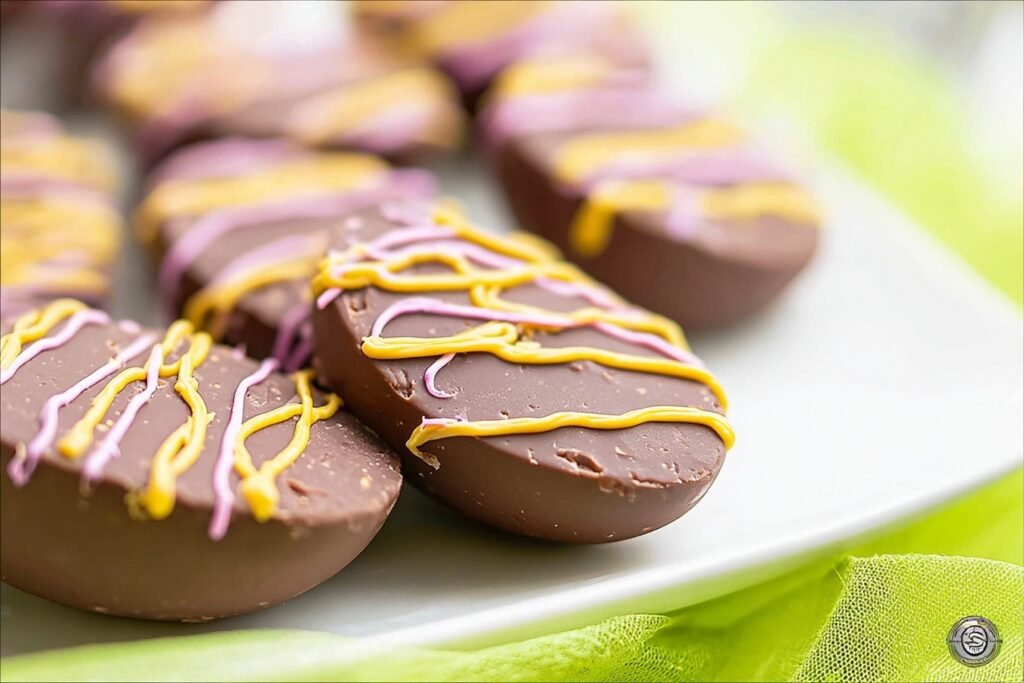
Why You’ll Love This Peanut Butter Eggs Recipe
If you love classic candy shop flavors but want something simple at home, these Peanut Butter Eggs are a sweet win. They have that creamy peanut butter center, a smooth chocolate shell, and the kind of homemade charm that makes them perfect for holidays, gifting, or just keeping in the fridge for a quick treat.
- Easy to make: This Peanut Butter Eggs recipe comes together with basic pantry ingredients and no oven. You only need about 20 minutes of prep time, then the fridge does the rest.
- Great for busy days: With a total time of just 50 minutes, these homemade chocolate eggs fit well into a packed schedule. Busy parents, students, and working professionals can make them ahead without much fuss.
- Flexible for different tastes: You can use crunchy peanut butter, natural peanut butter, almond butter, or cashew butter. You can also coat them in milk, dark, or white chocolate, which makes this recipe easy to adapt.
- Rich, candy-style flavor: The mix of creamy peanut butter, butter, powdered sugar, and chocolate gives these eggs a smooth, sweet, Reese’s-style bite that feels special without being complicated.
These homemade candy eggs are the kind of recipe that feels festive, but still practical enough for everyday home cooks.
Whether you are making a batch for Easter, sharing with friends, or packing a few for dessert, this Peanut Butter Eggs recipe brings big flavor with very little effort. For more easy sweet ideas, you may also like Recipes Valentina.
Jump to:
- Why You’ll Love This Peanut Butter Eggs Recipe
- Essential Ingredients for Peanut Butter Eggs
- Ingredient Notes and Smart Swaps
- Special Dietary Options
- How to Prepare the Perfect Peanut Butter Eggs: Step-by-Step Guide
- Step 1: Melt the peanut butter and butter
- Step 2: Add the sweeteners and flavoring
- Step 3: Shape into balls and then eggs
- Step 4: Chill until firm
- Step 5: Melt the chocolate
- Step 6: Dip and coat the eggs
- Step 7: Let them set and store properly
- Quick Recipe Snapshot
- Dietary Substitutions to Customize Your Peanut Butter Eggs
- Protein and Main Component Alternatives
- Vegetable, Sauce, and Seasoning Modifications
- Mastering Peanut Butter Eggs: Advanced Tips and Variations
- Pro cooking techniques
- Flavor variations
- Presentation tips
- Make-ahead options
- How to Store Peanut Butter Eggs: Best Practices
- Refrigeration
- Freezing
- Reheating
- Meal prep considerations
- FAQs: Frequently Asked Questions About Peanut Butter Eggs
- What are the ingredients for homemade peanut butter eggs?
- Can I use different chocolate to make peanut butter eggs?
- What can I substitute for peanut butter in peanut butter eggs?
- How do you store homemade peanut butter eggs?
- How long do homemade peanut butter eggs last?
- Peanut Butter Eggs
- Ingredients
- Instructions
- Last Step:
- Notes
- Nutrition
- Did you make this recipe?
Essential Ingredients for Peanut Butter Eggs
Here is everything you need to make this Peanut Butter Eggs recipe. The ingredient list is short, but each item plays an important role in the flavor and texture.
- 1 cup creamy peanut butter – Gives the filling its rich, nutty base and smooth texture.
- 1/2 cup unsalted butter – Helps soften the mixture and adds a creamy, melt-in-your-mouth feel.
- 2 cups powdered sugar – Sweetens the filling and helps it hold its egg shape.
- 1/4 teaspoon salt – Balances the sweetness and brings out the peanut flavor.
- 1 teaspoon vanilla extract – Adds warm flavor and makes the filling taste more like homemade candy.
- 2 cups milk chocolate for dipping – Creates the sweet outer shell that sets the eggs apart.
Ingredient Notes and Smart Swaps
If you want to change the flavor or work with what you have on hand, these swaps can help.
- Crunchy peanut butter: Adds little peanut pieces for extra texture.
- Natural peanut butter: Works too, but it may be stiffer or softer depending on the brand, so you may need to adjust the sugar.
- Almond butter: Makes a milder, nuttier filling and may need a little more powdered sugar for shaping.
- Cashew butter: Creates a softer, creamier bite with a gentle flavor.
- White chocolate or dark chocolate: Great if you want a different finish on your peanut butter chocolate eggs recipe.
Special Dietary Options
- Vegan: Use plant-based butter and dairy-free chocolate.
- Gluten-free: This recipe is naturally gluten-free as written, but always check labels on chocolate and peanut butter.
- Lower sugar: Reduce the powdered sugar a little and use a darker chocolate coating for a less sweet version.
If your peanut butter mixture feels too soft, add a little more powdered sugar. If it feels too stiff, let it warm slightly before shaping.
How to Prepare the Perfect Peanut Butter Eggs: Step-by-Step Guide
This Peanut Butter Eggs recipe is easy to follow, and the steps move quickly once the filling is mixed. Keep a lined sheet pan ready before you start so you can chill and coat the eggs without rushing around.
Step 1: Melt the peanut butter and butter
Start by adding 1 cup creamy peanut butter and 1/2 cup unsalted butter to a microwave-safe bowl. Heat them in the microwave until smooth, stopping to stir every so often. The mixture should blend together easily and look glossy.
If the mixture seems lumpy, microwave it for 10 more seconds and stir again. This helps everything melt evenly and gives you a better base for the filling.
Step 2: Add the sweeteners and flavoring
Mix in 1/4 teaspoon salt and 1 teaspoon vanilla extract. Then add the 2 cups powdered sugar one scoop at a time, stirring after each addition. The mixture will thicken as you go, and that is what you want.
Keep mixing until a soft dough forms. It should be thick enough to shape, but still smooth and easy to press together. If you want a firmer filling, add a little more powdered sugar. If you are using natural peanut butter, you may need to work a bit more slowly because the texture can be stiffer.
Step 3: Shape into balls and then eggs
Once the dough is ready, scoop out portions and roll them into balls. Then gently form each one into an egg shape with your hands. Try to keep the pieces similar in size so they chill and coat evenly.
Wearing gloves can make this part easier because the mixture warms quickly in your hands. That is one of the best tips for making homemade Peanut Butter Eggs without a sticky mess.
Step 4: Chill until firm
Place the shaped eggs on a lined sheet pan and chill them in the fridge or freezer. The recipe needs about 30 minutes of chill time. This step helps the eggs hold their shape when you dip them in chocolate.
Do not skip this part. Cold centers are much easier to coat, and they help the chocolate set faster once the eggs are dipped.
Step 5: Melt the chocolate
While the eggs chill, melt 2 cups milk chocolate for dipping in the microwave. Heat it in 30-second increments, stirring after each one until it is smooth. If the chocolate is still thick, give it a few more seconds, but do not overheat it.
You can also use dark chocolate or white chocolate if you want a different finish. For a thicker shell, some home cooks like to stir in a small spoonful of coconut oil, but it is optional.
Step 6: Dip and coat the eggs
Take the chilled eggs out of the fridge or freezer and work fast. Dip each one into the melted chocolate, then tap off the excess so the coating stays neat. Set each coated egg onto a lined sheet pan.
If you want a prettier finish, drizzle extra melted chocolate over the tops before the coating sets. This gives your homemade peanut butter eggs a bakery-style look without extra effort.
Step 7: Let them set and store properly
Let the chocolate harden before serving or storing. Once set, place the eggs in an airtight container. You can keep them at room temperature for a short time if your kitchen is cool, or freeze them for longer storage.
The full recipe makes 12 eggs, with a prep time of 20 minutes, chill time of 30 minutes, and a total time of 50 minutes.
Work quickly once the eggs come out of the fridge. The colder the centers stay, the easier the dipping will be.
Quick Recipe Snapshot
| Detail | Amount |
|---|---|
| Prep Time | 20 minutes |
| Chill Time | 30 minutes |
| Total Time | 50 minutes |
| Servings | 12 eggs |

Dietary Substitutions to Customize Your Peanut Butter Eggs
One reason people love Peanut Butter Eggs is how easy they are to tweak. Whether you are working around allergies, cutting back on sugar, or just using what is in the pantry, there are several ways to adjust the recipe.
Protein and Main Component Alternatives
If peanut butter is not the right fit, swap in another nut or seed butter. Almond butter and cashew butter both work well, though you may need extra powdered sugar to get the right texture. Sunflower seed butter is a good nut-free option, especially for school snacks or allergy-aware gatherings.
Natural peanut butter can also be used, but it may be a little stiffer or oilier than regular creamy peanut butter. Stir it well before measuring so the texture is more even. If the mixture feels too soft, add a bit more powdered sugar until it is easy to roll.
Vegetable, Sauce, and Seasoning Modifications
This recipe does not use vegetables or sauce, but you can still play with flavor and coating choices. Try a coating of white chocolate for a sweeter, festive look, or dark chocolate for a deeper taste that balances the filling. A pinch of sea salt on top can add a nice contrast if you want a sweet-salty finish.
For a less sweet version, use darker chocolate and reduce the powdered sugar slightly. If you want extra texture, use crunchy peanut butter. If you are making these for someone who loves candy with a richer bite, add a little more vanilla or drizzle with a second layer of chocolate.
For more background on peanuts and their nutrition profile, see this helpful resource from Healthline on peanuts.
Mastering Peanut Butter Eggs: Advanced Tips and Variations
Once you have made this recipe once, it is easy to fine-tune the results. A few small changes can make your Peanut Butter Eggs look neater, taste better, and store more smoothly.
Pro cooking techniques
Wear gloves when shaping the mixture because it can soften fast in your hands. This is especially helpful if your kitchen is warm. If the filling gets too sticky, chill it for a few minutes before rolling it again.
When melting chocolate, use short microwave bursts and stir often. That keeps the chocolate smooth and less likely to seize. If your melted chocolate looks a little thick or lumpy, microwave it for 10 more seconds and stir again.
Flavor variations
You can make this recipe your own with different coatings and fillings. Try milk chocolate for the classic version, white chocolate for a sweeter finish, or dark chocolate for a more balanced bite. You can also make a peanut butter chocolate eggs recipe with almond butter or cashew butter if you want a softer or milder flavor.
For a festive touch, add colored sprinkles right after dipping. Another fun option is to drizzle one color of chocolate over another after the first coat sets.
Presentation tips
For a cleaner look, let excess chocolate drip off before placing the eggs on parchment paper. A lined sheet pan helps keep the bottoms smooth. If you want a more polished finish, use a fork or dipping tool to lower the eggs into the melted chocolate.
Once they are set, arrange them on a platter or pack them in small treat boxes. They make thoughtful gifts for Easter baskets, dessert trays, or holiday snack plates.
Make-ahead options
These are great make-ahead sweets for busy families. You can shape the peanut butter centers a day ahead, chill them overnight, and dip them in chocolate the next day. That makes the process feel less rushed.
You can also freeze the finished eggs and pull out a few at a time when you want a quick dessert. They thaw well in the fridge and keep their flavor and texture nicely.
For the best chocolate shell, keep the eggs cold right up until dipping.
How to Store Peanut Butter Eggs: Best Practices
Good storage helps your Peanut Butter Eggs stay fresh, firm, and tasty. Since these are no-bake treats, the filling and chocolate both respond to temperature, so a little care goes a long way.
Refrigeration
Store the eggs in an airtight container in the refrigerator for up to two weeks. If you stack them, place parchment paper between layers so the chocolate shells do not stick together. Chilling keeps the filling firm and gives the chocolate a nice snap.
Freezing
For longer storage, freeze the eggs in a single layer first, then move them to a freezer-safe bag or container. They can keep for about three months this way. Thaw them in the fridge overnight before serving so the chocolate does not sweat.
Reheating
These treats do not need reheating. In fact, warming them can make the chocolate soft and the filling too loose. If they have been in the freezer, let them thaw slowly in the refrigerator for the best texture.
Meal prep considerations
If you are planning ahead for a party, holiday tray, or lunchbox treat, make a double batch and freeze part of it. The recipe is easy to portion, and the finished eggs travel well when packed cold. That makes them handy for gifts, potlucks, and make-ahead dessert platters.
| Storage Method | How Long | Best Practice |
|---|---|---|
| Room Temperature | 3 to 5 days | Keep in a cool, dry place away from sunlight |
| Refrigerator | Up to 2 weeks | Store in an airtight container with parchment between layers |
| Freezer | Up to 3 months | Freeze in a single layer, then transfer to a bag or container |

FAQs: Frequently Asked Questions About Peanut Butter Eggs
What are the ingredients for homemade peanut butter eggs?
Can I use different chocolate to make peanut butter eggs?
What can I substitute for peanut butter in peanut butter eggs?
How do you store homemade peanut butter eggs?
How long do homemade peanut butter eggs last?

Peanut Butter Eggs
🍫 Creamy peanut butter eggs dipped in rich chocolate – homemade Reese’s-style treat that’s cheaper and fresher!
🥚 No-bake delight ready in 50 minutes, perfect for holidays, gifts, or satisfying sweet tooth cravings.
- Total Time: 50 minutes
- Yield: 12 eggs
Ingredients
– 1 cup creamy peanut butter
– 1/2 cup unsalted butter
– 2 cups powdered sugar
– 1/4 teaspoon salt
– 1 teaspoon vanilla extract
– 2 cups milk chocolate for dipping
Instructions
1-Step 1: Melt the peanut butter and butter Start by adding 1 cup creamy peanut butter and 1/2 cup unsalted butter to a microwave-safe bowl. Heat them in the microwave until smooth, stopping to stir every so often. The mixture should blend together easily and look glossy. If the mixture seems lumpy, microwave it for 10 more seconds and stir again. This helps everything melt evenly and gives you a better base for the filling.
2-Step 2: Add the sweeteners and flavoring Mix in 1/4 teaspoon salt and 1 teaspoon vanilla extract. Then add the 2 cups powdered sugar one scoop at a time, stirring after each addition. The mixture will thicken as you go, and that is what you want. Keep mixing until a soft dough forms. It should be thick enough to shape, but still smooth and easy to press together. If you want a firmer filling, add a little more powdered sugar. If you are using natural peanut butter, you may need to work a bit more slowly because the texture can be stiffer.
3-Step 3: Shape into balls and then eggs Once the dough is ready, scoop out portions and roll them into balls. Then gently form each one into an egg shape with your hands. Try to keep the pieces similar in size so they chill and coat evenly. Wearing gloves can make this part easier because the mixture warms quickly in your hands. That is one of the best tips for making homemade Peanut Butter Eggs without a sticky mess.
4-Step 4: Chill until firm Place the shaped eggs on a lined sheet pan and chill them in the fridge or freezer. The recipe needs about 30 minutes of chill time. This step helps the eggs hold their shape when you dip them in chocolate. Do not skip this part. Cold centers are much easier to coat, and they help the chocolate set faster once the eggs are dipped.
5-Step 5: Melt the chocolate While the eggs chill, melt 2 cups milk chocolate for dipping in the microwave. Heat it in 30-second increments, stirring after each one until it is smooth. If the chocolate is still thick, give it a few more seconds, but do not overheat it. You can also use dark chocolate or white chocolate if you want a different finish. For a thicker shell, some home cooks like to stir in a small spoonful of coconut oil, but it is optional.
6-Step 6: Dip and coat the eggs Take the chilled eggs out of the fridge or freezer and work fast. Dip each one into the melted chocolate, then tap off the excess so the coating stays neat. Set each coated egg onto a lined sheet pan. If you want a prettier finish, drizzle extra melted chocolate over the tops before the coating sets. This gives your homemade peanut butter eggs a bakery-style look without extra effort.
7-Step 7: Let them set and store properly Let the chocolate harden before serving or storing. Once set, place the eggs in an airtight container. You can keep them at room temperature for a short time if your kitchen is cool, or freeze them for longer storage. The full recipe makes 12 eggs, with a prep time of 20 minutes, chill time of 30 minutes, and a total time of 50 minutes.
Last Step:
Please leave a rating and comment letting us know how you liked this recipe! This helps our business to thrive and continue providing free, high-quality recipes for you.Notes
🧤 Wear food-safe gloves when shaping – filling melts from hand warmth for easier handling.
⚡ If mixture is lumpy after microwaving, zap 10 more seconds and stir vigorously.
❄️ Freeze set eggs up to 3 months; thaw at room temp for perfect texture.
- Prep Time: 20 minutes
- Chill: 30 minutes
- Category: Dessert
- Method: No Cook
- Cuisine: American
- Diet: Vegetarian
Nutrition
- Serving Size: 1 egg
- Calories: 423 kcal
- Sugar: 37g
- Sodium: 147mg
- Fat: 29g
- Saturated Fat: 13g
- Unsaturated Fat: 14g
- Trans Fat: 0g
- Carbohydrates: 42g
- Fiber: 3g
- Protein: 6g
- Cholesterol: 20mg