

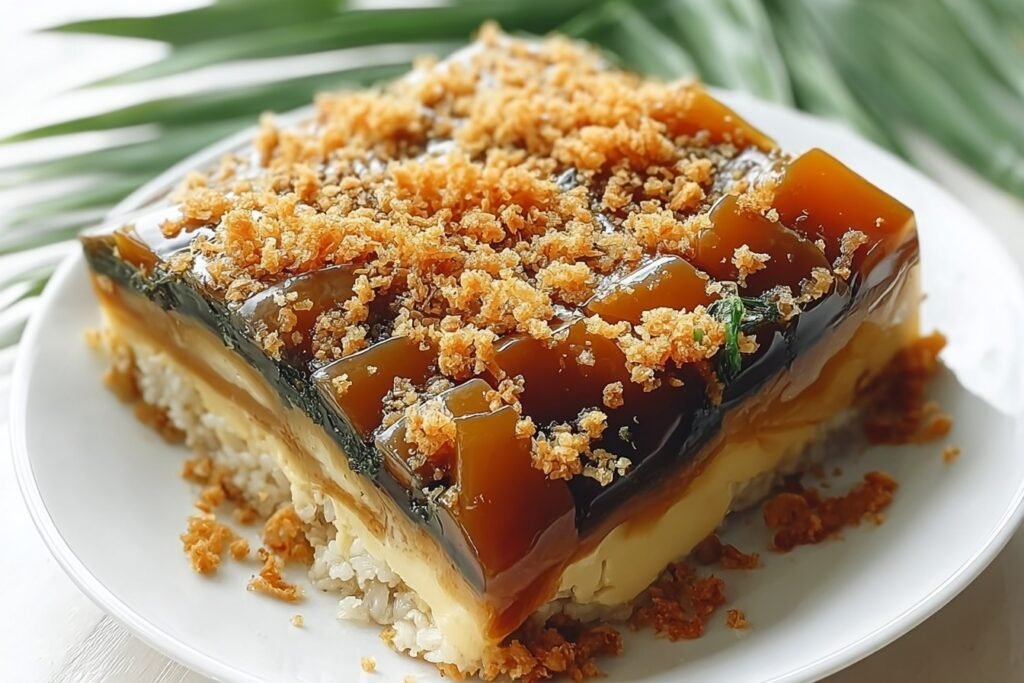
Why You’ll Love This Filipino Sapin Sapin
Filipino Sapin Sapin is one of those desserts that looks fancy but is actually friendly for home cooks. This Filipino Sapin Sapin recipe gives you colorful layers, a soft chewy bite, and a sweet coconut flavor that feels comforting from the first slice. If you love filipino rice cake treats or want to try a new sticky rice dessert, this is a great place to start.
It is the kind of kakanin that makes a table feel festive without asking for complicated steps.
- Easy to make: The batter comes together fast, and each layer only needs a short steaming time. With a total time of about 1 hour, this simple sapin sapin recipe fits busy schedules.
- Comforting and filling: Because it uses glutinous rice flour, coconut milk, and condensed milk, every slice feels rich and satisfying. It is a sweet snack that can keep you full longer than many other desserts.
- Flexible for different tastes: You can keep it classic, add mashed ube, or fold in chopped jackfruit. That makes it a nice pick for families with different flavor preferences.
- Pretty enough for celebrations: The purple, yellow, and white layers make it a beautiful layered rice cake for holidays, parties, or merienda time.
This traditional Filipino sapin sapin also brings in the cozy flavor of coconut cream and latik, which gives it that classic toasted topping people look forward to. If you enjoy more easy Filipino desserts from Recipes Valentina, this one fits right in with simple treats that still feel special.
From a practical side, the recipe works well for home cooks because it does not need special tools beyond a pan, a bowl, and a steamer. It is also a nice recipe for students, working professionals, and newlyweds who want a homemade dessert without a long ingredient list. Even better, the layered batter can be made ahead and steamed in stages, so the process feels calm instead of rushed.
For people who like to keep an eye on portions, this dessert is rich, so a small piece goes a long way. That makes it good for sharing at gatherings, where everyone can enjoy a few bites without feeling overwhelmed. If you are looking for a filipino sapin sapin recipe that is simple, colorful, and dependable, this one checks all the boxes.
Jump to:
- Why You’ll Love This Filipino Sapin Sapin
- Essential Ingredients for Filipino Sapin Sapin
- Step-by-Step Instructions to Make Filipino Sapin Sapin
- Prepare the latik and pan
- Mix the batter
- Steam each layer
- Cool, unmold, and serve
- Tips, Variations, and Storage for Sapin Sapin
- Frequently Asked Questions About Filipino Sapin Sapin
- What is sapin sapin?
- What does sapin sapin mean?
- How do you make sapin sapin at home?
- How long does sapin sapin last in the fridge?
- What are common sapin sapin variations and toppings?
- Filipino Sapin Sapin
- Ingredients
- Notes
- Nutrition
- Did you make this recipe?
Essential Ingredients for Filipino Sapin Sapin
Before you start, gather every ingredient so the process stays smooth. This sapin sapin recipe uses pantry-friendly ingredients and a few flavor drops to create those classic layers. The ingredients below are listed exactly as needed for the recipe.
- 1 cup coconut cream, for latik
- 3 1/2 cups glutinous rice flour
- 2 cans coconut milk, 13.5 ounces each
- 1 can condensed milk, 14 ounces
- 1 cup sugar
- 3 drops ube flavor extract
- 3 drops langka flavor extract
Ingredient notes: The coconut cream is cooked down to make latik and coconut oil for brushing the cake. Glutinous rice flour gives the dessert its chewy texture, while coconut milk and condensed milk make the batter creamy and sweet. The ube and langka extracts bring color and flavor to two of the layers, while the third layer stays plain for balance.
If you want a richer version of this filipino kakanin, you can also follow the tip to mix 1/2 cup mashed cooked ube into the purple batter and 1/4 cup finely chopped jackfruit into the yellow batter. Those additions are optional, but they make the flavor deeper and more natural.
| Ingredient | Purpose |
|---|---|
| Glutinous rice flour | Creates the chewy base of the cake |
| Coconut milk and condensed milk | Add creamy texture and sweetness |
| Ube and langka extracts | Give the signature purple and yellow layers |
| Coconut cream | Turns into latik topping and coconut oil |
For more dessert ideas that use similar ingredients, you can also check Recipes Valentina dessert recipes when planning your next sweet snack.
Step-by-Step Instructions to Make Filipino Sapin Sapin
This easy layered rice cake recipe may look detailed, but the steps are very manageable once you do them one at a time. The best way to make sapin sapin is to keep the batter smooth, steam each layer fully, and let the cake cool before slicing. That helps the layers stay neat and clean.
Prepare the latik and pan
- Pour the 1 cup coconut cream into a pan and cook it over medium heat.
- Stir from time to time until it separates into latik curds and oil.
- Drain the latik and set it aside for topping.
- Reserve the coconut oil and use it to grease an 8-inch round baking pan.
A well-greased pan makes removal much easier later. You can also line the pan with banana leaves or parchment paper if you want extra insurance against sticking. The recipe works in an 8-inch round or square pan that can hold at least 8 cups of batter.
Mix the batter
- In a large bowl, combine the glutinous rice flour, coconut milk, condensed milk, and sugar.
- Stir until you get a smooth batter with no dry flour left at the bottom.
- Strain the batter to remove lumps, then divide it equally into three bowls.
- Add 3 drops ube flavor extract to one bowl, 3 drops langka flavor extract to another bowl, and leave the third bowl plain.
Straining the batter is a small step, but it helps you get a smoother, more polished cake.
If you want stronger color, the batter often looks deeper after steaming, so do not worry if it seems light at first. That is normal for this filipino sapin sapin recipe.
Steam each layer
- Pour the ube batter into the prepared pan and steam for 10 minutes until firm.
- Carefully add the langka batter on top and steam for another 10 minutes.
- Finish with the plain batter and steam for 10 more minutes.
Try not to rush the steaming time. Each layer should be firm before the next one goes in, or the colors may mix too much. If you want a stronger ube flavor, mix in 1/2 cup mashed cooked ube to the purple batter. If you want a more noticeable langka taste, add 1/4 cup finely chopped jackfruit to the yellow batter.
Cool, unmold, and serve
- Allow the cake to cool fully before removing it from the pan.
- Release it carefully, then flip it onto a serving plate.
- Brush the top with the reserved coconut oil.
- Top with latik and slice into pieces.
Cooling fully matters because it helps the layers set and keeps the cake from breaking. Once sliced, the cake is ready for merienda, family gatherings, or a simple sweet ending to a meal. If you like Filipino snacks and desserts, this is a lovely recipe to add to your rotation of easy kakanin ideas.
Tips, Variations, and Storage for Sapin Sapin
This traditional Filipino sapin sapin is simple once you know a few small tricks. These tips can help you get neat layers, better texture, and easier storage.
- Use the right pan: An 8-inch round or square pan works well, as long as it can hold at least 8 cups of batter.
- Grease well: Coat the pan thoroughly with coconut oil, or line it with banana leaves or parchment paper.
- Let it cool fully: This keeps condensation from forming and helps the cake stay firm when sliced.
- Store properly: Keep leftovers in the refrigerator for up to 3 days, then reheat briefly in the microwave.
- Try flavor twists: Add mashed cooked ube to the purple layer or chopped jackfruit to the yellow layer for a richer taste.
- Watch the colors: The batter colors often intensify after steaming, so the final cake may look brighter than the raw batter.
For a different twist, some home cooks like to make a more natural version with fresh ube or jackfruit, while others keep it classic with extracts. Either way, this sticky rice dessert remains soft, sweet, and satisfying.
| Storage Method | How Long | Notes |
|---|---|---|
| Refrigerator | Up to 3 days | Cool completely first and cover tightly |
| Freezer | Up to 1 month | Wrap slices well, then thaw in the fridge |
This cake tastes best when served at room temperature or slightly warmed after chilling.
Approximate nutrition per serving: 557 calories, 80g carbohydrates, 8g protein, 24g fat, 20g saturated fat, 11mg cholesterol, 51mg sodium, 368mg potassium, 2g fiber, 35g sugar, 90IU vitamin A, 2.1mg vitamin C, 113mg calcium, and 2.8mg iron. It is rich, so smaller portions are usually enough.
If you want to read more about ingredients in desserts, you may also find this helpful: health benefits of ube and purple yam and coconut milk nutrition facts.
Frequently Asked Questions About Filipino Sapin Sapin
What is sapin sapin?
What does sapin sapin mean?
How do you make sapin sapin at home?
How long does sapin sapin last in the fridge?
What are common sapin sapin variations and toppings?
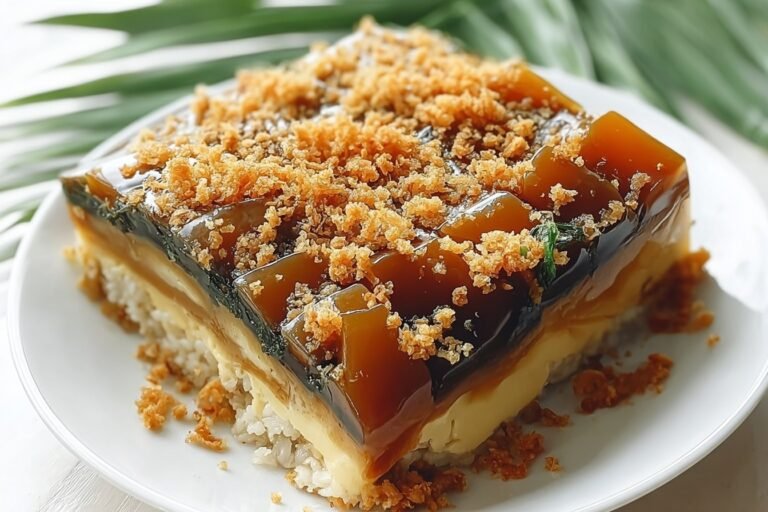
Filipino Sapin Sapin
🍚 Chewy layered glutinous rice cake in vibrant ube-langka-coconut – festive Filipino delicacy that’s simply irresistible!
🥥 Easy steamed treat with crispy latik topping – naturally sweet, shareable dessert for celebrations.
- Total Time: 3 hours
- Yield: 12 servings
Ingredients
– 1 cup coconut cream for latik
– 3 1/2 cups glutinous rice flour
– 2 cans coconut milk, 13.5 ounces each
– 1 can condensed milk, 14 ounces
– 1 cup sugar
– 3 drops ube flavor extract
– 3 drops langka flavor extract
Notes
🥥 Grease pan well with coconut oil or use banana leaves to prevent sticking.
🍠 Boost flavor: mix mashed ube or chopped jackfruit into flavored batters.
❄️ Cool fully before slicing; refrigerate up to 3 days, reheat gently.
- Prep Time: 10 minutes
- Cooling: 2 hours
- Cook Time: 50 minutes
- Category: Desserts
- Method: Steam
- Cuisine: Filipino
- Diet: Vegetarian
Nutrition
- Serving Size: 1 slice
- Calories: 557
- Sugar: 35g
- Sodium: 51mg
- Fat: 24g
- Saturated Fat: 20g
- Unsaturated Fat: 4g
- Trans Fat: 0g
- Carbohydrates: 80g
- Fiber: 2g
- Protein: 8g
- Cholesterol: 11mg