
Why You’ll Love This Mango Chickpea Pickle
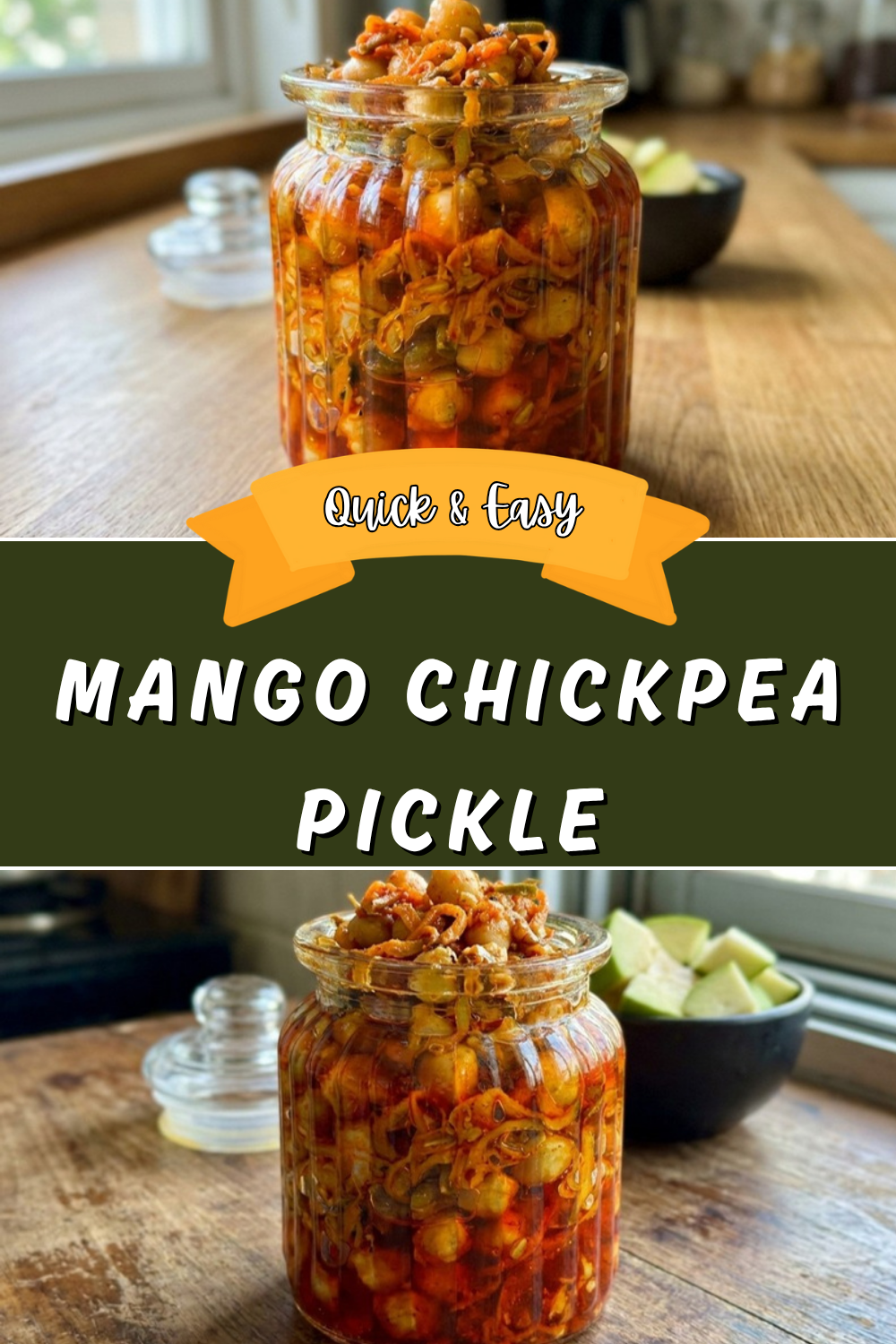
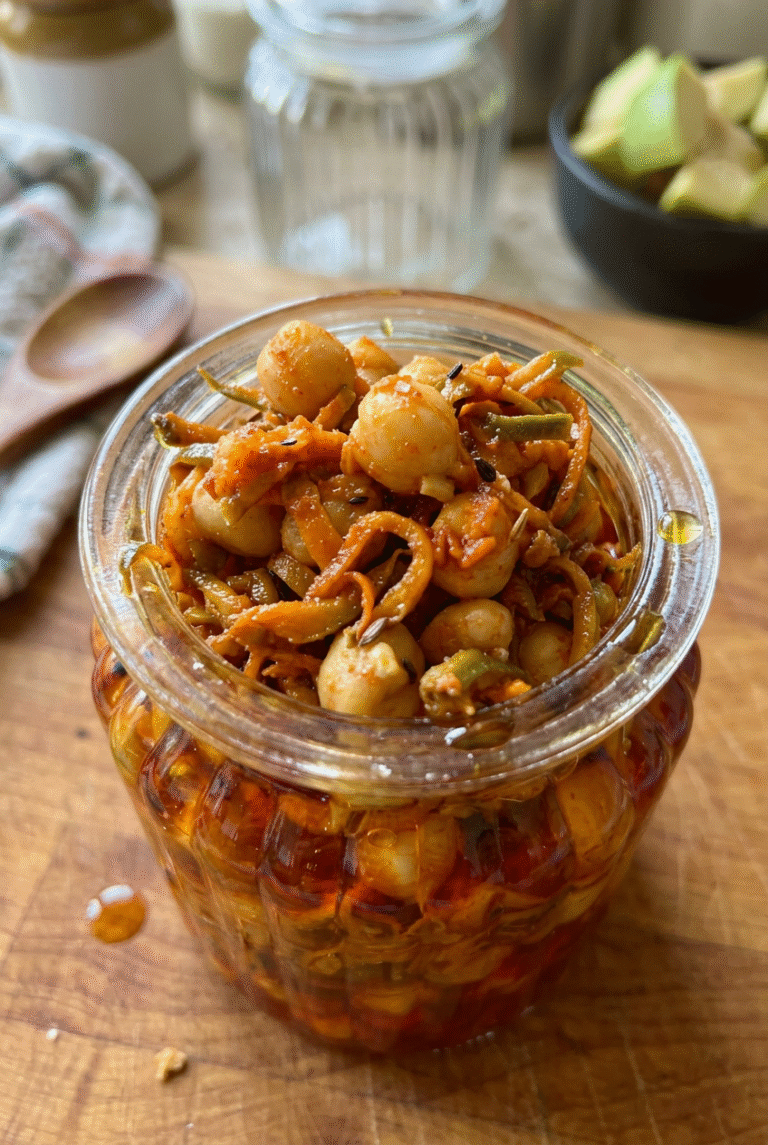
This Mango Chickpea Pickle is the kind of homemade recipe that feels old-school, cozy, and super satisfying. It brings together raw mango, chickpeas, spices, and mustard oil in a way that tastes tangy, bold, and a little bit addictive. If you love Indian pickle flavors, this one is a real treat.
- Easy to make: This Mango Chickpea Pickle Recipe needs no cooking at all. You just wash, grate, mix, sun-dry, and wait. That makes it a great pick for busy parents, students, and working professionals who still want homemade flavor.
- Good for your body: The natural fermentation makes this pickle rich in probiotics. Chickpeas bring protein and fiber, while raw mango adds a bright sour bite and vitamin C. It is also a nice fit for vegan and gluten-free eating.
- Very versatile: You can enjoy Mango Chickpea Pickle with roti, paratha, khichdi, rice, or even a simple sandwich. The chickpeas can also be used later in curries, hummus, or pilaf once the pickle is gone.
- Big flavor, small effort: The mix of methi dana, saunf, kalonji, and red chilli powder gives this pickle a deep, rich taste that stands out fast. Every bite feels tangy, spicy, and full of character.
Homemade pickle has a special magic. It sits in the sun, slowly matures, and turns into something far better than anything from a store jar.
If you enjoy bold Indian flavors, you may also like this sweet and sticky chicken recipe for another family-friendly meal idea.
At Recipes Valentina, this kind of recipe fits right in because it is simple, accessible, and full of joy. It is the sort of food that helps create happy table moments without a lot of stress.
| Prep Time | Cook Time | Resting Time | Total Time |
|---|---|---|---|
| 30 minutes | 0 minutes | 15 days | 15 days 30 minutes |
Jump to:
- Why You’ll Love This Mango Chickpea Pickle
- Essential Ingredients for Mango Chickpea Pickle
- Special Dietary Notes
- How to Prepare the Perfect Mango Chickpea Pickle: Step-by-Step Guide
- First Step: Wash, dry, and prep the main ingredients
- Second Step: Mix mango, chickpeas, and salt
- Third Step: Prepare the spice mixture
- Fourth Step: Combine everything carefully
- Fifth Step: Pack the pickle into a dry glass bottle
- Final Step: Sun-rest, stir, and wait
- Dietary Substitutions to Customize Your Mango Chickpea Pickle
- Protein and Main Component Alternatives
- Vegetable, Sauce, and Seasoning Modifications
- Mastering Mango Chickpea Pickle: Advanced Tips and Variations
- Pro cooking techniques
- Flavor variations
- Presentation tips
- Make-ahead options
- How to Store Mango Chickpea Pickle: Best Practices
- FAQs: Frequently Asked Questions About Mango Chickpea Pickle
- Do I need to cook chickpeas before adding them to mango chickpea pickle?
- Are mango chickpea pickles healthy?
- How long does homemade mango chickpea pickle last?
- How do I store mango chickpea pickle properly?
- Can I adjust the spice level in mango chickpea pickle?
- Mango Chickpea Pickle
- Ingredients
- Instructions
- Last Step:
- Notes
- Nutrition
- Did you make this recipe?
Essential Ingredients for Mango Chickpea Pickle
Here is the full ingredient list for this Mango Chickpea Pickle Recipe. Every item matters, so keep the measurements close while you prep.
- 3 cups raw mango, grated without peeling – Gives the pickle its sour base and helps start the softening process.
- 1 cup raw chickpeas, white chole – Adds bite, protein, and a classic texture after sun-resting.
- 2 tablespoons salt, adjust as per taste – Helps draw out moisture from the mango and preserves the pickle.
- 2 tablespoons fenugreek seeds, methi dana, coarsely ground – Adds a warm, slightly bitter flavor that is very traditional in pickles.
- 2 tablespoons fennel seeds, saunf – Brings a sweet, fragrant note that balances the sour mango.
- 1 teaspoon nigella seeds, kalonji – Adds a sharp, earthy flavor and makes the pickle taste more complete.
- 1/8 cup red chilli powder, lal mirch, adjust as per taste – Gives the pickle its heat and bright color.
- 1 teaspoon turmeric powder, haldi – Adds color, earthiness, and a little extra support for preservation.
- 1-1/4 cups mustard oil, more required if not using vinegar – Creates the rich pickle base and helps keep the mixture covered.
- 1/4 cup vinegar, optional, only if mangoes are not sour enough – Adds extra sharpness if the mangoes need a sour boost.
Special Dietary Notes
- Vegan: This Mango Chickpea Pickle is naturally vegan because it uses only plant-based ingredients.
- Gluten-free: It is naturally gluten-free, so it works well for many gluten-free meal plans.
- Low-calorie: Use smaller portions and serve with lighter meals if you want a more calorie-conscious option.
For another simple homemade side, you might like this comforting potato side dish from the blog.
How to Prepare the Perfect Mango Chickpea Pickle: Step-by-Step Guide
First Step: Wash, dry, and prep the main ingredients
Start by washing the raw chickpeas very well. Then spread them out and let them dry fully. This step matters a lot because extra moisture can spoil pickle fast. Next, wash the raw mangoes and clean them carefully. Grate the mangoes without peeling them, because the peel is not needed here and the grated mango helps the flavors mix faster. This is also a good time to check that your bowl, spoon, and jar are completely dry. A dry setup helps the pickle stay fresh for a long time.
Second Step: Mix mango, chickpeas, and salt
Take the grated raw mango, raw chickpeas, and salt in a large clean bowl. Mix everything well so the salt coats the mango and chickpeas evenly. Cover the bowl and keep it in the sun for 6 to 8 hours. During this resting time, the mango starts releasing juice, and the chickpeas begin soaking up that tangy flavor. This is one of the secret little magic steps in Mango Chickpea Pickle Recipe. It gives the pickle a deeper taste and helps the chickpeas soften slowly without any cooking.
Third Step: Prepare the spice mixture
In a separate bowl, mix the coarsely ground fenugreek seeds, fennel seeds, nigella seeds, red chilli powder, and turmeric powder. Then pour in the mustard oil and vinegar if you are using it. Stir everything until it forms a thick, even spice mix. If your mangoes are not very sour, the vinegar helps bring the sharp taste up. If the mangoes are already very sour, you can skip it and use a little extra mustard oil instead. This is also the stage where you can adjust spice level to your taste.
Fourth Step: Combine everything carefully
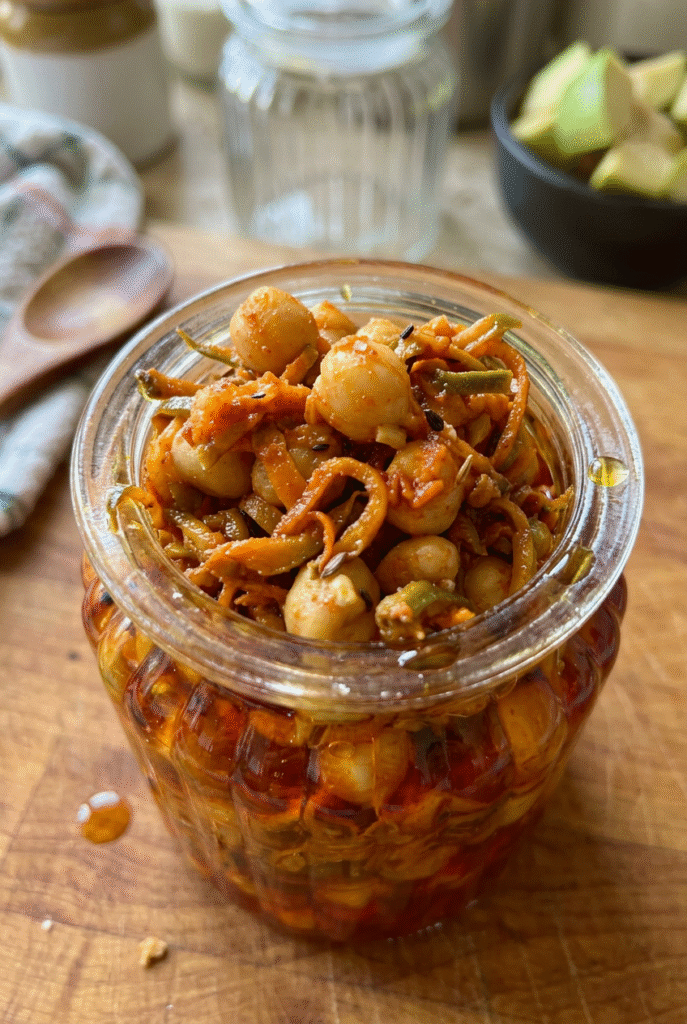
Now add the spice mixture to the mango and chickpea mix. Stir gently but thoroughly so every piece gets coated. The color should look rich and warm, with the oil surrounding the mango strands and chickpeas. Make sure no dry spice clumps stay hidden at the bottom of the bowl. If you want a milder pickle, reduce the red chilli powder a little. If your family loves heat, keep the full amount or add slightly more as needed. Taste is personal, and that is the beauty of homemade pickle.
Fifth Step: Pack the pickle into a dry glass bottle
Transfer the mixture into a dry, clean glass bottle or jar. This part should be done carefully. Use a spoon to press the pickle down so it sits below the oil. The oil layer is very important because it helps protect the pickle from air and moisture. Make sure the top surface stays covered. If needed, add a little more mustard oil so the pickle remains fully submerged. Glass is best because it does not hold smell or moisture the way some other containers do.
Final Step: Sun-rest, stir, and wait
Put the airtight jar in sunlight for at least 2 to 3 weeks. Stir it with a clean, dry spoon every 2 to 3 days. Always keep your hands dry when handling the pickle. Moisture is the enemy of good pickle storage. Over time, the flavors grow deeper, the chickpeas soak up the tang, and the whole jar becomes more and more delicious. After about 15 days, your Mango Chickpea Pickle should be ready to enjoy. The flavor keeps getting better if you let it sit a little longer.
Use a clean, dry spoon every single time. Even a tiny bit of water can change the pickle and shorten its life.

Dietary Substitutions to Customize Your Mango Chickpea Pickle
Protein and Main Component Alternatives
The classic version uses raw chickpeas, and that gives the pickle its special bite. If you need a change because of ingredient availability, you can try other dry legumes, but the result will not taste exactly the same. Split black chickpeas or another dry bean may work in a small test batch, but raw chickpeas remain the best choice for this Mango Chickpea Pickle. Canned or cooked chickpeas are not a good swap because they turn soft too fast and can spoil sooner.
Vegetable, Sauce, and Seasoning Modifications
If raw mangoes are very sour, skip the vinegar and use the mustard oil as written. If the mangoes are less sour, a little vinegar helps balance the taste. For spice, you can lower the red chilli powder for a mild version or add a bit more for a hotter jar. Some home cooks also like a tiny pinch of extra fennel for sweetness or a little more methi for that classic pickle edge. You can serve this recipe with simple meals, or pair it with other flavorful dishes like Indian coconut shrimp curry when you want a full Indian-inspired plate.
Mastering Mango Chickpea Pickle: Advanced Tips and Variations
Pro cooking techniques
The biggest tip is to keep everything dry. Use dry bowls, dry spoons, dry hands, and a dry jar. That one habit makes a huge difference. Another smart trick is to keep the pickle submerged in mustard oil at all times. If the oil level drops, add a little more. This helps the Mango Chickpea Pickle stay fresh for much longer. Also, always place the jar in a sunny spot during the early days so the flavors can build properly.
Flavor variations
If you like a stronger tang, use slightly more raw mango or a little vinegar. If you want a deeper spice note, increase the fenugreek just a touch. For a more aromatic feel, you can add a little extra fennel. Keep in mind that this pickle already has a bold flavor, so small changes work best. You can also make two small jars, one mild and one hot, if your family likes different spice levels. That makes this Mango Chickpea Pickle Recipe very home-friendly and fun.
Presentation tips
Serve the pickle in a small ceramic bowl or a neat glass jar with a clean spoon beside it. A little oil on top looks glossy and inviting. This pairs nicely with simple rotis, dal, rice, or even a travel lunch box. For a colorful table, place it beside fresh salad, yogurt, or a dry sabzi.
Make-ahead options
This recipe is perfect for batch prep. Since it rests for 15 days, it fits well into busy routines. Make it once, then enjoy it little by little for weeks. It is also a great hobby recipe to make with kids, as long as the sharp spices are handled carefully by an adult.
How to Store Mango Chickpea Pickle: Best Practices
Store Mango Chickpea Pickle in a clean glass jar with a tight lid. Keep it in a cool, dry place away from moisture and direct light once the initial sunlight period is done. A pantry or cupboard works well. The pickle should always stay below the oil line, because oil helps form a protective layer.
| Storage Method | Best Use | Notes |
|---|---|---|
| Pantry | Longer shelf life | Keep away from heat and moisture |
| Refrigerator | Hot climates or extra long storage | Use a dry spoon only |
| Glass jar | Best container | Helps keep flavor and texture stable |
Freezing is not a great choice for this pickle because the texture and oil can change after thawing. There is no reheating needed. If the oil thickens in the fridge, let the jar sit at room temperature for a bit before serving. For meal prep, make a larger batch and portion some into smaller jars so you open one at a time. That helps keep the rest fresh for longer.
FAQs: Frequently Asked Questions About Mango Chickpea Pickle
Do I need to cook chickpeas before adding them to mango chickpea pickle?
Are mango chickpea pickles healthy?
How long does homemade mango chickpea pickle last?
How do I store mango chickpea pickle properly?
Can I adjust the spice level in mango chickpea pickle?
Mango Chickpea Pickle
🥭🌶️ Probiotic tangy mango chickpea pickle aids digestion—vegan protein boost from chickpeas in bold Indian spices.
🫙 30-min prep sun-ferment 2 weeks: shelf-stable years, elevates curries, rice effortlessly!
- Total Time: 15 days 30 minutes
- Yield: 3 cups (48 servings)
Ingredients
– 3 cups raw mango, grated without peeling for sour base and softening process
– 1 cup raw chickpeas, white chole for bite, protein, and classic texture after sun-resting
– 2 tablespoons salt, adjust as per taste for drawing out moisture and preservation
– 2 tablespoons fenugreek seeds, methi dana, coarsely ground for warm, slightly bitter flavor traditional in pickles
– 2 tablespoons fennel seeds, saunf for sweet, fragrant note balancing sour mango
– 1 teaspoon nigella seeds, kalonji for sharp, earthy flavor
– 1/8 cup red chilli powder, lal mirch, adjust as per taste for heat and bright color
– 1 teaspoon turmeric powder, haldi for color, earthiness, and preservation
– 1-1/4 cups mustard oil, more required if not using vinegar for rich pickle base and covering mixture
– 1/4 cup vinegar, optional, only if mangoes are not sour enough for extra sharpness
Instructions
1-First Step: Wash, dry, and prep the main ingredients Start by washing the raw chickpeas very well. Then spread them out and let them dry fully. This step matters a lot because extra moisture can spoil pickle fast. Next, wash the raw mangoes and clean them carefully. Grate the mangoes without peeling them, because the peel is not needed here and the grated mango helps the flavors mix faster. This is also a good time to check that your bowl, spoon, and jar are completely dry. A dry setup helps the pickle stay fresh for a long time.
2-Second Step: Mix mango, chickpeas, and salt Take the grated raw mango, raw chickpeas, and salt in a large clean bowl. Mix everything well so the salt coats the mango and chickpeas evenly. Cover the bowl and keep it in the sun for 6 to 8 hours. During this resting time, the mango starts releasing juice, and the chickpeas begin soaking up that tangy flavor. This is one of the secret little magic steps in Mango Chickpea Pickle Recipe. It gives the pickle a deeper taste and helps the chickpeas soften slowly without any cooking.
3-Third Step: Prepare the spice mixture In a separate bowl, mix the coarsely ground fenugreek seeds, fennel seeds, nigella seeds, red chilli powder, and turmeric powder. Then pour in the mustard oil and vinegar if you are using it. Stir everything until it forms a thick, even spice mix. If your mangoes are not very sour, the vinegar helps bring the sharp taste up. If the mangoes are already very sour, you can skip it and use a little extra mustard oil instead. This is also the stage where you can adjust spice level to your taste.
4-Fourth Step: Combine everything carefully Now add the spice mixture to the mango and chickpea mix. Stir gently but thoroughly so every piece gets coated. The color should look rich and warm, with the oil surrounding the mango strands and chickpeas. Make sure no dry spice clumps stay hidden at the bottom of the bowl. If you want a milder pickle, reduce the red chilli powder a little. If your family loves heat, keep the full amount or add slightly more as needed. Taste is personal, and that is the beauty of homemade pickle.
5-Fifth Step: Pack the pickle into a dry glass bottle Transfer the mixture into a dry, clean glass bottle or jar. This part should be done carefully. Use a spoon to press the pickle down so it sits below the oil. The oil layer is very important because it helps protect the pickle from air and moisture. Make sure the top surface stays covered. If needed, add a little more mustard oil so the pickle remains fully submerged. Glass is best because it does not hold smell or moisture the way some other containers do.
6-Final Step: Sun-rest, stir, and wait Put the airtight jar in sunlight for at least 2 to 3 weeks. Stir it with a clean, dry spoon every 2 to 3 days. Always keep your hands dry when handling the pickle. Moisture is the enemy of good pickle storage. Over time, the flavors grow deeper, the chickpeas soak up the tang, and the whole jar becomes more and more delicious. After about 15 days, your Mango Chickpea Pickle should be ready to enjoy. The flavor keeps getting better if you let it sit a little longer.
Last Step:
Please leave a rating and comment letting us know how you liked this recipe! This helps our business to thrive and continue providing free, high-quality recipes for you.Notes
🌾 Use only raw dry chickpeas—never cooked/canned.
🫙 Keep pickle submerged in oil; top up if needed.
🧼 Always clean dry spoon/hands—no moisture to spoil.
- Prep Time: 30 minutes
- Sun Fermentation: 15 days
- Cook Time: 0 minutes
- Category: Condiments
- Method: Ferment
- Cuisine: Indian
- Diet: Vegan, Gluten-Free
Nutrition
- Serving Size: 1 tablespoon
- Calories: 45 kcal
- Sugar: 1g
- Sodium: 500mg
- Fat: 4g
- Saturated Fat: 0.5g
- Unsaturated Fat: 3.5g
- Trans Fat: 0g
- Carbohydrates: 3g
- Fiber: 1g
- Protein: 1g
- Cholesterol: 0mg