

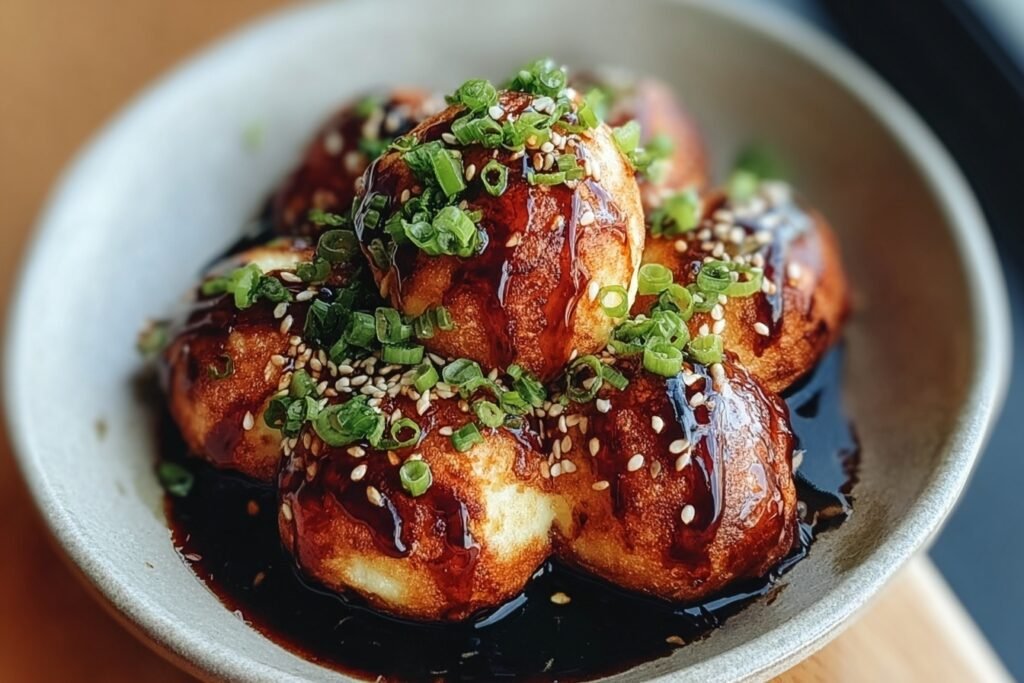
Why You’ll Love This Takoyaki
Takoyaki is a classic Japanese snack that brings together a crisp outside and a soft center in one bite. This takoyaki recipe works well for home cooks who want a dish that feels special without requiring complicated steps. With a little practice, these octopus balls can be made at home in about 15 to 20 minutes.
- Easy to prepare: This easy takoyaki recipe uses a simple wheat flour-based batter, a special molded pan, and quick cooking over medium heat. The process is straightforward once the pan is hot and the ingredients are ready.
- Good for many eating styles: While traditional japanese takoyaki uses octopus, the filling can be adjusted with cheese, vegetables, or other seafood for different preferences. That makes it useful for mixed households and busy families.
- Distinctive flavor: The mix of takoyaki sauce, mayonnaise, dried seaweed, and dried bonito flakes gives the dish its known savory taste. The pickled ginger and green onion add freshness and balance.
- Works as a snack or side dish: These balls can be served between meals, alongside rice, or as part of a larger spread. They are also a good choice for students, working professionals, and travelers who want a filling bite-sized dish.
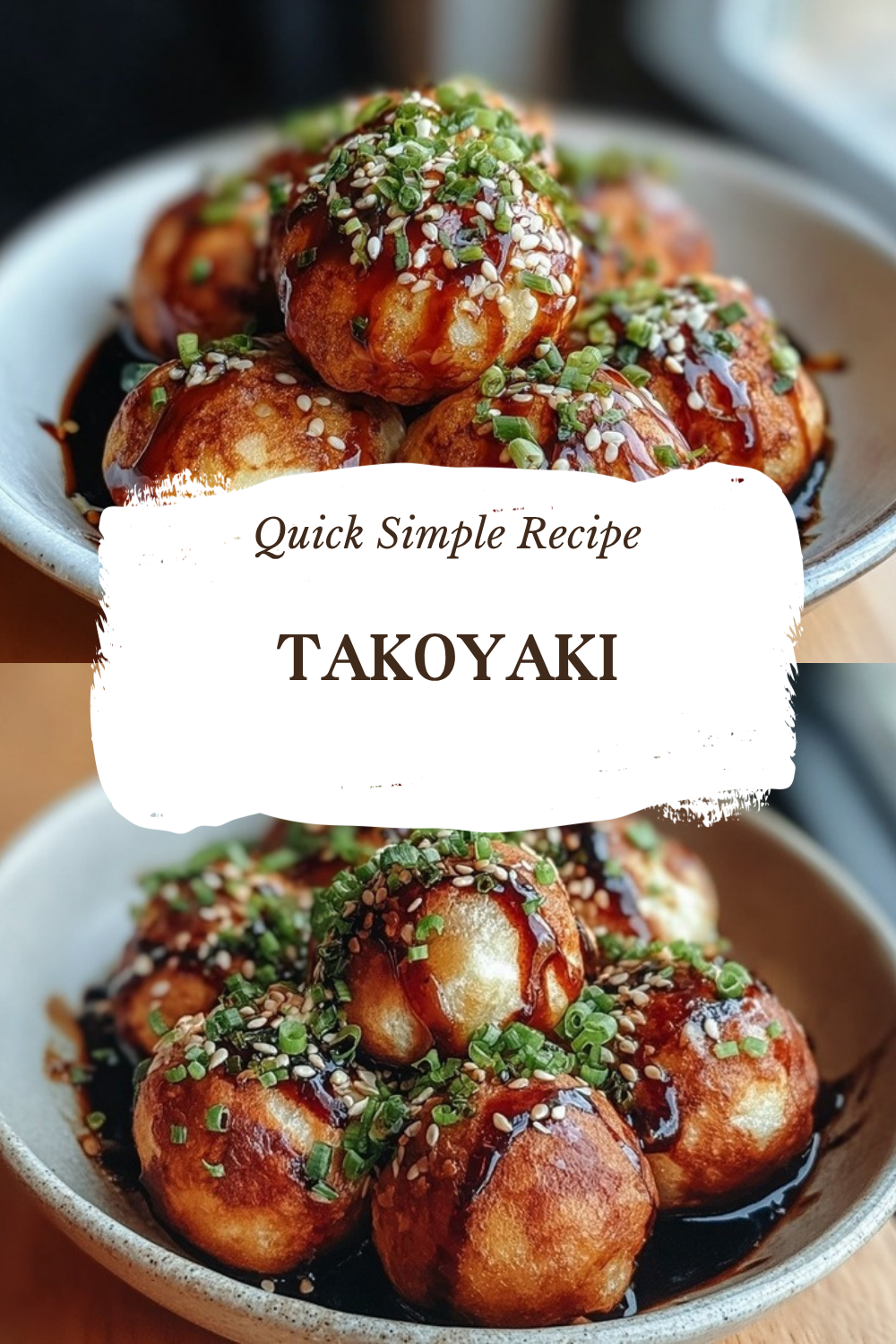
Takoyaki is known for its contrast of textures: crisp on the outside, soft in the center, and topped with savory sauces and flakes.
For readers who enjoy seafood dishes, you may also like this simple home recipe collection at Recipes Valentina for more everyday cooking ideas.
Jump to:
- Why You’ll Love This Takoyaki
- Essential Ingredients for Takoyaki
- Special Dietary Options
- How to Prepare the Perfect Takoyaki: Step-by-Step Guide
- First Step: Prepare the batter and fillings
- Second Step: Heat the takoyaki pan
- Third Step: Fill the molds with batter
- Fourth Step: Turn the balls as they cook
- Fifth Step: Add the toppings
- Final Step: Serve right away
- Dietary Substitutions to Customize Your Takoyaki
- Protein and Main Component Alternatives
- Vegetable, Sauce, and Seasoning Modifications
- Mastering Takoyaki: Advanced Tips and Variations
- Pro cooking techniques
- Flavor variations
- Presentation tips
- Make-ahead options
- How to Store Takoyaki: Best Practices
- Refrigeration
- Freezing
- Reheating
- Meal prep considerations
- FAQs: Frequently Asked Questions About Takoyaki
- What is takoyaki?
- Where did takoyaki come from?
- What are the main ingredients for takoyaki?
- How do you make takoyaki at home?
- Can you make takoyaki without a takoyaki pan?
- Takoyaki
- Ingredients
- Instructions
- Last Step:
- Notes
- Nutrition
- Did you make this recipe?
Essential Ingredients for Takoyaki
The ingredients for this takoyaki recipe made easy are simple and familiar. The batter forms the base, while the fillings and toppings give the dish its signature flavor. Because the original source does not specify exact measurements, the list below uses practical home-cooking amounts that match a small batch.
- 1 cup wheat flour-based batter – This is the base of the dish and gives the balls their structure.
- 1/2 cup minced or diced octopus – The traditional filling that gives japanese octopus balls recipe its name and flavor.
- 2 tablespoons tempura scraps – Adds a light crunch inside each ball.
- 2 tablespoons pickled ginger – Brings a sharp, bright note that balances the rich toppings.
- 2 tablespoons green onion, finely chopped – Adds freshness and color.
- 3 tablespoons takoyaki sauce – The savory-sweet topping that coats the cooked balls.
- 2 tablespoons mayonnaise – Adds creaminess and helps round out the flavor.
- 1 tablespoon dried seaweed – Usually aonori, used for a salty, ocean-like finish.
- 1 tablespoon dried bonito flakes – Adds smoky flavor and a traditional finish.
Special Dietary Options
- Vegan: Replace octopus with diced mushrooms, tofu, or plant-based seafood alternatives. Use vegan mayo and a plant-based sauce.
- Gluten-free: Choose a gluten-free flour blend and confirm that the sauce, tempura scraps, and seasonings are gluten-free.
- Low-calorie: Use less mayonnaise, reduce sauce, and add more green onion or vegetables for freshness.
The batter is the heart of homemade takoyaki, and the toppings matter just as much. If you like dishes with ginger, you may also enjoy this external resource on the benefits of ginger.
How to Prepare the Perfect Takoyaki: Step-by-Step Guide
Making homemade takoyaki is easier once you understand the rhythm of the cooking process. The key is to work quickly, keep the pan well heated, and turn the balls gently so they cook evenly on all sides. This crispy takoyaki recipe gives you a snack that is crisp outside and soft inside.
First Step: Prepare the batter and fillings
Start by mixing the wheat flour-based batter until it is smooth. Chop the octopus into small pieces, then prepare the tempura scraps, pickled ginger, and green onion. Keep the takoyaki sauce, mayonnaise, dried seaweed, and dried bonito flakes ready near the stove so you can finish the dish fast.
Second Step: Heat the takoyaki pan
Place a special molded takoyaki pan over medium heat. If you are using a non-stick pan, lightly oil each mold so the balls release easily. Heat the pan fully before adding the batter. A hot pan helps form a crisp outside and prevents sticking.
Third Step: Fill the molds with batter
Pour the batter into each mold until it is generously filled. The batter may spill a little over the edge, and that is normal. Add a small piece of octopus, a little tempura scraps, pickled ginger, and green onion into each mold. These fillings help build the classic flavor of japanese takoyaki.
Fourth Step: Turn the balls as they cook
As the batter begins to set, use a pick or skewer to turn each piece. Rotate them carefully so they form round balls. Keep turning them little by little until all sides are golden and cooked through. This step takes patience, but it is the part that gives octopus balls their shape.
Fifth Step: Add the toppings
When the takoyaki are cooked, brush them with takoyaki sauce. Add mayonnaise in a thin zigzag pattern, then sprinkle dried seaweed and dried bonito flakes on top. The heat from the balls will make the bonito flakes move slightly, which is part of the dish’s appeal.
Final Step: Serve right away
Serve the takoyaki hot while the outside is still crisp. They can be eaten as a snack, a side dish, or with rice. This takoyaki recipe is best enjoyed fresh from the pan, since the texture is strongest right after cooking.
Cook takoyaki while the pan is hot and keep turning them gently. That is the best way to get a crisp shell and a soft center.

Dietary Substitutions to Customize Your Takoyaki
Protein and Main Component Alternatives
If octopus is not available, or if you want a different filling, there are many ways to adjust this japanese octopus balls recipe. Shrimp is a common seafood option, and small cubes of cooked chicken or sausage can also work for a less traditional version. For a vegetarian version, use diced mushrooms, tofu, or cheese.
People who want a lighter dish can also reduce the amount of filling and add more green onion or ginger. Those who are following a seafood-free diet may still enjoy the same batter and cooking method with plant-based fillings. This keeps the recipe flexible for home cooks with different needs.
Vegetable, Sauce, and Seasoning Modifications
For extra color, add corn, cabbage, or finely chopped spinach. If you want a spicier flavor, mix a small amount of chili flakes or spicy seasoning into the batter. You can also replace the standard sauce with a lighter drizzle or a reduced-sugar version if you are watching calories.
The toppings can also be changed. Use less mayonnaise, more dried seaweed, or extra bonito flakes depending on your taste. For a stronger Japanese street food feel, keep the classic topping combination and serve the balls immediately after cooking.
Mastering Takoyaki: Advanced Tips and Variations
Pro cooking techniques
For the best crispy takoyaki recipe, keep the pan hot from the start and avoid crowding the molds. Add enough oil to help the balls rotate and brown evenly. Turn them in stages rather than trying to flip them all at once, because that helps keep the shape neat.
Use a pick or skewer that is sturdy enough to move the batter without tearing it. If the batter sticks, wait a few more seconds before turning again. A little patience goes a long way with takoyaki recipe made easy cooking.
Flavor variations
Cheese is a popular modern filling because it melts well and adds richness. Spicy seasonings can be mixed into the batter or sprinkled on top for more heat. Some cooks also add extra pickled ginger for a brighter bite. These changes make the recipe useful for families that like different flavors in one batch.
Presentation tips
Serve the balls on a wide plate so the toppings stay visible. A light drizzle of mayonnaise and sauce makes the dish look like classic street food. Finish with dried bonito flakes and dried seaweed just before serving for the most traditional appearance.
Make-ahead options
You can prepare the batter, chop the fillings, and mix the toppings ahead of time. That is helpful for busy parents, students, and working professionals who want dinner or a snack ready faster. Once everything is prepped, cooking the takoyaki only takes a short time.
How to Store Takoyaki: Best Practices
Takoyaki is best eaten fresh, but leftovers can still be stored safely with the right method. Because the dish contains batter, seafood, and toppings, it is important to cool it before storing. The texture will soften after storage, but it can still be enjoyable when reheated well.
Refrigeration
Place leftover takoyaki in an airtight container and refrigerate for up to 2 days. If possible, store the sauce and toppings separately so the balls do not become soggy. This helps preserve the texture a little better.
Freezing
For longer storage, freeze the cooked balls on a tray first, then move them to a freezer bag or container. They can be stored for about 1 month. Do not freeze with mayonnaise and bonito flakes already on top, since those are better added after reheating.
Reheating
Reheat takoyaki in an oven, toaster oven, or air fryer so the outside becomes crisp again. Microwaving is faster, but it makes the balls softer. Add the sauce and toppings after reheating for the best result.
Meal prep considerations
For meal prep, make a batch and store portions for quick snacks or side dishes. Takoyaki can also be packed for lunch if it is cooled properly first. This makes it a practical option for batch cooking.
FAQs: Frequently Asked Questions About Takoyaki
What is takoyaki?
Where did takoyaki come from?
What are the main ingredients for takoyaki?
How do you make takoyaki at home?
Can you make takoyaki without a takoyaki pan?
Takoyaki
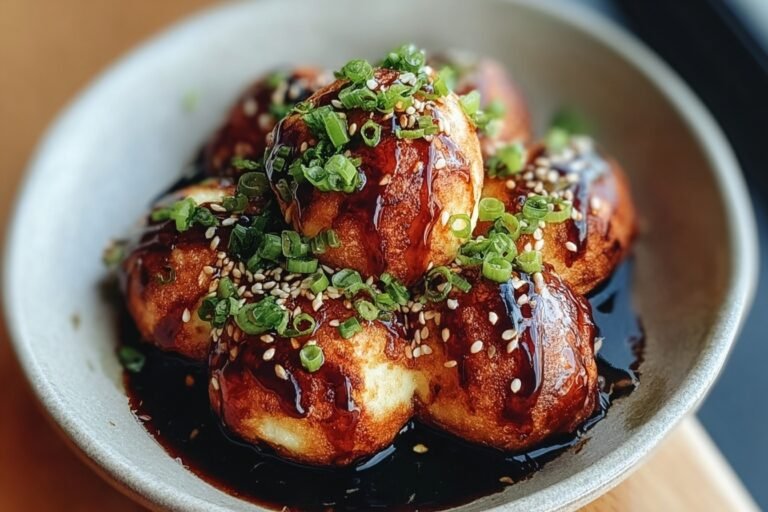
🐙 Crispy golden shells burst with tender octopus, green onion, and tempura in savory batter – iconic Japanese street food magic!
🍡 Fun easy home takoyaki pan method yields perfect balls every time – addictive snack for parties or cravings.
- Total Time: 50 minutes
- Yield: 24 balls (4 servings)
Ingredients
– 1 cup wheat flour-based batter
– 1/2 cup minced or diced octopus
– 2 tablespoons tempura scraps
– 2 tablespoons pickled ginger
– 2 tablespoons green onion, finely chopped
– 3 tablespoons takoyaki sauce
– 2 tablespoons mayonnaise
– 1 tablespoon dried seaweed
– 1 tablespoon dried bonito flakes
Instructions
1-First Step: Prepare the batter and fillings Start by mixing the wheat flour-based batter until it is smooth. Chop the octopus into small pieces, then prepare the tempura scraps, pickled ginger, and green onion. Keep the takoyaki sauce, mayonnaise, dried seaweed, and dried bonito flakes ready near the stove so you can finish the dish fast.
2-Second Step: Heat the takoyaki pan Place a special molded takoyaki pan over medium heat. If you are using a non-stick pan, lightly oil each mold so the balls release easily. Heat the pan fully before adding the batter. A hot pan helps form a crisp outside and prevents sticking.
3-Third Step: Fill the molds with batter Pour the batter into each mold until it is generously filled. The batter may spill a little over the edge, and that is normal. Add a small piece of octopus, a little tempura scraps, pickled ginger, and green onion into each mold. These fillings help build the classic flavor of japanese takoyaki.
4-Fourth Step: Turn the balls as they cook As the batter begins to set, use a pick or skewer to turn each piece. Rotate them carefully so they form round balls. Keep turning them little by little until all sides are golden and cooked through. This step takes patience, but it is the part that gives octopus balls their shape.
5-Fifth Step: Add the toppings When the takoyaki are cooked, brush them with takoyaki sauce. Add mayonnaise in a thin zigzag pattern, then sprinkle dried seaweed and dried bonito flakes on top. The heat from the balls will make the bonito flakes move slightly, which is part of the dish’s appeal.
6-Final Step: Serve right away Serve the takoyaki hot while the outside is still crisp. They can be eaten as a snack, a side dish, or with rice. This takoyaki recipe is best enjoyed fresh from the pan, since the texture is strongest right after cooking.
Last Step:
Please leave a rating and comment letting us know how you liked this recipe! This helps our business to thrive and continue providing free, high-quality recipes for you.Notes
🔥 Oil molds generously and keep medium heat for crispy exteriors without burning.
🐙 Use pre-boiled octopus; push fillings deep with toothpick for even distribution.
⏱️ Batter consistency like pancake batter; rest hydrates flour for fluffier balls.
- Prep Time: 15 minutes
- Batter Rest: 15 minutes
- Cook Time: 20 minutes
- Category: Appetizers
- Method: Pan Fry
- Cuisine: Japanese
Nutrition
- Serving Size: 6 balls
- Calories: 320
- Sugar: 4g
- Sodium: 850mg
- Fat: 12g
- Saturated Fat: 2.5g
- Unsaturated Fat: 9.5g
- Trans Fat: 0g
- Carbohydrates: 42g
- Fiber: 2g
- Protein: 14g
- Cholesterol: 95mg