
Why You’ll Love This Red Curry Salmon
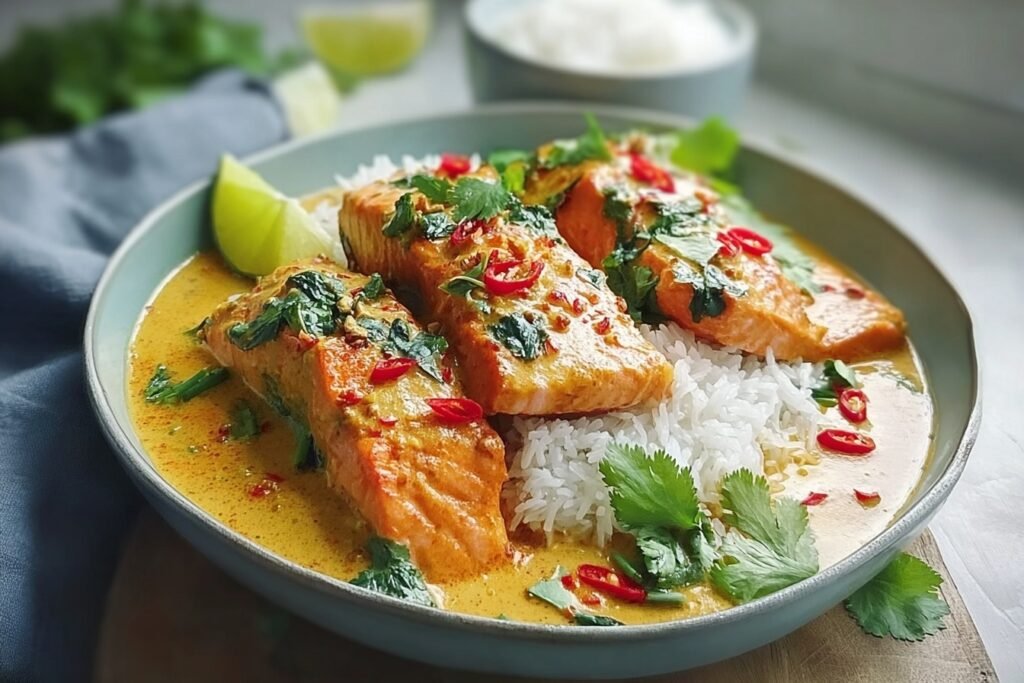
This Red Curry Salmon recipe brings big flavor to the table with very little fuss. It is the kind of meal that feels special enough for guests, yet simple enough for a Tuesday night. If you want a cozy dinner with creamy sauce, tender fish, and fresh herbs, this one hits the spot.
- Fast and easy: With just 15 minutes of prep and 20 minutes of cooking, dinner is ready in 35 minutes. The steps are simple, and the skillet does most of the work.
- Good for you: Salmon gives you protein and healthy fats, while broccolini and carrots add color, fiber, and vitamins. For more on the benefits of salmon, see this helpful guide to salmon nutrition.
- Flexible: You can swap the vegetables, adjust the spice, or even use soy sauce instead of fish sauce if needed. That makes it a good fit for busy families and different eating styles.
- Bold flavor: Thai red curry paste, coconut milk, garlic, lime, basil, and cilantro create a rich sauce with sweet, spicy, and fresh notes all at once.
Tip: This is a great recipe when you want a dinner that feels restaurant-style without requiring a lot of skill or cleanup.
If you enjoy easy seafood dinners, you may also like our Thai basil chicken recipe for another quick, flavor-packed meal.
Jump to:
- Why You’ll Love This Red Curry Salmon
- Essential Ingredients for Red Curry Salmon
- Special Dietary Options
- How to Prepare the Perfect Red Curry Salmon: Step-by-Step Guide
- First Step: Prepare the salmon
- Second Step: Sear the salmon
- Third Step: Build the curry base
- Fourth Step: Simmer the sauce and vegetables
- Fifth Step: Finish the salmon in the sauce
- Final Step: Garnish and serve
- Nutrition Information for Red Curry Salmon
- Dietary Substitutions to Customize Your Red Curry Salmon
- Protein and Main Component Alternatives
- Vegetable, Sauce, and Seasoning Modifications
- Mastering Red Curry Salmon: Advanced Tips and Variations
- Pro cooking techniques
- Flavor variations
- Presentation tips
- Make-ahead options
- How to Store Red Curry Salmon: Best Practices
- Refrigeration
- Freezing
- Reheating
- Meal prep considerations
- FAQs: Frequently Asked Questions About Red Curry Salmon
- What is red curry salmon?
- How do you make red curry salmon?
- What ingredients are needed for red curry salmon?
- Can you make red curry salmon with frozen salmon?
- How do you store leftover red curry salmon?
- Red Curry Salmon
- Ingredients
- Instructions
- Last Step:
- Notes
- Nutrition
- Did you make this recipe?
Essential Ingredients for Red Curry Salmon
Here is the full ingredient list for this Red Curry Salmon recipe. Every item is included with the exact measurement so you can shop and cook with confidence.
- 1 pound fresh salmon – Cut into 4 pieces for fast, even cooking.
- Salt and pepper to taste – Adds simple seasoning to the fish.
- 1 tablespoon olive oil – Helps the salmon sear in the skillet.
- 1 tablespoon butter – Adds richness and helps build flavor.
- 1/2 medium onion, chopped – Creates a sweet base for the curry sauce.
- 2 cloves garlic, minced – Brings a savory aroma and depth.
- 2 heaping tablespoons Thai red curry paste – The main flavor driver for the sauce.
- 1/2 teaspoon fish sauce, optional – Adds salty, umami flavor.
- 1 can 13.5 ounce full-fat coconut milk – Makes the sauce creamy and rich.
- 1/2 teaspoon brown sugar – Balances the heat and acidity.
- 1/2 cup matchstick cut carrots – Adds sweetness and color.
- 1 heaping cup chopped broccolini – Brings a tender-crisp bite and a fresh green finish.
- 1 teaspoon lime juice – Lifts the sauce with bright acidity.
- 2 tablespoons torn or chopped fresh basil – Adds a fragrant herbal note.
- 2 tablespoons chopped fresh cilantro – Gives the dish a fresh finish.
Special Dietary Options
- Vegan: Swap salmon for extra-firm tofu or chickpeas, and replace fish sauce with soy sauce or coconut aminos.
- Gluten-free: This dish is naturally gluten-free as written, but always check your curry paste and fish sauce label.
- Low-calorie: Use less butter, reduce coconut milk slightly, or add more broccolini and carrots for volume.
How to Prepare the Perfect Red Curry Salmon: Step-by-Step Guide
This easy skillet meal comes together quickly, so it helps to have everything ready before you turn on the heat. The curry sauce moves fast once the garlic hits the pan, and the salmon cooks in just minutes. If you have your vegetables chopped and your herbs nearby, the process feels smooth from start to finish.
First Step: Prepare the salmon
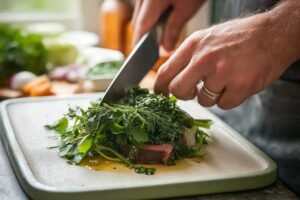
Cut the 1 pound fresh salmon into 4 even pieces. Pat each piece dry with paper towels, then season both sides with salt and pepper. Dry salmon sears better and is less likely to stick to the pan. If your fillets have skin, leave it on for cooking now, since it helps protect the fish and gives you better texture.
Second Step: Sear the salmon
Heat the 1 tablespoon olive oil and 1 tablespoon butter in a skillet over medium-high heat. When the pan is hot, place the salmon skin-side down and cook for about 5 minutes. You want the skin to crisp and the fish to release more easily. Flip the salmon and cook for another 2 to 3 minutes. The fish should be nearly cooked through, then transfer it to a plate. If you want, remove the skin after it has cooled a bit.
Third Step: Build the curry base
Spoon out extra oil from the skillet, leaving about 1 tablespoon behind. Add the 1/2 medium onion, chopped, and sauté for about 3 minutes until it softens. Stir in the 2 cloves garlic, minced, and 2 heaping tablespoons Thai red curry paste. Cook for 1 minute, stirring often, so the curry paste gets fragrant and the garlic does not burn.
Fourth Step: Simmer the sauce and vegetables
Add the 1/2 teaspoon fish sauce, optional, 1 can 13.5 ounce full-fat coconut milk, 1/2 teaspoon brown sugar, 1/2 cup matchstick cut carrots, and 1 heaping cup chopped broccolini. Stir everything together and let it simmer for about 5 minutes. The vegetables should become tender-crisp, meaning soft enough to bite easily but still bright and fresh. If you like a little more heat, this is a good time to add fresh chilis or red pepper flakes.
Fifth Step: Finish the salmon in the sauce
Stir in the 1 teaspoon lime juice to brighten the curry. Return the salmon to the pan and warm it through gently for a minute or two. Try not to overcook it at this stage, since the fish is already mostly done. Taste the sauce and add more salt or pepper if needed.
Final Step: Garnish and serve
Top the dish with 2 tablespoons torn or chopped fresh basil and 2 tablespoons chopped fresh cilantro. Serve hot and spoon plenty of sauce over the fish and vegetables. This meal is lovely with jasmine rice, rice noodles, or even a simple side salad. For another salmon idea that works well for busy nights, take a look at our salmon storage guide before planning leftovers.
| Step | Time | What to Watch For |
|---|---|---|
| Prep salmon and vegetables | 15 minutes | Salmon should be dry and vegetables chopped small |
| Sear salmon | 7 to 8 minutes | Skin should crisp and fish should release from the pan |
| Make curry sauce | 6 to 8 minutes | Paste should smell fragrant and vegetables stay tender-crisp |
| Finish and garnish | 2 minutes | Salmon should be warmed through, not overcooked |
Nutrition Information for Red Curry Salmon
Here is the nutrition estimate for one serving of this Red Curry Salmon recipe:
- Calories: 458kcal
- Carbohydrates: 12g
- Protein: 27g
- Fat: 35g
- Saturated Fat: 22g
- Cholesterol: 70mg
- Sodium: 176mg
- Potassium: 837mg
- Fiber: 2g
- Sugar: 4g
- Vitamin A: 5392IU
- Vitamin C: 59mg
- Calcium: 97mg
- Iron: 5mg
These numbers make this recipe a solid choice for people who want a filling dinner with good protein and satisfying flavor. Salmon gives you omega-3 fats, while the vegetables add color and a boost of nutrients. Garlic also brings its own wellness perks, which you can read about in this overview of garlic benefits.

Dietary Substitutions to Customize Your Red Curry Salmon
Protein and Main Component Alternatives
If you do not have salmon on hand, there are still plenty of ways to make this meal work. Thick white fish like cod or halibut can stand in well, though they may need a slightly shorter cooking time. Shrimp also works beautifully and cooks even faster. For a plant-based version, use tofu cubes or chickpeas and simmer them in the sauce until heated through.
Vegetable, Sauce, and Seasoning Modifications
You can change the vegetables based on what is in your fridge. Peas, bell peppers, snap peas, or baby spinach all fit nicely here. If you want a spicier curry, add fresh chilis or red pepper flakes. If you prefer a milder meal, use a little less curry paste and skip the fish sauce. Soy sauce is a good swap if you want a similar savory flavor without fish sauce. Cut vegetables small so they cook quickly and stay lightly crisp.
Mastering Red Curry Salmon: Advanced Tips and Variations
Once you make this dish once, it becomes easier to tweak it for your own kitchen. A few small habits can make the biggest difference in taste and texture. The good news is that you do not need fancy gear or hard-to-find ingredients to get a great result.
Pro cooking techniques
Start with dry salmon and a hot pan. That combo helps the fish sear instead of steam. If your salmon has skin, cook skin-side down first and do not move it too soon. This lets the skin crisp and helps the fish lift away more cleanly. When making the curry base, let the red curry paste cook for a minute before adding the coconut milk so the flavor blooms in the pan.
Flavor variations
You can shift the flavor in a few easy ways. Add a splash more lime juice for brightness, or stir in a little extra brown sugar if you want a softer finish. Toss in bell peppers for sweetness or peas for a pop of green. If you like more herb flavor, use extra basil or cilantro at the end.
Presentation tips
For a pretty plate, place the salmon on top of the vegetables and spoon the sauce around it. A few basil leaves and a sprinkle of cilantro make the dish look fresh and inviting. Serve it in shallow bowls if you want the curry sauce to stay front and center.
Make-ahead options
You can chop the onion, carrots, broccolini, garlic, basil, and cilantro earlier in the day. The salmon can also be portioned ahead of time and kept chilled until dinner. That way, when it is time to cook, the recipe moves quickly from skillet to table.
How to Store Red Curry Salmon: Best Practices
Leftovers keep well, especially because the creamy sauce helps protect the fish from drying out. Let the curry cool before storing it so the container does not trap too much steam. Then pack it into airtight containers and place it in the fridge.
Refrigeration
Store leftover Red Curry Salmon in the refrigerator for up to 3 days. Keep the fish and sauce together so the salmon stays moist. If possible, use a shallow container so it cools quickly and evenly.
Freezing
You can freeze the curry for up to 2 months. Portion it into freezer-safe containers or bags, and label them with the date. The texture of the salmon may soften a little after thawing, but the flavor will still be good. For the best result, freeze in smaller portions so you only thaw what you need.
Reheating
Reheat gently on the stovetop over low heat with a splash of coconut milk or water. You can also use the microwave in short bursts, covered loosely. Try not to boil the sauce, since that can dry out the fish and make the coconut milk separate.
Meal prep considerations
If you are making this for meal prep, keep rice or noodles in a separate container. That helps everything stay fresh longer. The curry also works well for lunch the next day, making it a smart choice for working professionals and students.
FAQs: Frequently Asked Questions About Red Curry Salmon
What is red curry salmon?
How do you make red curry salmon?
What ingredients are needed for red curry salmon?
Can you make red curry salmon with frozen salmon?
How do you store leftover red curry salmon?
Red Curry Salmon
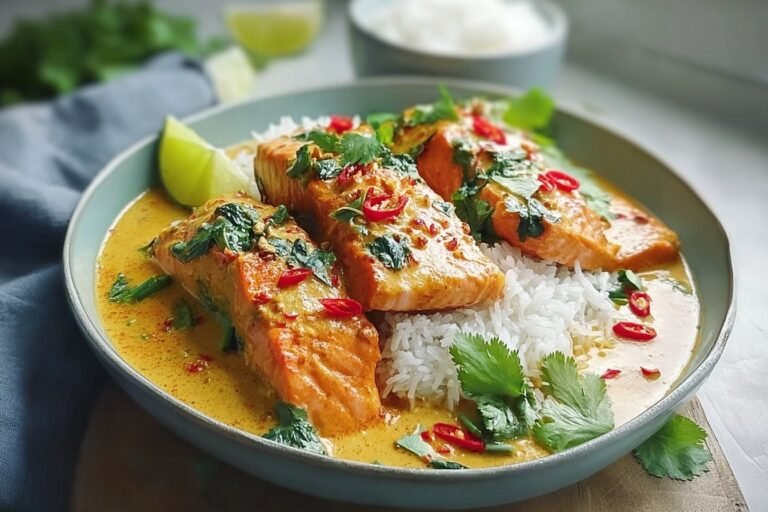
🐟 Succulent seared salmon in creamy coconut red curry – omega-rich healthy glow meal!
🥥 Quick Thai-inspired one-pan wonder with crisp veggies & herbs – flavorful family favorite.
- Total Time: 35 minutes
- Yield: 4 servings
Ingredients
– 1 pound fresh salmon
– Salt and pepper to taste
– 1 tablespoon olive oil
– 1 tablespoon butter
– 1/2 medium onion, chopped
– 2 cloves garlic, minced
– 2 heaping tablespoons Thai red curry paste
– 1/2 teaspoon fish sauce, optional
– 1 can 13.5 ounce full-fat coconut milk
– 1/2 teaspoon brown sugar
– 1/2 cup matchstick cut carrots
– 1 heaping cup chopped broccolini
– 1 teaspoon lime juice
– 2 tablespoons torn or chopped fresh basil
– 2 tablespoons chopped fresh cilantro
Instructions
1-First Step: Prepare the salmon Cut the 1 pound fresh salmon into 4 even pieces. Pat each piece dry with paper towels, then season both sides with salt and pepper. Dry salmon sears better and is less likely to stick to the pan. If your fillets have skin, leave it on for cooking now, since it helps protect the fish and gives you better texture.
2-Second Step: Sear the salmon Heat the 1 tablespoon olive oil and 1 tablespoon butter in a skillet over medium-high heat. When the pan is hot, place the salmon skin-side down and cook for about 5 minutes. You want the skin to crisp and the fish to release more easily. Flip the salmon and cook for another 2 to 3 minutes. The fish should be nearly cooked through, then transfer it to a plate. If you want, remove the skin after it has cooled a bit.
3-Third Step: Build the curry base Spoon out extra oil from the skillet, leaving about 1 tablespoon behind. Add the 1/2 medium onion, chopped, and sauté for about 3 minutes until it softens. Stir in the 2 cloves garlic, minced, and 2 heaping tablespoons Thai red curry paste. Cook for 1 minute, stirring often, so the curry paste gets fragrant and the garlic does not burn.
4-Fourth Step: Simmer the sauce and vegetables Add the 1/2 teaspoon fish sauce, optional, 1 can 13.5 ounce full-fat coconut milk, 1/2 teaspoon brown sugar, 1/2 cup matchstick cut carrots, and 1 heaping cup chopped broccolini. Stir everything together and let it simmer for about 5 minutes. The vegetables should become tender-crisp, meaning soft enough to bite easily but still bright and fresh. If you like a little more heat, this is a good time to add fresh chilis or red pepper flakes.
5-Fifth Step: Finish the salmon in the sauce Stir in the 1 teaspoon lime juice to brighten the curry. Return the salmon to the pan and warm it through gently for a minute or two. Try not to overcook it at this stage, since the fish is already mostly done. Taste the sauce and add more salt or pepper if needed.
6-Final Step: Garnish and serve Top the dish with 2 tablespoons torn or chopped fresh basil and 2 tablespoons chopped fresh cilantro. Serve hot and spoon plenty of sauce over the fish and vegetables. This meal is lovely with jasmine rice, rice noodles, or even a simple side salad. For another salmon idea that works well for busy nights, take a look at our salmon storage guide before planning leftovers.
Last Step:
Please leave a rating and comment letting us know how you liked this recipe! This helps our business to thrive and continue providing free, high-quality recipes for you.Notes
🥥 Full-fat coconut milk essential for luxurious creamy sauce.
🐟 Pat salmon very dry + hot pan = perfect sear, no sticking.
🌶️ Swap broccolini for peas/bell peppers; add chili for extra heat.
- Prep Time: 15 minutes
- Cook Time: 20 minutes
- Category: Main Dishes
- Method: Stovetop
- Cuisine: Thai
- Diet: Gluten Free
Nutrition
- Serving Size: 1 serving
- Calories: 458
- Sugar: 4g
- Sodium: 176mg
- Fat: 35g
- Saturated Fat: 22g
- Unsaturated Fat: 13g
- Trans Fat: 0g
- Carbohydrates: 12g
- Fiber: 2g
- Protein: 27g
- Cholesterol: 70mg