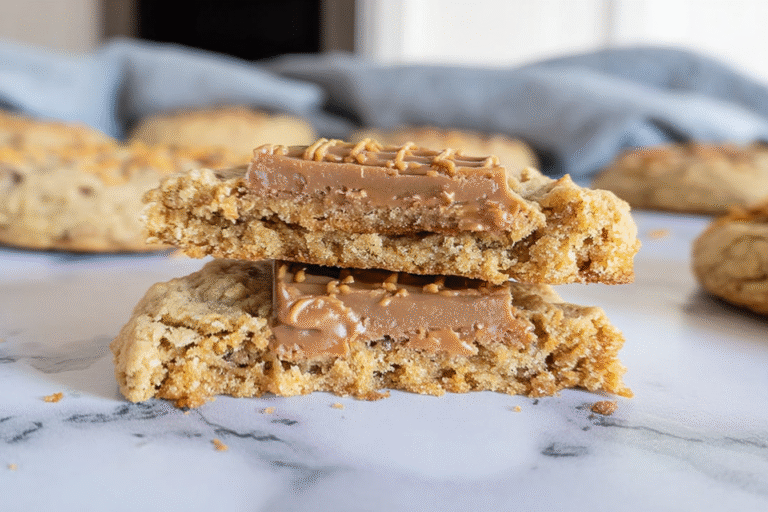
Ingredients
– 1 cup Biscoff spread for unique caramel-cinnamon flavor and moist texture
– 1½ cups rolled oats for structure, chewiness, and fiber
– 1 cup all-purpose flour for base structure of the cookie dough
– ½ cup softened butter for rich, tender crumb and spreading during baking
– ¾ cup brown sugar for moisture and depth of flavor with its molasses content
– ¼ cup white sugar for slight crispiness on the edges of the cookies
– 1 large egg for binding the ingredients together and adding structure
– 1 teaspoon vanilla extract for enhancing the overall flavor profile
– 1 teaspoon baking soda for helping the cookies rise and spread properly
– ½ teaspoon cinnamon for complementing the natural spices in the Biscoff spread
– ¼ teaspoon salt for balancing sweetness and enhancing all the flavors
Instructions
1-First Step: Begin by preheating your oven to 350°F (175°C) and preparing your baking sheets. Line two large baking sheets with parchment paper or silicone baking mats to prevent the cookies from sticking and make cleanup easier. Having your oven ready before you start mixing ensures the dough won’t sit too long before baking, which could affect its texture. Make sure all your ingredients are at room temperature, especially the butter and Biscoff spread. This helps them cream together more easily, creating a uniform texture in your cookie dough. Gather all your measuring tools and mixing bowls to have everything within reach before you begin.
2-Second Step: In a large mixing bowl, cream together ½ cup softened butter and ½ cup Biscoff spread until smooth and well combined. This should take about 1-2 minutes with an electric mixer on medium speed. The mixture should have a creamy, uniform consistency without large lumps.
3-Third Step: Add ¾ cup brown sugar and ¼ cup white sugar to the butter mixture. Continue beating on medium speed for 2-3 minutes until the mixture becomes light and fluffy. This process incorporates air into the dough, which helps create a lighter texture in the baked cookies. Scrape down the sides of the bowl occasionally to ensure all ingredients are well incorporated.
4-Fourth Step: Beat in 1 egg and 1 teaspoon vanilla extract until fully combined. The mixture may look slightly curdled at this point, which is normal. Continue mixing until smooth and glossy. This step adds moisture and richness to the cookie dough while helping to bind the ingredients together.
5-Fifth Step: In a separate medium bowl, whisk together 1 cup all-purpose flour, 1 teaspoon baking soda, ½ teaspoon cinnamon, and ¼ teaspoon salt. This ensures the leavening agent and spices are evenly distributed throughout the flour, preventing any clumps of baking soda or cinnamon in your finished cookies.
6-Sixth Step: Gradually add the dry ingredient mixture to the wet ingredients, mixing on low speed just until combined. Be careful not to overmix at this stage, as overworking the dough can develop gluten and result in tough cookies. The dough should be thick but still pliable.
7-Seventh Step: Gently fold in 1½ cups rolled oats using a spatula or wooden spoon. Mix just until the oats are evenly distributed throughout the dough. The oats will provide that classic chewy texture and nutritional benefits that make these cookies special.
8-Eighth Step: Using a cookie scoop or tablespoon, portion the dough into balls approximately 2 tablespoons each. Place them on the prepared baking sheets, leaving about 2 inches of space between each cookie to allow for spreading. If you prefer thicker cookies, you can slightly flatten the dough balls with the palm of your hand. For extra flavor, you can optionally press a small indent in the center of each dough ball and add a small dollop of additional Biscoff spread before baking. This creates a delightful surprise center that melts into the cookie as it bakes.
9-Ninth Step: Bake the cookies in the preheated oven for 10-12 minutes, or until the edges are lightly golden but the centers still appear slightly soft. Keep a close eye on them during the last few minutes of baking, as they can go from perfectly done to overbaked quickly. The cookies will continue to cook slightly as they cool on the baking sheet.
10-Final Step: Allow the cookies to cool on the baking sheet for 5 minutes. This resting period is crucial as it allows them to set and firm up slightly without becoming too hard. After 5 minutes, carefully transfer the cookies to a wire rack to cool completely. This air circulation helps them maintain their perfect texture crisp edges with soft, chewy centers.
Last Step:
Please leave a rating and comment letting us know how you liked this recipe! This helps our business to thrive and continue providing free, high-quality recipes for you.Notes
❄️ Chill dough for thicker, chewier cookies that hold shape better.
🍪 Underbake slightly for ultimate soft centers – they firm up as cooling.
💾 Freeze extra dough balls for fresh-baked cookies anytime.
- Prep Time: 15 minutes
- Chill: 30 minutes
- Cook Time: 12 minutes
- Category: Dessert
- Method: Baking
- Cuisine: American
- Diet: Vegetarian
Nutrition
- Serving Size: 1 cookie
- Calories: 190 calories
- Sugar: 15g
- Sodium: 140mg
- Fat: 10g
- Saturated Fat: 5g
- Unsaturated Fat: 4g
- Trans Fat: 0g
- Carbohydrates: 23g
- Fiber: 2g
- Protein: 3g
- Cholesterol: 25mg