Why You’ll Love These Mango Salsa Salmon Bowls
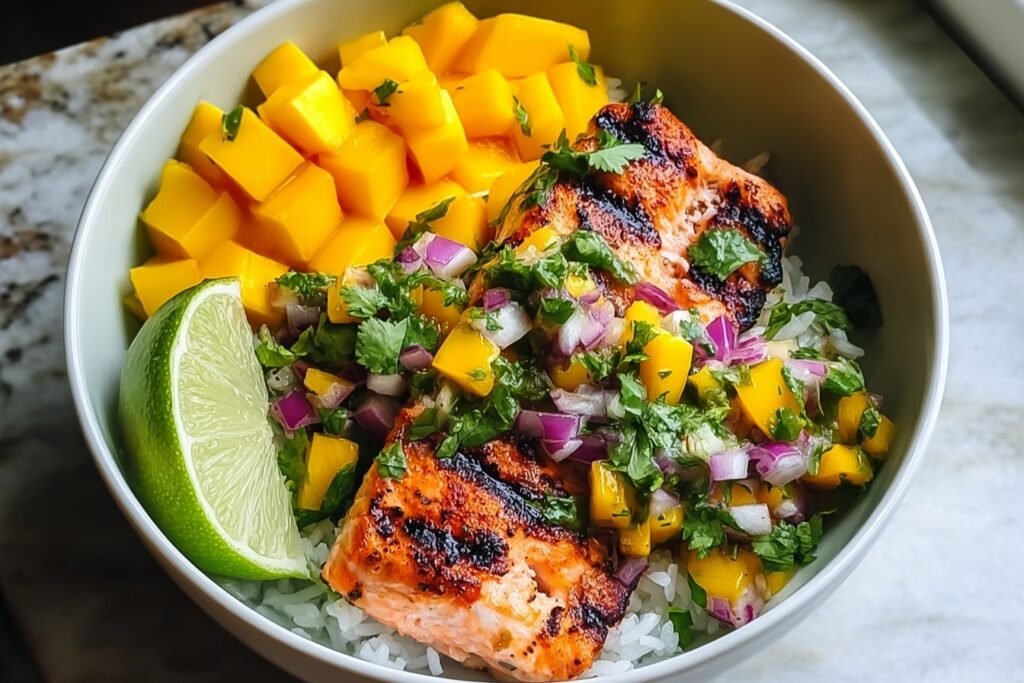
If you are craving a dinner that feels fresh, fast, and a little bit fancy without the fuss, Mango Salsa Salmon Bowls are about to become a regular in your kitchen. This recipe brings together juicy salmon, sweet mango, creamy avocado, and fluffy rice in one colorful bowl. It is the kind of meal that looks impressive, tastes bright, and still fits into a busy weeknight.
- Quick and easy: The whole dish comes together in about 25 minutes, with just 15 minutes of prep and 10 minutes of cook time. That makes it a solid pick for busy parents, students, and working professionals who need dinner on the table fast.
- Good-for-you ingredients: Salmon brings protein and healthy fats, while mango and avocado add fiber, vitamins, and that fresh-from-the-sun flavor. For more on salmon’s nutrition perks, check out this guide to the health benefits of salmon.
- Easy to adapt: You can swap rice for cauliflower rice, use frozen mango if that is what you have, or add veggies like roasted asparagus or mushrooms. It works well for all kinds of eaters.
- Big flavor, simple steps: The smoky spice rub on the salmon plus the sweet and tangy mango avocado salsa gives every bite a bold, sunny flavor that keeps you coming back for more.
Best of all, this bowl feels like a treat, but it is simple enough for a regular Tuesday night.
If you love easy seafood dinners, you may also enjoy this grilled salmon bowl idea from Recipes Valentina.
Jump to:
- Why You’ll Love These Mango Salsa Salmon Bowls
- Essential Ingredients for Mango Salsa Salmon Bowls
- Salmon and Spice Rub
- Mango Avocado Salsa
- For Serving
- Special Dietary Options
- How to Prepare the Perfect Mango Salsa Salmon Bowls: Step-by-Step Guide
- First Step: Mix the salsa
- Second Step: Cook the rice
- Third Step: Preheat the oven and prep the pan
- Fourth Step: Make the spice paste
- Fifth Step: Season the salmon
- Sixth Step: Bake until flaky
- Seventh Step: Assemble the bowls
- Protein and Main Component Alternatives
- Salmon swaps
- Base swaps
- Vegetable, Sauce, and Seasoning Modifications
- Vegetable add-ins
- Sauce and seasoning changes
- Mastering Mango Salsa Salmon Bowls: Advanced Tips and Variations
- Pro cooking techniques
- Flavor variations
- Presentation tips
- Make-ahead options
- How to Store Mango Salsa Salmon Bowls: Best Practices
- Refrigeration
- Freezing
- Reheating
- Meal prep considerations
- FAQs: Frequently Asked Questions About Mango Salsa Salmon Bowls
- How do I know when salmon is done cooking in mango salsa salmon bowls?
- How much salmon do I need for mango salsa salmon bowls?
- Can I use frozen mango for mango salsa salmon bowls?
- What can I add to mango salsa salmon bowls?
- Can I air fry salmon for mango salsa salmon bowls?
- Mango Salsa Salmon Bowls
- Ingredients
- Instructions
- Last Step:
- Notes
- Nutrition
- Did you make this recipe?
Essential Ingredients for Mango Salsa Salmon Bowls
Here is everything you need for this recipe. The ingredient list is broken into three parts so it is easy to follow while you cook.
Salmon and Spice Rub
- 1 to 2 pounds fresh salmon – the star of the dish, rich and flaky when baked.
- 2 tablespoons brown sugar – adds a little sweetness and helps form a caramelized crust.
- 2 teaspoons smoked paprika – gives the salmon that smoky BBQ-style flavor.
- 2 teaspoons onion powder – rounds out the seasoning mix with savory depth.
- 1 teaspoon garlic powder – adds classic garlic flavor without extra chopping.
- 1/2 teaspoon chili powder – brings gentle warmth.
- 1/2 teaspoon kosher salt – seasons the fish and boosts all the other flavors.
- 2 tablespoons olive oil – turns the spices into a paste and helps the rub stick.
Mango Avocado Salsa
- 2 mangoes, diced – sweet, juicy, and the key to the fresh salsa flavor.
- 1 avocado, diced – adds creaminess and balances the tang.
- 1/4 cup minced cilantro – brings a fresh herbal note.
- 1/4 cup minced red onion – adds crunch and bite.
- 1/2 jalapeño, minced – gives a little heat without overpowering the bowl.
- 1 teaspoon honey – smooths out the lime and spice.
- 2 tablespoons lime juice plus 1 teaspoon lime zest – adds bright, zippy flavor.
- Salt to taste – brings the salsa into balance.
For Serving
- 1 1/2 cups rice – the cozy base that soaks up all the saucy goodness.
Special Dietary Options
- Vegan: Swap the salmon for roasted tofu, tempeh, or chickpeas. Keep the salsa as written, and serve over rice or quinoa.
- Gluten-free: This recipe is naturally gluten-free as written, just check that your spices and brown sugar are certified gluten-free if needed.
- Low-calorie: Use cauliflower rice instead of regular rice, and keep the avocado portion a little smaller if you want a lighter bowl.
| Ingredient | Why it matters | Easy swap |
|---|---|---|
| Salmon | Provides protein and rich texture | Tofu, chickpeas, or shrimp |
| Mango | Adds sweetness and freshness | Frozen mango, pineapple, or peach |
| Rice | Makes the bowl filling | Cauliflower rice or quinoa |
For more fruit-forward bowl inspiration, take a look at this mango chicken bowl recipe.
How to Prepare the Perfect Mango Salsa Salmon Bowls: Step-by-Step Guide
This recipe is simple, but a few small details make it taste like something you would order at a great café. Follow these steps and you will end up with tender salmon, bright salsa, and a bowl that feels balanced from top to bottom.
First Step: Mix the salsa
Start with the mango avocado salsa so the flavors have a moment to mingle while you cook the salmon. In a medium bowl, combine the diced mangoes, diced avocado, minced cilantro, minced red onion, minced jalapeño, honey, lime juice, lime zest, and salt. Stir gently so the avocado stays in nice chunks. Set the bowl aside.
If your mangoes are very ripe, handle them carefully so they do not turn mushy. The salsa should look colorful and chunky, not mashed. That fresh texture is part of what makes Mango Salsa Salmon Bowls so fun to eat.
Second Step: Cook the rice
Cook 1 1/2 cups rice according to the package instructions. You can use white rice, brown rice, or another favorite grain. Keep it warm until you are ready to build the bowls. If the rice finishes early, fluff it with a fork and cover it so it stays soft.
Third Step: Preheat the oven and prep the pan
Set your oven to 475°F. This high heat helps the salmon cook quickly and get a nice finish without drying out. Line a baking sheet with foil for easier cleanup. A foil-lined pan also helps prevent the sugary spice rub from sticking too much.
Fourth Step: Make the spice paste
In a small bowl, mix the brown sugar, smoked paprika, onion powder, garlic powder, chili powder, kosher salt, and olive oil until it forms a thick paste. It should look dark, smooth, and a little glossy. If the paste seems too dry, add a tiny splash more oil.
This spice mix is what gives the salmon its BBQ-style flavor. The brown sugar helps create that sweet-savory crust, while the smoked paprika brings in the smoky note people love.
Fifth Step: Season the salmon
Place the salmon skin-side down on the lined baking sheet. Rub the spice paste over the top of the fish in an even layer. Try to coat the surface well so every slice gets flavor. If your salmon is in one large fillet, that works fine. If it is cut into smaller portions, coat each piece the same way.
At this point, the salmon is ready for the oven. Since the rub contains sugar, keep an eye on it as it bakes so the top does not darken too much.
Sixth Step: Bake until flaky
Bake the salmon for 6 to 12 minutes, depending on the thickness and how done you like it. Thinner fillets cook fast, while thicker pieces need a little more time. Start checking around the 6 to 8 minute mark. The salmon is ready when it turns opaque and flakes easily with a fork.
For food safety, the internal temperature should reach 145°F, but many cooks prefer to pull it a little earlier for a juicier center if the fish is fresh. Do not overbake it, or the salmon can turn dry fast. If you like, you can let it rest for 2 minutes after baking.
Seventh Step: Assemble the bowls
Spoon the rice into bowls, then top with flaked salmon and a generous scoop of mango avocado salsa. You can pile the salsa right over the fish or place it next to it for a cleaner look. Either way, the bowl should feel bright, fresh, and full of texture.
Serve right away while the salmon is warm and the salsa is cool. That contrast is part of the magic. If you want extra flair, add lime wedges on the side or a sprinkle of cilantro on top.
When in doubt, remember this: opaque, flaky salmon means dinner is ready.
Protein and Main Component Alternatives
Salmon swaps
If salmon is not your thing, you have options. The spice rub works well on shrimp, chicken thighs, cod, or tofu. Shrimp cooks much faster, usually in just a few minutes in the oven or on the stovetop. Chicken thighs need a longer cook time, but they hold the smoky-sweet flavor really well. Firm tofu is a great plant-based choice because it soaks up the seasoning and stays hearty in the bowl.
For those who want a lighter seafood option, cod or mahi mahi can work nicely too. Just keep an eye on them since lean fish can dry out faster than salmon. If you are cooking for a mixed crowd, it helps to make the spice paste once and use it across a few proteins.
Base swaps
Rice is classic here, but you can change the base to fit your needs. Cauliflower rice keeps things light and low-carb. Quinoa adds a little extra protein and a nutty bite. Brown rice gives more chew and fiber. Even shredded cabbage or greens can work if you want the bowl to feel extra fresh.
For a meal-prep version, keep the base plain and let each person add their own toppings. That makes it easier to serve picky eaters or family members with different tastes. It also helps leftovers stay flexible.
Vegetable, Sauce, and Seasoning Modifications
Vegetable add-ins
Roasted mushrooms and asparagus are both great with this bowl. They bring a savory note that balances the sweet mango salsa. You can also add bell peppers, corn, shredded cabbage, or cucumber for crunch. If you want more color, try cherry tomatoes or sliced radishes.
Sauce and seasoning changes
If you want more heat, add an extra bit of jalapeño or a pinch of cayenne to the salmon rub. If you want a sweeter profile, swap the brown sugar for coconut sugar or maple syrup. The recipe already has a nice balance, so tiny changes are usually enough. You can also use the same spice mix for the air fryer version of the salmon, which is great on busy nights.
Fresh mango is best for the salsa, but thawed frozen mango works too. Just pat it dry before mixing so the salsa does not get watery. If mango is not in season, try pineapple or peach for a different tropical vibe.
Mastering Mango Salsa Salmon Bowls: Advanced Tips and Variations
Pro cooking techniques
To get the best texture, dry the salmon with a paper towel before adding the spice paste. This helps the rub stick better and gives the fish a nicer finish. If your salmon fillet has thin edges, tuck those parts under a bit so they do not overcook before the center is done. A quick check with a fork or thermometer is the easiest way to avoid guesswork.
Another smart move is to let the salmon sit at room temperature for about 10 minutes before baking. That helps it cook more evenly. If you are using frozen mango, thaw it fully and drain extra liquid first. That keeps the salsa bright instead of soggy.
Flavor variations
Want a sweeter bowl? Add a little extra honey to the salsa and serve with coconut rice. Want more smoke? Increase the smoked paprika slightly. Want a stronger citrus kick? Add more lime zest. You can also toss in a handful of diced pineapple for a tangy-sweet twist that pairs nicely with the salmon.
If you like a little crunch, top the bowl with pumpkin seeds or toasted sesame seeds. Feta crumbles can also work if you like sweet and salty together. For a more filling bowl, add black beans or quinoa alongside the rice.
Presentation tips
For a pretty finish, use a wide bowl and layer the rice first. Then add the salmon in big flakes and spoon the salsa over one side so the colors stand out. A few cilantro leaves and a lime wedge make the bowl look fresh with almost no effort. If you are serving guests, this dish looks especially nice with colorful bowls or plates.
Make-ahead options
You can make the salsa a little ahead, but it is best the same day so the avocado stays fresh. The spice mix can be stirred together in advance and kept in a small jar. Rice also reheats well, so you can cook it earlier in the day. For meal prep, store the salmon, rice, and salsa separately and build the bowls right before eating.
According to the recipe notes, this dish has a 4.9 rating from 185 reviews, which is a nice sign that it has been a hit in real kitchens. It is easy to see why. The mix of smoky salmon, sweet fruit, and creamy avocado is just plain satisfying.
How to Store Mango Salsa Salmon Bowls: Best Practices
If you have leftovers, a little planning will keep them tasting good. Since this meal has both cooked fish and fresh salsa, storing each part separately is the smartest move.
Refrigeration
Store the salmon and rice in airtight containers in the fridge for up to 3 days. Keep the mango avocado salsa in a separate container and try to eat it within 1 to 2 days for the best texture. The avocado may brown a little, but the flavor will still be good.
Freezing
The salmon and rice can be frozen, but the salsa does not freeze well because the avocado and mango will soften too much. If you want to freeze leftovers, wrap the salmon tightly and store it in a freezer-safe container for up to 3 months. Thaw it in the fridge overnight before reheating.
Reheating
Reheat salmon gently in the oven or microwave so it does not dry out. A low oven, around 300°F, works well for a few minutes. Rice can be warmed with a splash of water to bring back moisture. Add the salsa after reheating so it stays fresh and cool.
Meal prep considerations
For meal prep, portion rice and salmon into containers, then pack salsa separately. If you are making lunches, wait to slice the avocado until closer to serving if possible. That keeps the bowl looking and tasting fresher. The recipe is great for batch cooking because the core parts hold up well on their own.

FAQs: Frequently Asked Questions About Mango Salsa Salmon Bowls
How do I know when salmon is done cooking in mango salsa salmon bowls?
How much salmon do I need for mango salsa salmon bowls?
Can I use frozen mango for mango salsa salmon bowls?
What can I add to mango salsa salmon bowls?
Can I air fry salmon for mango salsa salmon bowls?
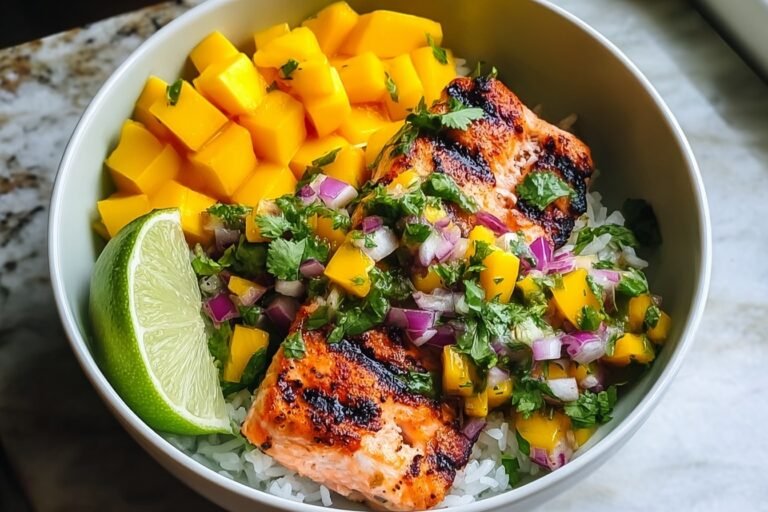
Mango Salsa Salmon Bowls
🔥 Smoky-spiced baked salmon atop fluffy rice with vibrant mango-avocado salsa – healthy omega-3s and bold flavors in 25 minutes!
🥑 Fresh, tropical salsa bursts with sweetness and tang – nutrient-packed bowls perfect for quick dinners or meal prep.
- Total Time: 25 minutes
- Yield: 4 servings
Ingredients
– 1 to 2 pounds fresh salmon
– 2 tablespoons brown sugar
– 2 teaspoons smoked paprika
– 2 teaspoons onion powder
– 1 teaspoon garlic powder
– 1/2 teaspoon chili powder
– 1/2 teaspoon kosher salt
– 2 tablespoons olive oil
– 2 mangoes, diced
– 1 avocado, diced
– 1/4 cup minced cilantro
– 1/4 cup minced red onion
– 1/2 jalapeño, minced
– 1 teaspoon honey
– 2 tablespoons lime juice plus 1 teaspoon lime zest
– Salt to taste
– 1 1/2 cups rice
Instructions
1-First Step: Mix the salsa Start with the mango avocado salsa so the flavors have a moment to mingle while you cook the salmon. In a medium bowl, combine the diced mangoes, diced avocado, minced cilantro, minced red onion, minced jalapeño, honey, lime juice, lime zest, and salt. Stir gently so the avocado stays in nice chunks. Set the bowl aside. If your mangoes are very ripe, handle them carefully so they do not turn mushy. The salsa should look colorful and chunky, not mashed. That fresh texture is part of what makes Mango Salsa Salmon Bowls so fun to eat.
2-Second Step: Cook the rice Cook 1 1/2 cups rice according to the package instructions. You can use white rice, brown rice, or another favorite grain. Keep it warm until you are ready to build the bowls. If the rice finishes early, fluff it with a fork and cover it so it stays soft.
3-Third Step: Preheat the oven and prep the pan Set your oven to 475°F. This high heat helps the salmon cook quickly and get a nice finish without drying out. Line a baking sheet with foil for easier cleanup. A foil-lined pan also helps prevent the sugary spice rub from sticking too much.
4-Fourth Step: Make the spice paste In a small bowl, mix the brown sugar, smoked paprika, onion powder, garlic powder, chili powder, kosher salt, and olive oil until it forms a thick paste. It should look dark, smooth, and a little glossy. If the paste seems too dry, add a tiny splash more oil. This spice mix is what gives the salmon its BBQ-style flavor. The brown sugar helps create that sweet-savory crust, while the smoked paprika brings in the smoky note people love.
5-Fifth Step: Season the salmon Place the salmon skin-side down on the lined baking sheet. Rub the spice paste over the top of the fish in an even layer. Try to coat the surface well so every slice gets flavor. If your salmon is in one large fillet, that works fine. If it is cut into smaller portions, coat each piece the same way. At this point, the salmon is ready for the oven. Since the rub contains sugar, keep an eye on it as it bakes so the top does not darken too much.
6-Sixth Step: Bake until flaky Bake the salmon for 6 to 12 minutes, depending on the thickness and how done you like it. Thinner fillets cook fast, while thicker pieces need a little more time. Start checking around the 6 to 8 minute mark. The salmon is ready when it turns opaque and flakes easily with a fork. For food safety, the internal temperature should reach 145°F, but many cooks prefer to pull it a little earlier for a juicier center if the fish is fresh. Do not overbake it, or the salmon can turn dry fast. If you like, you can let it rest for 2 minutes after baking.
7-Seventh Step: Assemble the bowls Spoon the rice into bowls, then top with flaked salmon and a generous scoop of mango avocado salsa. You can pile the salsa right over the fish or place it next to it for a cleaner look. Either way, the bowl should feel bright, fresh, and full of texture. Serve right away while the salmon is warm and the salsa is cool. That contrast is part of the magic. If you want extra flair, add lime wedges on the side or a sprinkle of cilantro on top.
Last Step:
Please leave a rating and comment letting us know how you liked this recipe! This helps our business to thrive and continue providing free, high-quality recipes for you.Notes
🥭 Choose ripe but firm mangoes; thawed frozen works if fresh unavailable for consistent texture.
🐟 Pat salmon very dry before rubbing to ensure crispy skin and even cooking.
🌶️ Taste salsa before serving and adjust lime, salt, or jalapeño for perfect balance.
- Prep Time: 15 minutes
- Cook Time: 10 minutes
- Category: Main Dishes
- Method: Bake
- Cuisine: American
Nutrition
- Serving Size: 1 bowl
- Calories: 550
- Sugar: 15g
- Sodium: 400mg
- Fat: 25g
- Saturated Fat: 5g
- Unsaturated Fat: 20g
- Trans Fat: 0g
- Carbohydrates: 50g
- Fiber: 5g
- Protein: 35g
- Cholesterol: 80mg