
Why You’ll Love This Hainanese Chicken Rice
Hainanese Chicken Rice is one of those dishes that looks simple but tastes like a special treat. If you have ever wanted a chicken rice recipe that feels comforting, fresh, and packed with flavor, this home version is a great place to start. The poached chicken stays tender, the rice soaks up rich broth, and the sauces bring everything to life.
- Easy to make at home: This authentic Hainanese chicken recipe uses basic steps and everyday tools, so even busy cooks can make it without stress. Most of the work happens in one pot, which means less cleanup.
- Good for balanced meals: The chicken gives you protein, the rice gives you steady energy, and the ginger, garlic, and chili sauces add flavor without needing heavy extras. It can fit into lighter meal plans too.
- Flexible for many eaters: You can serve it with cucumber, steamed greens, or extra broth on the side. It works well for home cooks, students, working professionals, and anyone who likes simple comfort food.
- Bold flavor in a gentle dish: Singapore Hainanese chicken is known for its silky chicken, fragrant rice, and three tasty sauces. Each bite feels balanced, savory, and bright.
When you prepare this dish at home, the silky chicken and flavorful rice can bring everyone to the table fast. That is the magic of a really good Hainanese chicken rice home version.
If you love dishes that are comforting but still fresh, this easy Hainanese chicken rice recipe may become a favorite in your kitchen.
Jump to:
- Why You’ll Love This Hainanese Chicken Rice
- Essential Ingredients for Hainanese Chicken Rice
- For the chicken
- For the rice
- For the ginger-garlic sauce
- For the sweet dark soy sauce
- For the chili sauce
- Special dietary options
- How to Prepare the Perfect Hainanese Chicken Rice: Step-by-Step Guide
- First Step: Rinse, season, and prep the chicken
- Second Step: Shock the chicken in ice water
- Third Step: Make the fragrant rice base
- Fourth Step: Mix the ginger-garlic sauce
- Fifth Step: Cook the sweet dark soy sauce
- Sixth Step: Blend the chili sauce
- Seventh Step: Slice the chicken and finish the plating
- Final Step: Serve and enjoy
- Protein and Main Component Alternatives
- Different protein choices
- Plant-based and lighter options
- Vegetable, Sauce, and Seasoning Modifications
- Vegetable ideas
- Sauce and seasoning swaps
- Mastering Hainanese Chicken Rice: Advanced Tips and Variations
- Pro cooking techniques
- Flavor variations
- Presentation tips
- Make-ahead options
- How to Store Hainanese Chicken Rice: Best Practices
- Refrigeration
- Freezing
- Reheating
- Meal prep considerations
- FAQs: Frequently Asked Questions About Hainanese Chicken Rice
- What is Hainanese chicken rice?
- What are the key ingredients for Hainanese chicken rice?
- How do you make Hainanese chicken rice at home?
- What sauces pair with Hainanese chicken rice?
- Is Hainanese chicken rice healthy?
- Hainanese Chicken Rice
- Ingredients
- Instructions
- Last Step:
- Notes
- Nutrition
- Did you make this recipe?
Essential Ingredients for Hainanese Chicken Rice
Below is a complete ingredient list for this Hainanese chicken rice recipe. Every item is included so you can prep with confidence and keep the process smooth from start to finish.
For the chicken
- 1 small chicken weighing 3 to 3.5 pounds
- 1 tablespoon salt
- 12 to 14 cups water
- 4 to 5 slices ginger
- 2 whole scallions
- Ice, for the ice bath
For the rice
- 2 ounces chicken fat
- 1 teaspoon neutral oil
- 4 cloves garlic, minced
- 3 cups uncooked white rice, preferably jasmine rice
- Chicken stock from cooking the chicken
- 2 teaspoons salt
For the ginger-garlic sauce
- 1 four-inch piece ginger, roughly chopped
- 2 cloves garlic
- 3 tablespoons neutral oil
- 1 pinch salt
For the sweet dark soy sauce
- 1/4 cup water
- 1.25 ounces rock sugar or 2.5 tablespoons granulated sugar
- 1/4 cup dark soy sauce
For the chili sauce
- 3 fresh red chilies of medium spice level
- 1.5-inch piece ginger
- 2 cloves garlic
- 1/4 teaspoon salt
- 1/2 teaspoon sesame oil
- 1/4 teaspoon sugar
- 1 tablespoon fresh lime juice
- 1/2 teaspoon rice vinegar or white vinegar
- 2 tablespoons chicken broth
Special dietary options
- Vegan: Use firm tofu or poached king oyster mushrooms instead of chicken, and cook the rice in mushroom broth with a little sesame oil.
- Gluten-free: Choose gluten-free dark soy sauce and check that your chicken broth is certified gluten-free.
- Low-calorie: Remove the chicken skin before serving, use less oil in the rice, and pair the dish with extra cucumber or steamed greens.
How to Prepare the Perfect Hainanese Chicken Rice: Step-by-Step Guide
First Step: Rinse, season, and prep the chicken
Start by rubbing the small chicken with 1 tablespoon salt, then rinse it well under cool water. This helps clean the skin and remove any loose bits. Next, get your big pot ready with 12 to 14 cups water, 4 to 5 slices ginger, and 2 whole scallions. Bring the water to a gentle boil over medium-high heat.
Once the water is hot, lower the chicken into the pot carefully. Keep the heat at a gentle simmer rather than a hard boil. A strong boil can make the meat tough and the skin split. Poach the chicken for about 30 to 40 minutes, depending on size, until the internal temperature reaches 165 F in the thickest part of the thigh.
Second Step: Shock the chicken in ice water
When the chicken is cooked, lift it out with tongs and move it right into a bowl of ice water. This ice bath stops the cooking and helps the skin turn silky and firm. It also keeps the meat juicy, which is one of the signature marks of authentic Hainanese chicken.
Let the chicken sit in the ice bath for a few minutes, then remove it and let it drain. Set it aside to rest while you prepare the rice and sauces. Save the poaching liquid, because it will become the stock for the rice and some of the sauces.
Third Step: Make the fragrant rice base
While the chicken rests, warm a large pot or deep pan over medium heat. Add 2 ounces chicken fat and 1 teaspoon neutral oil. When the fat starts to melt, stir in 4 cloves minced garlic. Cook for about 30 seconds, just until fragrant. Do not let the garlic brown, or the rice can taste bitter.
Add the 3 cups uncooked white rice and stir well so every grain gets coated. This step gives the rice its rich flavor and helps it absorb the chicken stock evenly. Toast the rice gently for 1 to 2 minutes, then season with 2 teaspoons salt. Add the chicken stock from cooking the chicken, then cook as you normally would for your stove top rice method or rice cooker. If you are using a pot, keep the heat low, cover tightly, and cook until the rice is fluffy and tender.
Fourth Step: Mix the ginger-garlic sauce
For the ginger-garlic sauce, place 1 four-inch piece roughly chopped ginger, 2 cloves garlic, and a pinch of salt into a mortar, food processor, or small blender. Add 3 tablespoons neutral oil. Blend or pound until it becomes a bright, chunky paste. Taste and add a little more salt if needed.
This sauce should feel fresh and sharp. It brings a lively bite to the chicken and cuts through the richness of the rice. If you want a smoother sauce, blend it longer. If you like more texture, keep it a bit rustic.
Fifth Step: Cook the sweet dark soy sauce
To make the sweet dark soy sauce, combine 1/4 cup water, 1.25 ounces rock sugar or 2.5 tablespoons granulated sugar, and 1/4 cup dark soy sauce in a small saucepan. Warm over low heat, stirring until the sugar dissolves. Let it simmer gently for a minute or two, then remove from the heat.
This sauce should be glossy, salty, and lightly sweet. It adds depth to the chicken and rice without overpowering them. If you want a deeper sweetness, let it reduce for another minute, but do not let it become too thick.
Sixth Step: Blend the chili sauce
For the chili sauce, add 3 fresh red chilies of medium spice level, 1.5-inch piece ginger, 2 cloves garlic, 1/4 teaspoon salt, 1/2 teaspoon sesame oil, 1/4 teaspoon sugar, 1 tablespoon fresh lime juice, 1/2 teaspoon rice vinegar or white vinegar, and 2 tablespoons chicken broth to a blender or mortar. Blend until smooth or slightly textured, depending on your preference.
The sauce should taste spicy, tangy, and a little sweet. If your chilies are mild, you can blend in a little extra chili for more heat. If it tastes too sharp, add another small splash of broth to soften it.
Seventh Step: Slice the chicken and finish the plating
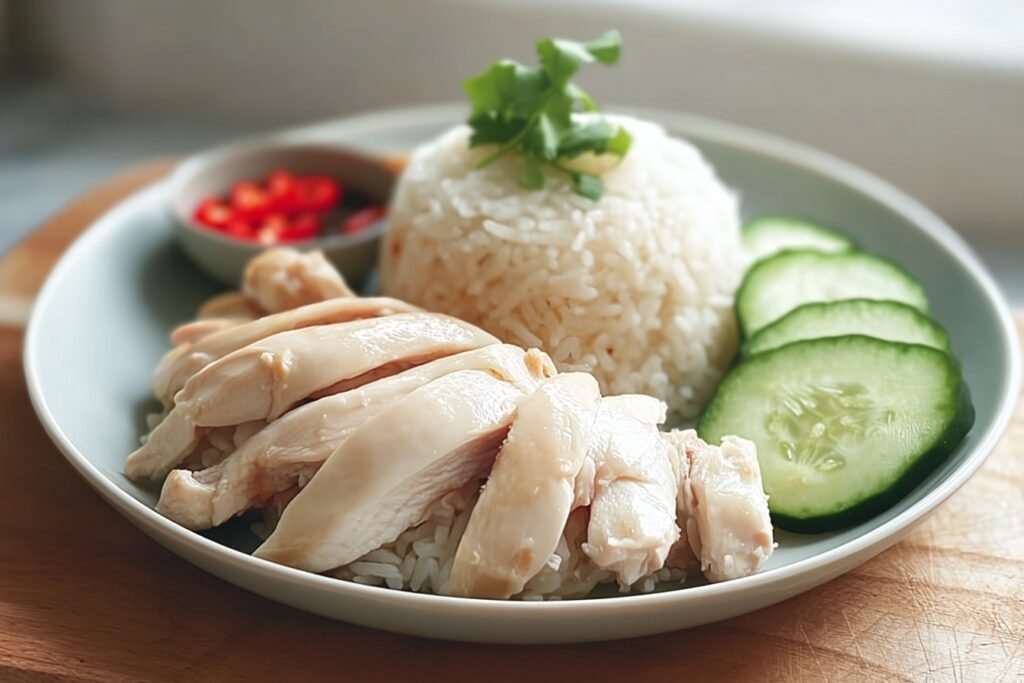
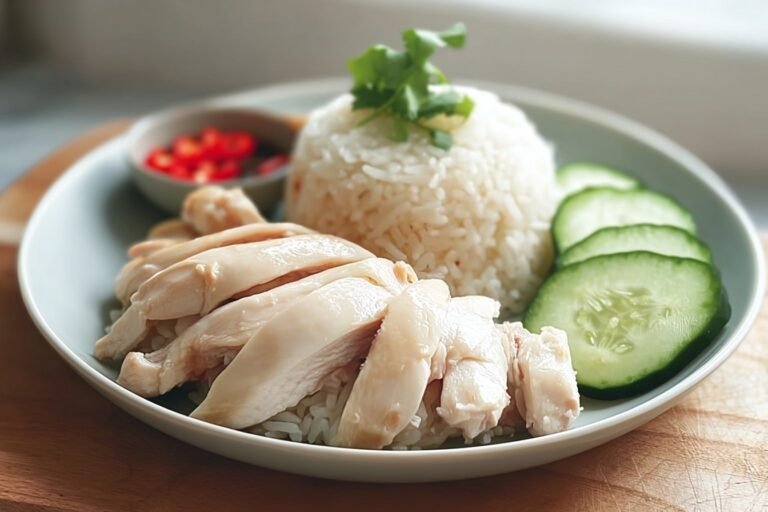
After the chicken has rested, slice it into neat pieces. A sharp knife helps keep the skin tidy and the meat juicy. Arrange the chicken over a bed of rice and spoon a little stock over the top if you want extra moisture.
Serve with the ginger-garlic sauce, sweet dark soy sauce, and chili sauce on the side. Many cooks also add sliced cucumber for a cool crunch. The dish is best served warm, but not piping hot, so the texture of the chicken stays smooth and soft.
Final Step: Serve and enjoy
Set the plate at the center of the table and let everyone spoon on their favorite sauce. The rice should be fragrant, the chicken should be tender, and the sauces should give each bite a different mood. That balance is what makes Hainanese Chicken Rice such a loved dish in Singapore, Malaysia, and home kitchens everywhere.
| Component | Key Flavor | Best Tip |
|---|---|---|
| Chicken | Clean, delicate, juicy | Poach gently and shock in ice water |
| Rice | Rich, aromatic, savory | Toast rice in chicken fat before cooking |
| Ginger-garlic sauce | Fresh and punchy | Use just enough oil to loosen the paste |
| Sweet dark soy sauce | Deep and savory-sweet | Warm until sugar fully dissolves |
| Chili sauce | Bright, spicy, tangy | Balance heat with lime juice and broth |
Protein and Main Component Alternatives
Different protein choices
If you cannot find a whole chicken, you can still make a satisfying chicken rice recipe with other cuts. Bone-in chicken thighs work well because they stay juicy and cook evenly. Chicken breasts can also be used, though they need more careful timing so they do not dry out.
For a more budget-friendly version, split chicken pieces can be easier to manage than a full bird. If you want a richer broth, add chicken backs or wings to the pot while the chicken cooks. That gives the rice deeper flavor without much extra effort.
Plant-based and lighter options
For a vegetarian version, poached tofu, soy curls, or king oyster mushrooms make a nice stand-in for the chicken. Cook them in a seasoned broth so they absorb flavor. You can also keep the rice and sauces the same while changing only the protein.
If you are cooking for someone who wants a lighter plate, try skinless chicken pieces or poached chicken breast. The dish still tastes satisfying when the rice is fragrant and the sauces are bold.
Vegetable, Sauce, and Seasoning Modifications
Vegetable ideas
Cucumber is the classic side, but many vegetables work nicely with Hainanese Chicken Rice. Steamed bok choy, baby gai lan, blanched green beans, or sautéed spinach all fit the dish well. These options add color and a fresh crunch without taking away from the rice and chicken.
If you want a fuller plate, add shredded carrots or quick-pickled vegetables. They bring brightness and can help balance the savory flavors of the chicken fat rice and soy sauce.
Sauce and seasoning swaps
If you like more heat, use bird’s eye chilies instead of medium red chilies in the chili sauce. If you prefer less spice, remove some chili seeds or add a little more chicken broth. For the dark soy sauce, a touch more sugar can soften the saltiness.
You can also adjust the ginger-garlic sauce by adding more ginger for sharper flavor or more oil for a smoother texture. A small spoonful of scallion oil can also be mixed in for a different aroma. If you are watching salt, reduce the salt in the chicken broth and sauces a little, then taste as you go.
Mastering Hainanese Chicken Rice: Advanced Tips and Variations
Pro cooking techniques
For the best Hainanese chicken rice home version, keep the poaching liquid at a gentle simmer. If it bubbles too hard, the chicken can become firm instead of silky. After cooking, the ice bath is not optional if you want that classic smooth skin.
Rinsing the rice well before cooking helps remove extra starch, so the grains stay separate and fluffy. If you have a rice cooker, you can still use the chicken stock and aromatics for a reliable result. A little patience in the early steps gives you much better texture at the end.
Flavor variations
Some cooks add pandan leaves to the rice for a more fragrant Singapore Hainanese chicken style. If you like deeper flavor, cook the rice with a bit more chicken fat or stir in a spoonful of the broth fat that rises to the top of the stock. For a brighter version, add extra lime juice to the chili sauce.
You can also serve the dish with a side soup made from the leftover chicken stock, ginger, and scallions. That simple bowl makes the meal feel even more complete.
Presentation tips
Slice the chicken into even pieces and fan them neatly over the rice. Add cucumber slices around the edge of the plate, then place the sauces in small bowls so everyone can choose their own balance. A little chopped scallion or cilantro on top can add freshness, though it is not traditional for every version.
Make-ahead options
You can cook the chicken and make the sauces earlier in the day, then rewarm the rice with a splash of stock before serving. The rice tastes best fresh, but it still holds up well for meal prep. This is one reason homemade Hainanese chicken rice works so well for busy parents and working professionals.
How to Store Hainanese Chicken Rice: Best Practices
Refrigeration
Store the chicken, rice, and sauces in separate airtight containers. Kept in the fridge, they will last about 3 to 4 days. Storing them separately helps the rice stay fluffy and keeps the chicken from soaking too much sauce.
Freezing
You can freeze the chicken and rice for longer storage, though the texture of the rice may soften a bit after thawing. Let everything cool first, then pack it into freezer-safe containers. The sauces are best made fresh, but the dark soy sauce can be stored for a few days in the fridge.
Reheating
Reheat the chicken gently so it stays tender. A steamer or covered pan with a little stock works well. The rice can be warmed in the microwave with a spoonful of broth or water. Heat until steaming hot and serve right away for the best taste.
Meal prep considerations
If you want to prep ahead, cook the chicken, broth, and sauces one day, then make the rice the next day using the chilled stock. This keeps the rice fresher and makes dinner faster. It is a smart plan for students and busy households.

FAQs: Frequently Asked Questions About Hainanese Chicken Rice
What is Hainanese chicken rice?
What are the key ingredients for Hainanese chicken rice?
How do you make Hainanese chicken rice at home?
What sauces pair with Hainanese chicken rice?
Is Hainanese chicken rice healthy?
Hainanese Chicken Rice
🍗 Silky poached chicken over fragrant stock-infused jasmine rice – ultimate comfort with authentic hawker flavors at home!
🌿 Trio of zesty ginger, chili, and sweet soy sauces – healthy, juicy protein-packed meal everyone craves.
- Total Time: 1 hour 40 minutes
- Yield: 4-6 servings
Ingredients
– 1 small chicken weighing 3 to 3.5 pounds
– 1 tablespoon salt
– 12 to 14 cups water
– 4 to 5 slices ginger
– 2 whole scallions
– Ice for the ice bath
– 2 ounces chicken fat
– 1 teaspoon neutral oil
– 4 cloves garlic, minced
– 3 cups uncooked white rice, preferably jasmine rice
– Chicken stock from cooking the chicken
– 2 teaspoons salt
– 1 four-inch piece ginger, roughly chopped
– 2 cloves garlic
– 3 tablespoons neutral oil
– 1 pinch salt
– 1/4 cup water
– 1.25 ounces rock sugar or 2.5 tablespoons granulated sugar
– 1/4 cup dark soy sauce
– 3 fresh red chilies of medium spice level
– 1.5-inch piece ginger
– 2 cloves garlic
– 1/4 teaspoon salt
– 1/2 teaspoon sesame oil
– 1/4 teaspoon sugar
– 1 tablespoon fresh lime juice
– 1/2 teaspoon rice vinegar or white vinegar
– 2 tablespoons chicken broth
Instructions
1-First Step: Rinse, season, and prep the chicken Start by rubbing the small chicken with 1 tablespoon salt, then rinse it well under cool water. This helps clean the skin and remove any loose bits. Next, get your big pot ready with 12 to 14 cups water, 4 to 5 slices ginger, and 2 whole scallions. Bring the water to a gentle boil over medium-high heat. Once the water is hot, lower the chicken into the pot carefully. Keep the heat at a gentle simmer rather than a hard boil. A strong boil can make the meat tough and the skin split. Poach the chicken for about 30 to 40 minutes, depending on size, until the internal temperature reaches 165 F in the thickest part of the thigh.
2-Second Step: Shock the chicken in ice water When the chicken is cooked, lift it out with tongs and move it right into a bowl of ice water. This ice bath stops the cooking and helps the skin turn silky and firm. It also keeps the meat juicy, which is one of the signature marks of authentic Hainanese chicken. Let the chicken sit in the ice bath for a few minutes, then remove it and let it drain. Set it aside to rest while you prepare the rice and sauces. Save the poaching liquid, because it will become the stock for the rice and some of the sauces.
3-Third Step: Make the fragrant rice base While the chicken rests, warm a large pot or deep pan over medium heat. Add 2 ounces chicken fat and 1 teaspoon neutral oil. When the fat starts to melt, stir in 4 cloves minced garlic. Cook for about 30 seconds, just until fragrant. Do not let the garlic brown, or the rice can taste bitter. Add the 3 cups uncooked white rice and stir well so every grain gets coated. This step gives the rice its rich flavor and helps it absorb the chicken stock evenly. Toast the rice gently for 1 to 2 minutes, then season with 2 teaspoons salt. Add the chicken stock from cooking the chicken, then cook as you normally would for your stove top rice method or rice cooker. If you are using a pot, keep the heat low, cover tightly, and cook until the rice is fluffy and tender.
4-Fourth Step: Mix the ginger-garlic sauce For the ginger-garlic sauce, place 1 four-inch piece roughly chopped ginger, 2 cloves garlic, and a pinch of salt into a mortar, food processor, or small blender. Add 3 tablespoons neutral oil. Blend or pound until it becomes a bright, chunky paste. Taste and add a little more salt if needed. This sauce should feel fresh and sharp. It brings a lively bite to the chicken and cuts through the richness of the rice. If you want a smoother sauce, blend it longer. If you like more texture, keep it a bit rustic.
5-Fifth Step: Cook the sweet dark soy sauce To make the sweet dark soy sauce, combine 1/4 cup water, 1.25 ounces rock sugar or 2.5 tablespoons granulated sugar, and 1/4 cup dark soy sauce in a small saucepan. Warm over low heat, stirring until the sugar dissolves. Let it simmer gently for a minute or two, then remove from the heat. This sauce should be glossy, salty, and lightly sweet. It adds depth to the chicken and rice without overpowering them. If you want a deeper sweetness, let it reduce for another minute, but do not let it become too thick.
6-Sixth Step: Blend the chili sauce For the chili sauce, add 3 fresh red chilies of medium spice level, 1.5-inch piece ginger, 2 cloves garlic, 1/4 teaspoon salt, 1/2 teaspoon sesame oil, 1/4 teaspoon sugar, 1 tablespoon fresh lime juice, 1/2 teaspoon rice vinegar or white vinegar, and 2 tablespoons chicken broth to a blender or mortar. Blend until smooth or slightly textured, depending on your preference. The sauce should taste spicy, tangy, and a little sweet. If your chilies are mild, you can blend in a little extra chili for more heat. If it tastes too sharp, add another small splash of broth to soften it.
7-Seventh Step: Slice the chicken and finish the plating After the chicken has rested, slice it into neat pieces. A sharp knife helps keep the skin tidy and the meat juicy. Arrange the chicken over a bed of rice and spoon a little stock over the top if you want extra moisture. Serve with the ginger-garlic sauce, sweet dark soy sauce, and chili sauce on the side. Many cooks also add sliced cucumber for a cool crunch. The dish is best served warm, but not piping hot, so the texture of the chicken stays smooth and soft.
8-Final Step: Serve and enjoy Set the plate at the center of the table and let everyone spoon on their favorite sauce. The rice should be fragrant, the chicken should be tender, and the sauces should give each bite a different mood. That balance is what makes Hainanese Chicken Rice such a loved dish in Singapore, Malaysia, and home kitchens everywhere.
Last Step:
Please leave a rating and comment letting us know how you liked this recipe! This helps our business to thrive and continue providing free, high-quality recipes for you.Notes
🛁 Ice bath post-poach gives signature silky taut skin – don’t skip!
🍚 Use chicken fat for rice aroma; jasmine rice absorbs stock best.
🔥 Poach gently low simmer to keep chicken juicy tender.
- Prep Time: 20 minutes
- Chilling: 10 minutes
- Cook Time: 1 hour 10 minutes
- Category: Main Dishes
- Method: Poach
- Cuisine: Singaporean
Nutrition
- Serving Size: ¼ chicken + rice
- Calories: 550
- Sugar: 5g
- Sodium: 1200mg
- Fat: 20g
- Saturated Fat: 5g
- Unsaturated Fat: 15g
- Trans Fat: 0g
- Carbohydrates: 60g
- Fiber: 1g
- Protein: 35g
- Cholesterol: 120mg