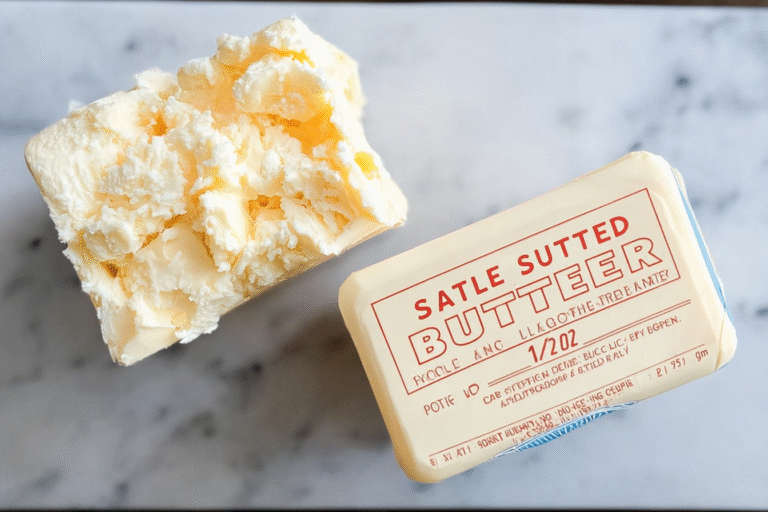
Ingredients
– 100% heavy cream base ingredient
– 1-2% salt optional for flavor and preservation
– natural milk solids for characteristic flavor
– 80% vegetable oils base
– 16-20% water emulsified for spreadable consistency
– salt varies for flavor enhancement
– 1-2% emulsifiers such as lecithin for stable texture
– flavorings including artificial butter flavor and colors
– vitamins A and D to match nutritional profile
– 100% unsalted butter starting material
– milk solids removed separated during clarification
– water removed evaporated during heating
Instructions
1-First Step: Start by selecting the appropriate fat for your cooking method. For baking recipes where creaming is essential, choose cold, unsalted butter. For spreading on toast or making sandwiches, margarine straight from the refrigerator works perfectly. When cooking at high temperatures or making Indian-inspired dishes, reach for ghee. Keep in mind that homemade butter offers exceptional flavor control compared to store-bought varieties.
2-Second Step: Prepare your fat according to the recipe requirements. For baking, cut cold butter into small cubes to incorporate evenly into flour mixtures. This creates flaky layers in pie crusts and biscuits. If your recipe calls for softened butter, remove it from the refrigerator 30-60 minutes before use. For margarine, measure it carefully as different brands contain varying water content, which can affect recipe outcomes. When using ghee, it can typically be used interchangeably with oil in most recipes.
3-Third Step: Master the proper melting techniques for each fat. Butter melts at lower temperatures than ghee and will separate into fat and milk solids. For clear golden fat, skim off the foam or continue heating until the milk solids brown slightly for a richer flavor. Margarine melts more quickly but has a lower smoke point, making it less suitable for high-heat cooking. Ghee can withstand higher temperatures without burning, making it ideal for sautéing and frying. According to Food Network’s comparison, understanding these temperature differences is crucial for cooking success.
4-Fourth Step: Apply the correct fat to your cooking vessel. When pan-frying, add cold butter to a hot pan to prevent browning too quickly, or swirl in room-temperature ghee for immediate coverage. For baking with butter, keep it cold until the last moment for the best results in pastries. Margarine works well in cookie recipes where a slightly softer texture is desired. Remember that each fat contributes differently to the final product butter adds richness and flakiness, while margarine creates a softer texture, and ghee imparts a distinctive nutty flavor.
5-Final Step: Finish and serve your dishes with appropriate garnishes that highlight your chosen fat. A pat of butter on steamed vegetables adds richness, while a dollop of flavored margarine can enhance a simple piece of toast. Ghee makes an excellent finishing oil for roasted vegetables or drizzled over cooked grains. Store any leftovers properly to maintain freshness butter and margarine should be refrigerated when not in use, while ghee can be kept at room temperature for several weeks due to its lack of milk solids and water content.
Last Step:
Please leave a rating and comment letting us know how you liked this recipe! This helps our business to thrive and continue providing free, high-quality recipes for you.Notes
🔥 Choose ghee for high-heat Indian/Asian cooking.
🍪 Use real butter for superior cookie flavor and rise.
🥄 Margarine works in vegan recipes but check labels.
- Prep Time: 5 minutes
- Category: Cooking Guide
- Method: Comparison
- Cuisine: Universal
- Diet: Varies
Nutrition
- Serving Size: N/A
- Calories: Varies
- Sugar: 0g
- Sodium: Varies
- Fat: Varies
- Saturated Fat: Varies
- Unsaturated Fat: Varies
- Trans Fat: Varies
- Carbohydrates: 0g
- Fiber: 0g
- Protein: 0g
- Cholesterol: Varies