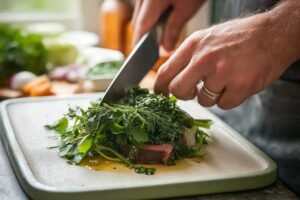

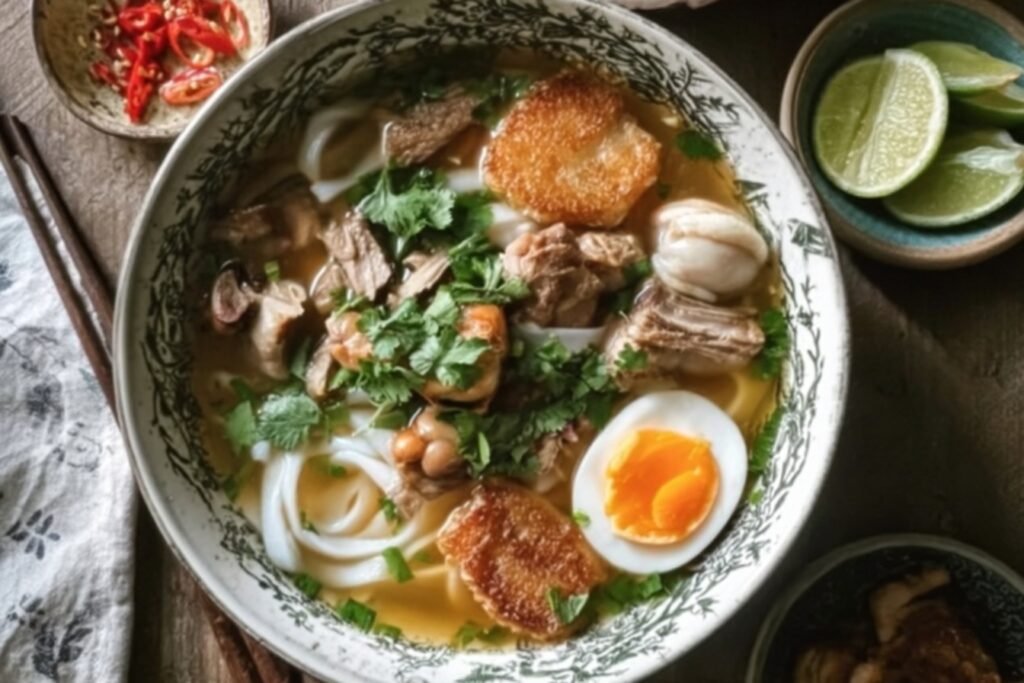
Why You’ll Love This Banh Canh Cua
If you have been craving a cozy bowl of Banh Canh Cua, this crab tapioca noodle soup recipe brings all the rich, savory comfort of Vietnamese noodle soup right to your kitchen. The broth is layered with crab, pork hock, dried squid, and scallops, so every spoonful tastes deep, briny, and satisfying. It is the kind of meal that makes the whole house smell amazing while it simmers.
- Comforting and filling: This banh canh recipe gives you chewy tapioca noodles, tender pork hock, crab, and golden prawn balls in one hearty bowl. It is a complete meal that works well for lunch or dinner, especially when you want something warm and satisfying.
- Big flavor, simple method: Even though authentic banh canh cua tastes like something from a busy Vietnamese food stall, the process is easy to follow at home. You simmer the stock, season the broth, fry the aromatics, and finish with noodles and toppings.
- Great for family meals: This banh canh cua recipe makes 10 servings, so it is perfect for home cooks feeding a crowd. Busy parents, students, and working professionals can cook once and enjoy leftovers later.
- Deep seafood taste: Crab noodle soup shines because fresh crab, frozen crab meat, dried squid, and dehydrated scallops build a rich broth with natural sweetness. For readers who love crab tapioca noodle soup, this one feels bold and comforting at the same time.
Hot broth, springy noodles, sweet crab, and a squeeze of lime make Banh Canh Cua the kind of bowl that feels special without being fussy.
For more cozy bowl ideas, you can also try more comforting recipes from Recipes Valentina while planning your next family meal. If you enjoy seafood soups, you may also like the broader flavor ideas in this Vietnamese crab noodle soup guide.
Jump to:
- Why You’ll Love This Banh Canh Cua
- Essential Ingredients for Banh Canh Cua
- Main Ingredients
- Special Dietary Options
- How to Prepare the Perfect Banh Canh Cua: Step-by-Step Guide
- First Step: Build the stock
- Second Step: Add color and season the broth
- Third Step: Fry the aromatics
- Fourth Step: Make and fry the prawn balls
- Fifth Step: Cook the crab
- Sixth Step: Thicken the soup
- Seventh Step: Cook the noodles
- Eighth Step: Assemble the bowls
- Dietary Substitutions to Customize Your Banh Canh Cua
- Protein and Main Component Alternatives
- Vegetable, Sauce, and Seasoning Modifications
- Mastering Banh Canh Cua: Advanced Tips and Variations
- Pro cooking techniques
- Flavor variations
- Presentation tips
- Make-ahead options
- How to Store Banh Canh Cua: Best Practices
- Refrigeration
- Freezing
- Reheating
- Meal prep considerations
- FAQs: Frequently Asked Questions About Banh Canh Cua
- What is banh canh cua?
- What is the best crab to use for banh canh cua?
- How do I keep banh canh cua noodles from sticking together?
- What can I substitute for potato starch in banh canh cua noodles?
- How long does it take to make banh canh cua at home?
- Banh Canh Cua
- Ingredients
- Instructions
- Last Step:
- Notes
- Nutrition
- Did you make this recipe?
Essential Ingredients for Banh Canh Cua
Every part of this Banh Canh Cua recipe adds something important to the bowl. The stock gets body from pork hock, crab, dried squid, jicama, daikon, and scallops. The toppings bring color, texture, and fresh seafood flavor, while the tapioca noodles give the soup its signature chewy bite.
Main Ingredients
- 10 liters water – the base for a large pot of crab noodle soup broth
- 800 grams peeled daikon – adds mild sweetness after simmering
- 400 grams peeled jicama – gives the broth light natural sweetness
- 30 grams dried squid – adds smoky seafood depth
- 70 grams dehydrated scallops – builds rich umami flavor
- 500 grams frozen crab meat – strengthens the crab flavor in the broth
- 2 tablespoons annatto seeds – gives the broth a warm orange-red color
- 1 tablespoon oil for annatto seeds – helps release the color from the seeds
- 70 grams rock sugar – balances the salty seafood broth
- 6 tablespoons salt – seasons the stock and final soup
- 1/2 US cup fish sauce – adds savory Vietnamese flavor
- 1 1/2 tablespoons chicken bouillon powder – deepens the broth
- 1/2 US cup potato starch for starch slurry – thickens the soup
- 1/4 US cup water for starch slurry – mixes with the starch
- 1 pork hock – adds body and richness to the broth
- 1 crab or more – fresh crab adds sweetness and aroma
- 1 box blood jelly optional – traditional topping for extra texture
- 20 fresh prawns peeled and deveined – used for the prawn paste and fried balls
- 1 red shallot finely chopped – part of the fried aromatics
- 3 cloves garlic finely chopped – adds aroma to the prawn paste
- 1 sprig spring onion finely chopped – adds flavor to the aromatics
- 1 tablespoon oil for frying aromatics – cooks the shallot, garlic, and spring onion
- 1/4 teaspoon salt – seasons the prawn paste
- 1/2 teaspoon sugar – balances the seasoning in the paste
- 1 teaspoon chicken bouillon powder – adds savory depth to the prawn balls
- 1/2 teaspoon pepper – gives a gentle heat
- 1/2 teaspoon fish sauce – boosts umami in the paste
- Cooking oil for frying – used to fry the prawn balls
- 2 kilograms banh canh tapioca noodles – the chewy base of the dish
- Finely chopped coriander – for fresh garnish
- Finely chopped spring onion – for garnish
- Fried onions – for crunch and aroma
- Pepper – for finishing the bowl
- Lime juice – brightens the soup before serving
Special Dietary Options
- Vegan: Swap crab, prawns, pork hock, fish sauce, and chicken bouillon for mushroom broth, king oyster mushrooms, tofu puffs, and soy sauce. The broth will taste different, but it can still be rich and comforting.
- Gluten-free: Banh canh tapioca noodles are naturally a good gluten-free choice, but always check labels on bouillon powder and fish sauce.
- Low-calorie: Use more daikon and jicama, less oil, and a smaller portion of noodles. You can also reduce fried toppings and focus on crab and herbs.
| Ingredient Group | What It Adds | Best Used For |
|---|---|---|
| Pork hock, crab, shrimp | Rich savory broth and protein | Authentic banh canh cua flavor |
| Daikon, jicama, scallops | Sweetness and depth | Slow simmered stock |
| Annatto, rock sugar, fish sauce | Color and balance | Broth seasoning |
| Tapioca noodles, blood jelly | Chewy texture | Classic noodle bowl finish |
How to Prepare the Perfect Banh Canh Cua: Step-by-Step Guide
Making Banh Canh Cua at home takes time, but the process is straightforward once you break it into stages. This crab tapioca noodle soup recipe begins with a long simmer for the stock, then moves into seasoning, prawn balls, crab cooking, and noodle assembly. If you are new to Vietnamese noodle soup, the key is patience and gentle heat.
First Step: Build the stock
Place 10 liters of water in a large stockpot and add the pork hock. Bring it to a gentle simmer over low to medium heat. Keep the heat low enough that the broth stays clear and does not boil hard. This is the base of your banh canh recipe, so give it time.
Add the grilled dried squid, peeled daikon cut into large chunks, peeled jicama cut into large chunks, and dehydrated scallops. Simmer for about 40 minutes or until the vegetables are soft and the broth starts to taste sweet and savory. Remove the pork hock when it is tender enough to slice for serving.
Second Step: Add color and season the broth
Heat 1 tablespoon oil with 2 tablespoons annatto seeds until the oil turns a deep red color. Strain the oil into the broth so the soup gets its classic orange tint. Then season with 6 tablespoons salt, 70 grams rock sugar, 1/2 US cup fish sauce, and 1 1/2 tablespoons chicken bouillon powder.
If you prefer a lighter broth, start with a little less salt and fish sauce, then adjust near the end. This is also a good moment to taste the broth and decide if you want it more savory or more sweet.
Third Step: Fry the aromatics
In a separate pan, heat 1 tablespoon oil for frying aromatics. Cook the finely chopped red shallot, garlic, and spring onion until fragrant and lightly golden. Let them cool before making the prawn paste. This step brings the whole pot of Banh Canh Cua to life with a deep, mouthwatering aroma.
Fourth Step: Make and fry the prawn balls
Put the fried aromatics, 20 fresh prawns, 1/4 teaspoon salt, 1/2 teaspoon sugar, 1 teaspoon chicken bouillon powder, 1/2 teaspoon pepper, and 1/2 teaspoon fish sauce into a food processor. Blend into a paste. For a springier texture, slap the paste against a hard surface a few times before shaping.
Shape the mixture into balls about 2 centimeters wide. Heat cooking oil and fry the prawn balls until golden. They should be crisp outside and juicy inside. Add them to the boiling broth so they soak up flavor without falling apart.
Fifth Step: Cook the crab
Add 500 grams frozen crab meat to the broth. Then add the fresh crab, cut into pieces if needed, and cook it in the soup for about 15 minutes. Remove the crab once it is done so the meat stays sweet and tender. Fresh crab gives the broth extra aroma and a natural sweetness that makes crab noodle soup taste more authentic.
Fresh crab is one of the biggest flavor builders in Banh Canh Cua. If you can get it, the broth tastes fuller and sweeter.
Sixth Step: Thicken the soup
Mix 1/2 US cup potato starch with 1/4 US cup water to make a smooth slurry. Slowly pour it into the simmering broth while stirring constantly. The soup should turn glossy and lightly thickened. Add the slurry gradually so the broth stays silky instead of clumpy.
Seventh Step: Cook the noodles
Bring a separate pot of water to a boil and cook the banh canh tapioca noodles for 3 to 5 minutes. Drain them well. These noodles cook quickly, so keep an eye on them. If you cook them too long, they can turn soft instead of pleasantly chewy.
Eighth Step: Assemble the bowls
Line each bowl with noodles, then top with slices of pork hock, fried prawn balls, fresh crab, and blood jelly if you are using it. Pour the hot soup over everything so the noodles warm through. Finish with finely chopped coriander, finely chopped spring onion, fried onions, pepper, and a squeeze of lime juice.
Serve right away while the broth is steaming. That final hit of lime wakes up the seafood flavor and makes every bite pop.

Dietary Substitutions to Customize Your Banh Canh Cua
Protein and Main Component Alternatives
If you want to make this banh canh cua crab soup fit different needs, there are plenty of ways to adjust it. Use pork shoulder or pork bones instead of pork hock if that is what you have. You can also use mud crab or just the claw for less prep, which is a smart choice for busy cooks.
For the prawn balls, you can swap fresh prawns for minced fish or crab if shellfish is not the best option for your table. If you want a lighter bowl, use more crab meat and fewer fried toppings. For a plant-based version, use mushrooms and tofu in place of the seafood.
Vegetable, Sauce, and Seasoning Modifications
Chargrill the daikon and jicama with the skin on until blackened, then peel them before adding them to the broth. This trick adds a smoky note that tastes wonderful in authentic banh canh cua. If you cannot find jicama, more daikon or a bit of turnip can fill the gap.
Fish sauce brings the classic flavor, but you can use soy sauce in a vegetarian version. If the broth tastes too salty, add more water and a little rock sugar. For a lighter bowl, skip the blood jelly and reduce the fried onions. Asian grocery stores usually carry tapioca noodles, dried squid, dehydrated scallops, coriander, and spring onion, while seafood markets often have the best frozen crab meat.
Mastering Banh Canh Cua: Advanced Tips and Variations
Once you have made Banh Canh Cua a few times, small technique changes can make the dish even better. These tips help home cooks, students, and busy parents get a stronger broth, better texture, and prettier bowls without making the recipe harder.
Pro cooking techniques
Keep the stock at a gentle simmer so the broth stays clean and sweet. A hard boil can make the soup cloudy and can break down the crab flavor. If you have extra time, simmer the pork hock stock longer before adding the seasonings. That gives the crab noodle soup more body and richness.
Flavor variations
Add more crab if you want a stronger seafood flavor. If you like a smokier taste, grill the daikon and jicama before adding them to the pot. You can also make the broth slightly sweeter or saltier depending on your taste and the saltiness of the prawns. That flexibility is one reason banh canh recipe fans keep coming back to this dish.
Presentation tips
Serve the noodles first, then arrange the pork hock, crab, prawn balls, and blood jelly on top so the bowl looks full and inviting. Finish with herbs, fried onions, pepper, and lime. A deep bowl works best because it keeps the broth hot longer.
Make-ahead options
You can make the broth a day ahead and chill it overnight. In the morning, remove any fat that rises to the top. The prawn balls can also be shaped in advance and kept covered in the refrigerator. For an even faster dinner, cook the stock on the weekend and assemble the bowls later in the week.
If you enjoy recipe planning, this is one of those meals that rewards a little prep work with a truly special dinner.
How to Store Banh Canh Cua: Best Practices
Like many Vietnamese noodle soup dishes, Banh Canh Cua stores best when you keep the broth, noodles, and toppings separate. That way the noodles stay chewy and the crab stays tender. With a little planning, leftovers can taste almost as good as the first bowl.
Refrigeration
Store the broth in an airtight container in the refrigerator for up to 3 days. Keep the noodles in a separate container so they do not soak up too much liquid. The crab, pork hock, and prawn balls should also be stored separately if possible.
Freezing
The broth freezes well for longer storage. Pour it into freezer-safe containers, leaving some space at the top. Freeze without noodles, herbs, or lime. If you want to meal prep, freeze the broth in smaller portions so you can thaw only what you need.
Reheating
Reheat the broth gently on the stove until steaming hot. Cook or briefly warm the noodles separately, then assemble the bowl fresh. Avoid boiling the noodles again for too long, or they can lose their texture. Add herbs and lime at the very end for the best flavor.
Meal prep considerations
For batch cooking, prep the stock, prawn balls, and crab ahead of time, then make fresh noodles when you are ready to eat. This keeps the whole bowl tasting lively instead of soggy.
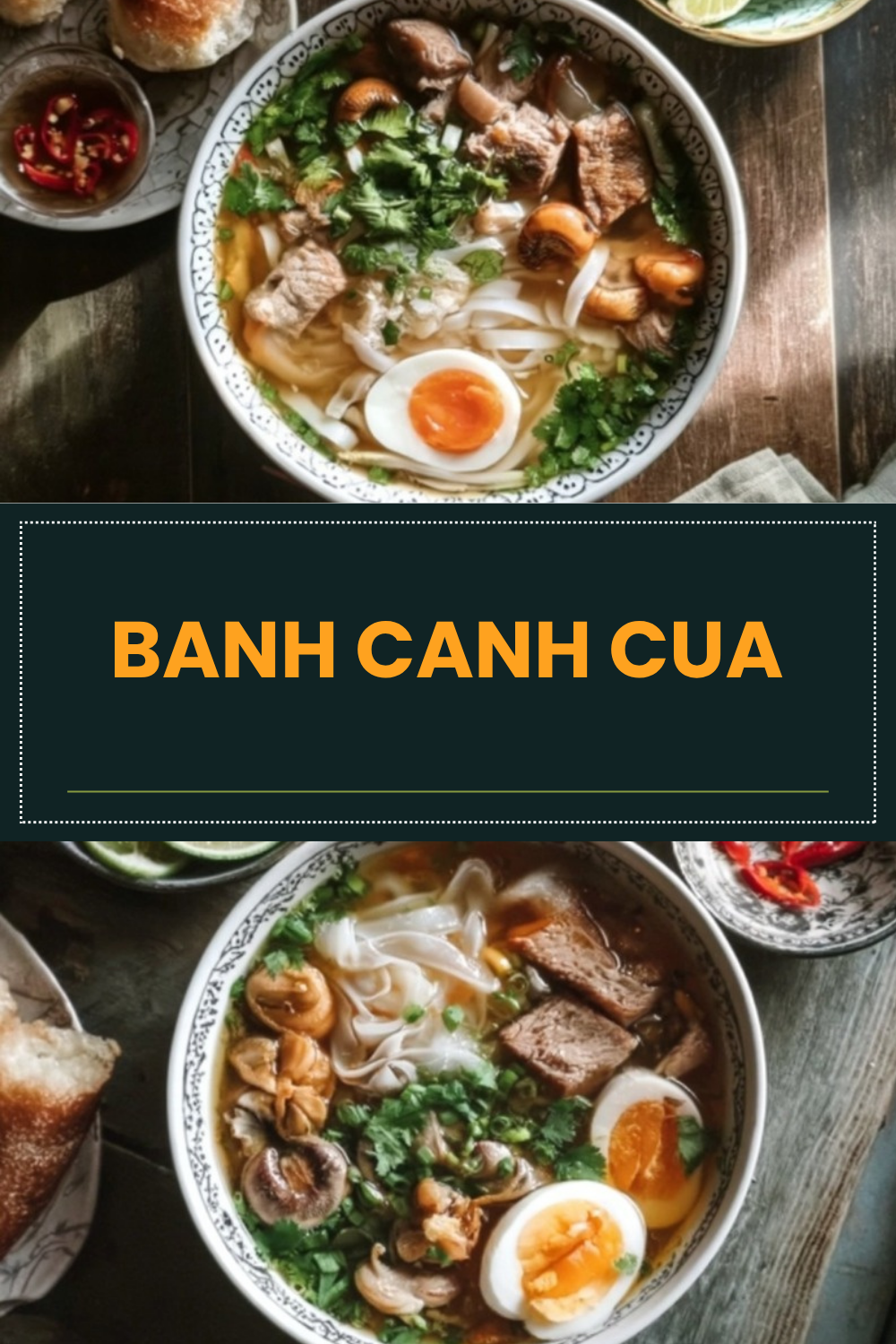
FAQs: Frequently Asked Questions About Banh Canh Cua
What is banh canh cua?
What is the best crab to use for banh canh cua?
How do I keep banh canh cua noodles from sticking together?
What can I substitute for potato starch in banh canh cua noodles?
How long does it take to make banh canh cua at home?
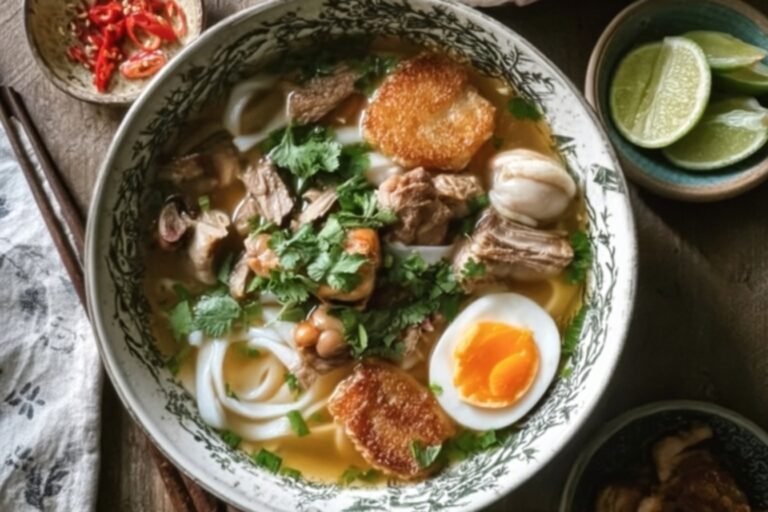
Banh Canh Cua
🦀 Dive into a rich, umami-packed Vietnamese crab noodle soup that’s hearty, comforting, and full of seafood goodness.
🍜 Thick tapioca noodles in silky thickened broth make this a slurpy delight for special gatherings or cozy nights.
- Total Time: 6 hours 10 minutes
- Yield: 10 servings
Ingredients
– 10 liters water for broth base
– 800 grams peeled daikon for mild sweetness
– 400 grams peeled jicama for light natural sweetness
– 30 grams dried squid for smoky seafood depth
– 70 grams dehydrated scallops for rich umami flavor
– 500 grams frozen crab meat for crab flavor in broth
– 2 tablespoons annatto seeds for warm orange-red color
– 1 tablespoon oil for annatto seeds
– 70 grams rock sugar for balancing salty broth
– 6 tablespoons salt for seasoning stock and soup
– 1/2 US cup fish sauce for savory Vietnamese flavor
– 1 1/2 tablespoons chicken bouillon powder for deepening broth
– 1/2 US cup potato starch for starch slurry
– 1/4 US cup water for starch slurry
– 1 pork hock for body and richness in broth
– 1 crab or more for sweetness and aroma
– 1 box blood jelly optional for extra texture
– 20 fresh prawns peeled and deveined for prawn paste and fried balls
– 1 red shallot finely chopped for fried aromatics
– 3 cloves garlic finely chopped for aroma in prawn paste
– 1 sprig spring onion finely chopped for flavor in aromatics
– 1 tablespoon oil for frying aromatics
– 1/4 teaspoon salt for prawn paste
– 1/2 teaspoon sugar for prawn paste seasoning
– 1 teaspoon chicken bouillon powder for prawn balls
– 1/2 teaspoon pepper for gentle heat
– 1/2 teaspoon fish sauce for umami in paste
– Cooking oil for frying prawn balls
– 2 kilograms banh canh tapioca noodles for chewy base
– Finely chopped coriander for garnish
– Finely chopped spring onion for garnish
– Fried onions for crunch and aroma
– Pepper for finishing
– Lime juice for brightening soup
Instructions
1-First Step: Build the stock Place 10 liters of water in a large stockpot and add the pork hock. Bring it to a gentle simmer over low to medium heat. Keep the heat low enough that the broth stays clear and does not boil hard. This is the base of your banh canh recipe, so give it time. Add the grilled dried squid, peeled daikon cut into large chunks, peeled jicama cut into large chunks, and dehydrated scallops. Simmer for about 40 minutes or until the vegetables are soft and the broth starts to taste sweet and savory. Remove the pork hock when it is tender enough to slice for serving.
2-Second Step: Add color and season the broth Heat 1 tablespoon oil with 2 tablespoons annatto seeds until the oil turns a deep red color. Strain the oil into the broth so the soup gets its classic orange tint. Then season with 6 tablespoons salt, 70 grams rock sugar, 1/2 US cup fish sauce, and 1 1/2 tablespoons chicken bouillon powder. If you prefer a lighter broth, start with a little less salt and fish sauce, then adjust near the end. This is also a good moment to taste the broth and decide if you want it more savory or more sweet.
3-Third Step: Fry the aromatics In a separate pan, heat 1 tablespoon oil for frying aromatics. Cook the finely chopped red shallot, garlic, and spring onion until fragrant and lightly golden. Let them cool before making the prawn paste. This step brings the whole pot of Banh Canh Cua to life with a deep, mouthwatering aroma.
4-Fourth Step: Make and fry the prawn balls Put the fried aromatics, 20 fresh prawns, 1/4 teaspoon salt, 1/2 teaspoon sugar, 1 teaspoon chicken bouillon powder, 1/2 teaspoon pepper, and 1/2 teaspoon fish sauce into a food processor. Blend into a paste. For a springier texture, slap the paste against a hard surface a few times before shaping. Shape the mixture into balls about 2 centimeters wide. Heat cooking oil and fry the prawn balls until golden. They should be crisp outside and juicy inside. Add them to the boiling broth so they soak up flavor without falling apart.
5-Fifth Step: Cook the crab Add 500 grams frozen crab meat to the broth. Then add the fresh crab, cut into pieces if needed, and cook it in the soup for about 15 minutes. Remove the crab once it is done so the meat stays sweet and tender. Fresh crab gives the broth extra aroma and a natural sweetness that makes crab noodle soup taste more authentic.
6-Sixth Step: Thicken the soup Mix 1/2 US cup potato starch with 1/4 US cup water to make a smooth slurry. Slowly pour it into the simmering broth while stirring constantly. The soup should turn glossy and lightly thickened. Add the slurry gradually so the broth stays silky instead of clumpy.
7-Seventh Step: Cook the noodles Bring a separate pot of water to a boil and cook the banh canh tapioca noodles for 3 to 5 minutes. Drain them well. These noodles cook quickly, so keep an eye on them. If you cook them too long, they can turn soft instead of pleasantly chewy.
8-Eighth Step: Assemble the bowls Line each bowl with noodles, then top with slices of pork hock, fried prawn balls, fresh crab, and blood jelly if you are using it. Pour the hot soup over everything so the noodles warm through. Finish with finely chopped coriander, finely chopped spring onion, fried onions, pepper, and a squeeze of lime juice. Serve right away while the broth is steaming. That final hit of lime wakes up the seafood flavor and makes every bite pop.
Last Step:
Please leave a rating and comment letting us know how you liked this recipe! This helps our business to thrive and continue providing free, high-quality recipes for you.Notes
🦀 Use fresh crab for the sweetest, most flavorful broth – mud crab or claws work great.
👋 Slap the prawn paste vigorously against a bowl for that signature springy, bouncy texture.
🔥 Chargrill daikon and jicama (skin on first) before peeling and adding to stock for deeper flavor.
- Prep Time: 40 minutes
- Stock cooking: 3 hours 30 minutes
- Cook Time: 2 hours
- Category: Soup
- Method: Stovetop
- Cuisine: Vietnamese
Nutrition
- Serving Size: 1/10 recipe
- Calories: 1356 kcal
- Sugar: 19g
- Sodium: 7061mg
- Fat: 20g
- Saturated Fat: 5g
- Unsaturated Fat: 15g
- Trans Fat: 0g
- Carbohydrates: 224g
- Fiber: 3g
- Protein: 62g
- Cholesterol: 215mg