
Why You Will Love These Cuban Sandwiches
Cuban Sandwiches have a long history, a clear flavor profile, and a quick cooking method that fits busy kitchens well. They are built from a small set of familiar ingredients, yet the final result feels hearty, balanced, and deeply satisfying. For home cooks, students, working professionals, and busy parents, that combination is especially practical.
- Easy preparation: Assembly and pressing typically take only 10 to 15 minutes per sandwich. The method is simple, and it does not require advanced knife skills or long cooking times.
- Balanced richness: Ham, roast pork, Swiss cheese, and mustard create a savory profile that feels filling without needing a long ingredient list. Dill pickles add brightness and keep the sandwich from tasting heavy.
- Versatile for different needs: Cuban Sandwiches can be adjusted for regional preferences, portion sizes, and ingredient availability. They also fit well into lunch, dinner, or casual gathering menus.
- Distinctive flavor and texture: The contrast between crispy Cuban bread, melted cheese, tangy mustard, and juicy meats gives this sandwich its signature appeal.
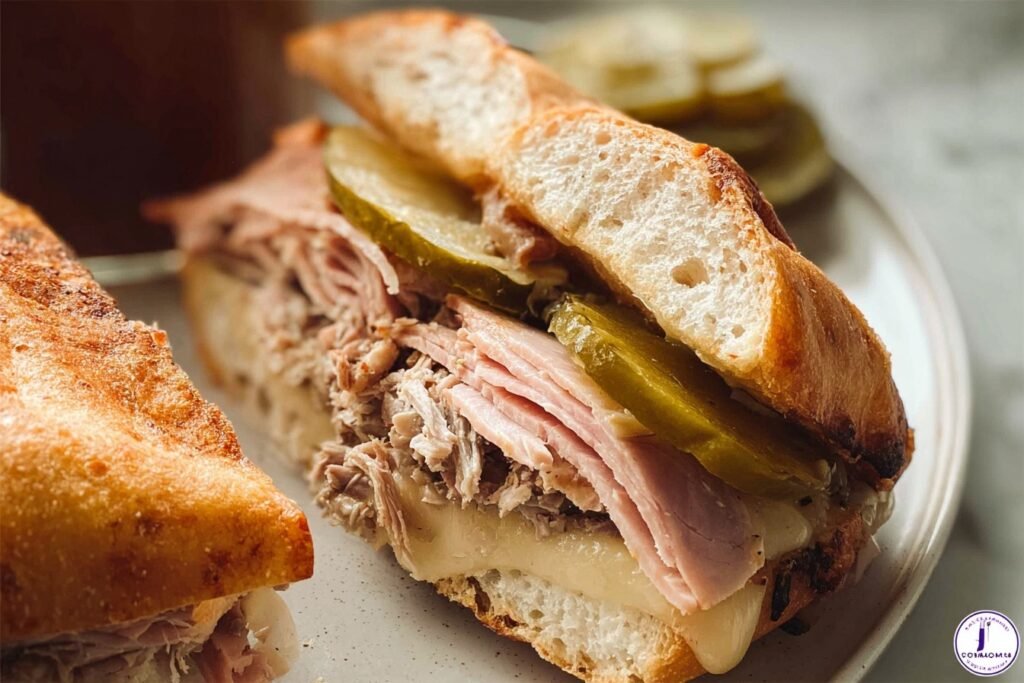
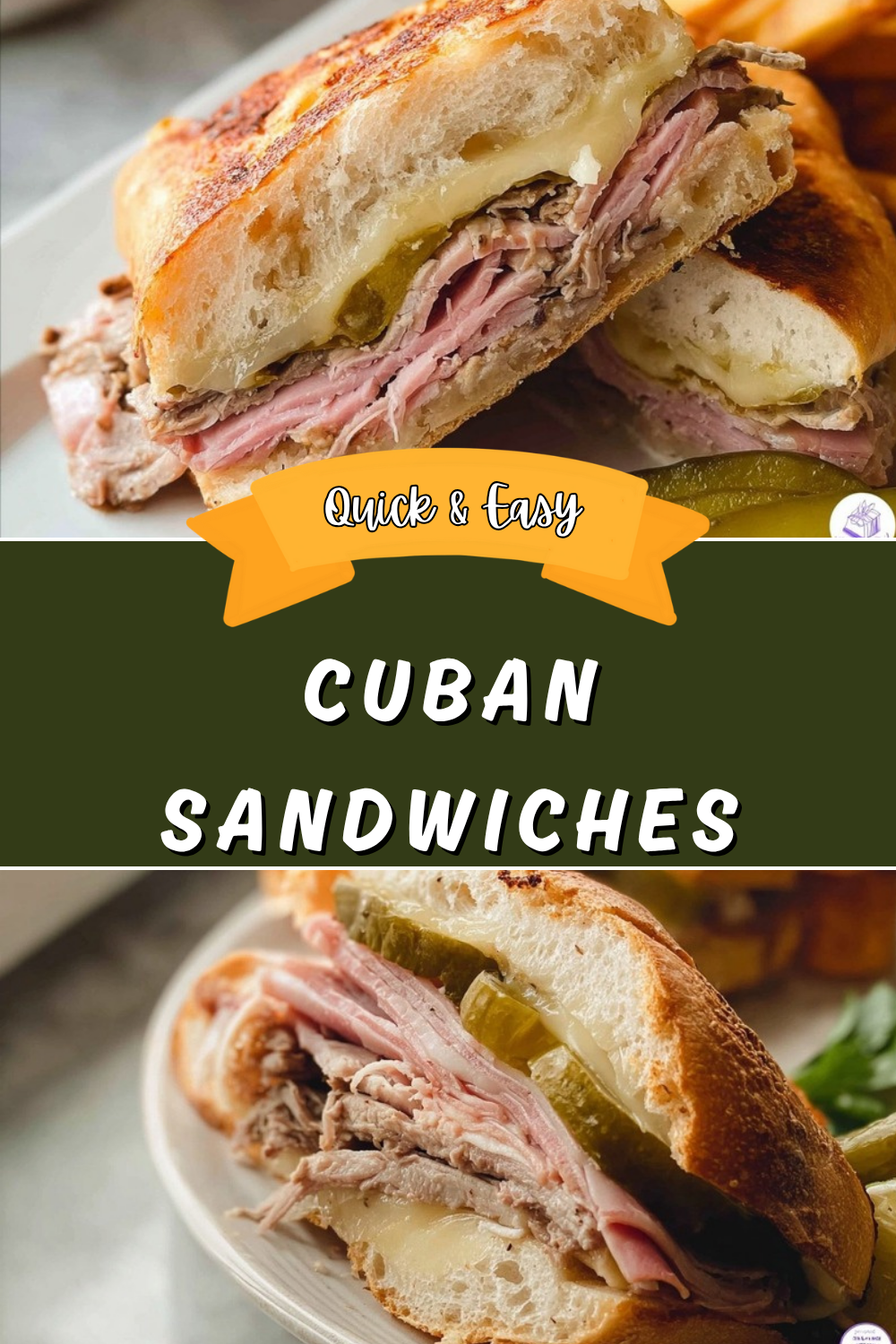
Cuban Sandwiches stand out because they combine crisp bread, melted cheese, and layered savory fillings in a format that is both simple and memorable.
For readers who enjoy classic comfort food with cultural roots, this recipe offers a dependable result with a strong sense of tradition. If you enjoy recipes with a practical method and a clear finish, you may also like more easy recipe ideas from Recipes Valentina.
Jump to:
- Why You Will Love These Cuban Sandwiches
- Essential Ingredients for Cuban Sandwiches
- Main Ingredients
- Special Dietary Options
- How to Prepare the Perfect Cuban Sandwiches: Step-by-Step Guide
- First Step: Prepare the bread and workspace
- Second Step: Add mustard to the inside of the bread
- Third Step: Layer the meats and cheese
- Fourth Step: Add pickles and close the sandwich
- Fifth Step: Press the sandwich
- Final Step: Rest, slice, and serve
- Dietary Substitutions to Customize Your Cuban Sandwiches
- Protein and Main Component Alternatives
- Vegetable, Sauce, and Seasoning Modifications
- Mastering Cuban Sandwiches: Advanced Tips and Variations
- Pro cooking techniques
- Flavor variations
- Presentation tips
- Make-ahead options
- How to Store Cuban Sandwiches: Best Practices
- Refrigeration
- Freezing
- Reheating
- Meal prep considerations
- FAQs: Frequently Asked Questions About Cuban Sandwiches
- Cuban Sandwiches
- Ingredients
- Instructions
- Last Step:
- Notes
- Nutrition
- Did you make this recipe?
Essential Ingredients for Cuban Sandwiches
The traditional Cuban Sandwich relies on a short list of ingredients that work together with very little fuss. Quantities are not specified in the source data, so the amounts below are written as practical recipe guidance for one sandwich. You can adjust them based on bread size and appetite.
Main Ingredients
- 1 Cuban bread loaf, cut into 8 to 12 inch lengths – This bread gives the sandwich its classic structure and crusty exterior.
- 2 to 4 slices ham – Ham adds saltiness and a tender, savory layer.
- 2 to 4 slices roast pork – Roast pork is a key part of the traditional filling and brings depth of flavor.
- 2 slices Swiss cheese – Swiss cheese melts smoothly and helps bind the layers together.
- 1 to 2 tablespoons mustard – Mustard adds tang and cuts through the richness of the meats and cheese.
- 3 to 6 dill pickle slices – Pickles add acidity and a crisp bite.
- 2 to 3 slices salami, optional – Salami is used in some regional versions, especially Tampa-style sandwiches.
- 1 tablespoon butter or olive oil, for brushing – This helps the bread crisp well during pressing.
Special Dietary Options
- Vegan: Use plant-based deli slices, vegan Swiss-style cheese, dairy-free butter, and vegan bread that contains no animal ingredients.
- Gluten-free: Choose gluten-free Cuban-style bread if available, or use a sturdy gluten-free sandwich roll that can handle pressing.
- Low-calorie: Use thinner layers of meat and cheese, light mustard, and a smaller portion of bread. You can also reduce the butter and brush lightly with olive oil instead.
For readers who want to understand pork choices in everyday cooking, this pork nutrition guide from Healthline offers helpful background on protein and fat content. If you are also making holiday-style ham dishes, this ham nutrition reference from Verywell Fit may be useful.
How to Prepare the Perfect Cuban Sandwiches: Step-by-Step Guide
First Step: Prepare the bread and workspace
Set out all ingredients before you begin so the sandwich can be assembled quickly. Slice the Cuban bread into 8 to 12 inch lengths, then cut each piece in half horizontally. Brush the outer sides lightly with butter or olive oil so they will brown and crisp during pressing.
If you are making more than one sandwich, keep the bread pieces aligned and the fillings ready in separate bowls or on a tray. This saves time and keeps the process orderly. Since the total preparation time is only 10 to 15 minutes per sandwich, a little organization goes a long way.
Second Step: Add mustard to the inside of the bread
Spread mustard on the cut side of both halves of the bread. Traditional Cuban Sandwiches rely on mustard for sharpness, so use enough to coat the surface without making the bread soggy. The mustard should be even, because it helps season every bite.
A thin, steady layer works best. Too much mustard can overpower the meats, while too little can leave the sandwich tasting flat. The goal is a bright, balanced flavor that supports the fillings rather than hiding them.
Third Step: Layer the meats and cheese
Place the ham first, followed by the roast pork. Add the Swiss cheese so it can melt into the warm meats during pressing. If you are making a Tampa-style version, add the salami at this stage. For South Florida versions, leave the salami out.
Layering matters because it affects both texture and heat distribution. The ham and roast pork create a stable base, while the cheese acts like a binder. When the sandwich is pressed, the layers compress and the flavors merge into a cohesive filling.
Fourth Step: Add pickles and close the sandwich
Arrange the dill pickle slices over the meats and cheese. Pickles should be placed with care so their tangy flavor reaches several sections of the sandwich. Then close the sandwich with the top half of the bread and press the halves together gently.
This is also the point to check balance. If the sandwich seems overloaded, remove a few slices of meat before pressing. Cuban Sandwiches taste best when the bread can still flatten without the filling spilling out.
Fifth Step: Press the sandwich
Place the sandwich in a plancha or a panini press. If using a plancha, press the sandwich evenly so the bread crisps on both sides and the cheese melts fully. Cook until the exterior is golden and crisp, and the interior is warm through.
A plancha is often preferred because it gives very even pressure. A panini press also works well and is convenient for home kitchens. The key is steady heat and firm pressure, which create the classic compact shape and crisp texture that define Cuban Sandwiches.
Final Step: Rest, slice, and serve
Remove the sandwich from the press and let it rest for a minute so the cheese settles slightly. Cut the sandwich diagonally for serving. This makes it easier to handle and gives a clean, appealing presentation.
Serve the sandwich while it is hot so the bread stays crisp and the cheese remains soft. Traditional Cuban Sandwiches do not include lettuce, tomatoes, or mayonnaise, so keep the presentation simple. The finished sandwich should look neat, pressed, and lightly glossy from the toasted bread.
| Step | What to Do | Why It Matters |
|---|---|---|
| 1 | Slice bread and brush with butter or olive oil | Helps the outside brown and crisp |
| 2 | Spread mustard on the cut sides | Adds tang and balance |
| 3 | Layer ham, roast pork, Swiss cheese, and pickles | Builds the classic flavor profile |
| 4 | Add salami if using | Creates the Tampa-style variation |
| 5 | Press in a plancha or panini press | Melts the cheese and crisps the bread |

Dietary Substitutions to Customize Your Cuban Sandwiches
Protein and Main Component Alternatives
If you need to adjust the sandwich for personal preferences or ingredient availability, start with the protein. Plant-based deli slices can replace ham and roast pork for a vegetarian version. Vegan cheese can stand in for Swiss cheese, and the sandwich can still be pressed for a crisp finish.
For lighter eating, reduce the amount of meat rather than removing it completely. Thin slices of roast pork or ham give flavor without making the sandwich too heavy. If salami is unavailable, simply omit it and follow the South Florida style.
Vegetable, Sauce, and Seasoning Modifications
Traditional Cuban Sandwiches keep the filling simple, so lettuce, tomatoes, and mayonnaise are not part of the classic formula. However, if you are making a personal variation, you can add roasted peppers, thin onions, or a mild garlic spread. Just remember that these additions move the sandwich away from the traditional style.
For a sharper taste, use a stronger mustard. For a softer profile, use a mild yellow mustard in a thin layer. The main point is to keep the flavors clean so the bread, meat, and cheese remain the focus.
Mastering Cuban Sandwiches: Advanced Tips and Variations
Pro cooking techniques
Use a plancha whenever possible because it gives even heat and pressure across the sandwich. If you do not have one, a panini press can still produce excellent results. Press firmly enough to flatten the bread, but not so hard that the filling squeezes out.
Brushing the bread lightly with butter or olive oil before pressing helps achieve a golden crust. Letting the sandwich rest for a minute before slicing also helps the cheese settle, which makes cleaner cuts and easier serving.
Flavor variations
Regional differences matter with Cuban Sandwiches. Tampa-style versions often include salami, while South Florida versions usually leave it out. That small change creates a distinct regional identity and lets you match the style you prefer.
You can also adjust the balance of meat and cheese depending on your taste. More Swiss cheese gives a richer melt, while a slightly larger share of pickles adds brightness. The best version is the one that keeps the classic structure intact while matching your own preference.
Presentation tips
Diagonal cuts give the sandwich a neat appearance and make it easier to hold. Serve each half on a simple plate with no heavy garnish, since the sandwich itself is visually strong. A crisp crust, visible layers, and a clean cut usually provide all the presentation needed.
For traditional Cuban Sandwiches, restraint matters as much as technique. Simple ingredients, careful pressing, and clean slicing create the best result.
Make-ahead options
You can prepare the meats, cheese, and pickles ahead of time and store them separately in the refrigerator. When it is time to eat, assembly takes only a few minutes. This makes the recipe practical for weeknight meals, lunch boxes, and casual entertaining.
If you plan to make several sandwiches, set up an assembly line with bread, mustard, fillings, and the press ready to go. That method works well for families, students, and anyone cooking under time pressure.
How to Store Cuban Sandwiches: Best Practices
Refrigeration
Store leftover Cuban Sandwiches in an airtight container in the refrigerator for up to 2 days. The bread will soften over time, so the best texture comes from eating the sandwich fresh. If possible, store the fillings separately and assemble just before pressing.
Freezing
Freezing a fully pressed sandwich is possible, but the texture of the bread may change after thawing. A better method is to freeze the meats and bread separately, then add cheese, pickles, and mustard when ready to assemble. This keeps the sandwich closer to its original quality.
Reheating
Reheat in a skillet, panini press, or oven until warmed through and the bread regains some crispness. Avoid the microwave if you want the crust to stay firm. Low to medium heat works best, since high heat can burn the outside before the filling is hot.
Meal prep considerations
For batch cooking, cook the roast pork in advance and portion the ham, cheese, and pickles into ready-to-use containers. Keep mustard nearby and assemble only what you need for the day. This approach saves time while preserving the best texture.
FAQs: Frequently Asked Questions About Cuban Sandwiches
Print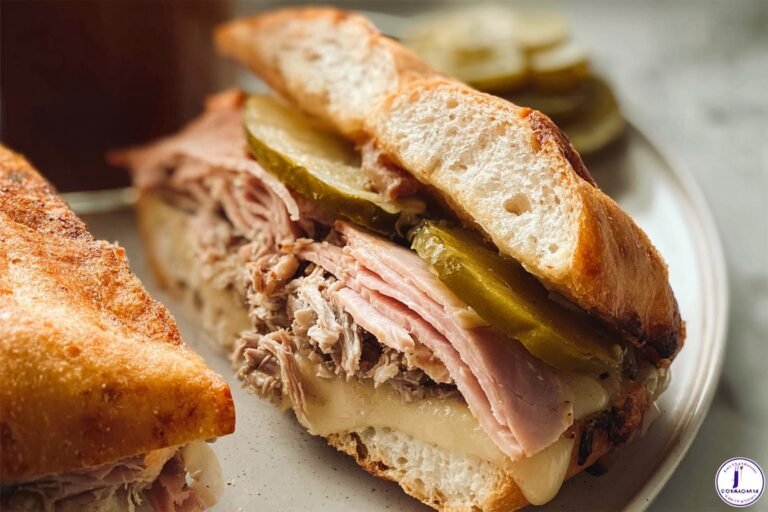
Cuban Sandwiches
🥪 Crispy, pressed perfection with layers of roast pork, ham, Swiss cheese, and tangy pickles – authentic Cuban flavor in every melty bite!
🍖 Golden crust, juicy meats, zesty mustard kick – quick to make at home, better than any deli for lunch or game day!
- Total Time: 25 minutes
- Yield: 4 sandwiches
Ingredients
– 1 Cuban bread loaf, cut into 8 to 12 inch lengths
– 2 to 4 slices ham
– 2 to 4 slices roast pork
– 2 slices Swiss cheese
– 1 to 2 tablespoons mustard
– 3 to 6 dill pickle slices
– 2 to 3 slices salami, optional
– 1 tablespoon butter or olive oil, for brushing
Instructions
1-First Step: Prepare the bread and workspace Set out all ingredients before you begin so the sandwich can be assembled quickly. Slice the Cuban bread into 8 to 12 inch lengths, then cut each piece in half horizontally. Brush the outer sides lightly with butter or olive oil so they will brown and crisp during pressing. If you are making more than one sandwich, keep the bread pieces aligned and the fillings ready in separate bowls or on a tray. This saves time and keeps the process orderly. Since the total preparation time is only 10 to 15 minutes per sandwich, a little organization goes a long way.
2-Second Step: Add mustard to the inside of the bread Spread mustard on the cut side of both halves of the bread. Traditional Cuban Sandwiches rely on mustard for sharpness, so use enough to coat the surface without making the bread soggy. The mustard should be even, because it helps season every bite. A thin, steady layer works best. Too much mustard can overpower the meats, while too little can leave the sandwich tasting flat. The goal is a bright, balanced flavor that supports the fillings rather than hiding them.
3-Third Step: Layer the meats and cheese Place the ham first, followed by the roast pork. Add the Swiss cheese so it can melt into the warm meats during pressing. If you are making a Tampa-style version, add the salami at this stage. For South Florida versions, leave the salami out. Layering matters because it affects both texture and heat distribution. The ham and roast pork create a stable base, while the cheese acts like a binder. When the sandwich is pressed, the layers compress and the flavors merge into a cohesive filling.
4-Fourth Step: Add pickles and close the sandwich Arrange the dill pickle slices over the meats and cheese. Pickles should be placed with care so their tangy flavor reaches several sections of the sandwich. Then close the sandwich with the top half of the bread and press the halves together gently. This is also the point to check balance. If the sandwich seems overloaded, remove a few slices of meat before pressing. Cuban Sandwiches taste best when the bread can still flatten without the filling spilling out.
5-Fifth Step: Press the sandwich Place the sandwich in a plancha or a panini press. If using a plancha, press the sandwich evenly so the bread crisps on both sides and the cheese melts fully. Cook until the exterior is golden and crisp, and the interior is warm through. A plancha is often preferred because it gives very even pressure. A panini press also works well and is convenient for home kitchens. The key is steady heat and firm pressure, which create the classic compact shape and crisp texture that define Cuban Sandwiches.
6-Final Step: Rest, slice, and serve Remove the sandwich from the press and let it rest for a minute so the cheese settles slightly. Cut the sandwich diagonally for serving. This makes it easier to handle and gives a clean, appealing presentation. Serve the sandwich while it is hot so the bread stays crisp and the cheese remains soft. Traditional Cuban Sandwiches do not include lettuce, tomatoes, or mayonnaise, so keep the presentation simple. The finished sandwich should look neat, pressed, and lightly glossy from the toasted bread.
Last Step:
Please leave a rating and comment letting us know how you liked this recipe! This helps our business to thrive and continue providing free, high-quality recipes for you.Notes
🥪 Tampa-style: Add 4 ounces thinly sliced Genoa salami between ham and pork layers.
❌ Skip lettuce, tomatoes, or mayo to keep it authentic traditional Cuban.
🔥 Use a plancha or hot cast-iron for even crispiness; press firmly for that signature flattened shape.
- Prep Time: 15 minutes
- Cook Time: 10 minutes
- Category: Sandwich
- Method: Panini Press
- Cuisine: Cuban
Nutrition
- Serving Size: 1 sandwich
- Calories: 823 calories
- Sugar: 7g
- Sodium: 2000mg
- Fat: 49g
- Saturated Fat: 20g
- Unsaturated Fat: 28g
- Trans Fat: 1g
- Carbohydrates: 50g
- Fiber: 4g
- Protein: 50g
- Cholesterol: 150mg