
Why You’ll Love This Thai Basil Pesto
If you have a bunch of Thai basil sitting in the fridge or garden, this Thai Basil Pesto is one of the easiest ways to turn it into something exciting. It comes together fast, tastes bright and bold, and works in so many meals. For more fresh recipe ideas, you may also like simple homemade recipes from Recipes Valentina.
- Easy to make: This recipe only needs a handful of ingredients and a food processor or blender. In just a few minutes, you can make a fresh Thai basil pesto recipe with little effort and no cooking.
- Good for everyday eating: Thai basil brings a fresh herb flavor, while nuts, garlic, and olive oil add healthy fats and satisfying richness. It is a smart choice for busy people who want something homemade without a lot of work.
- Flexible for many diets: You can make an easy Thai basil pesto with olive oil, sesame oil, soy sauce, or tamari. It can also fit vegan or gluten-free meals with simple swaps.
- Big flavor in every spoonful: Compared with classic basil pesto, this Thai pesto has a more fragrant, slightly spicy, and citrusy taste. It feels fresh, punchy, and just a little different in the best way.
Thai basil pesto is the kind of sauce that makes plain noodles, rice, or roasted vegetables taste like a complete meal.
Jump to:
- Why You’ll Love This Thai Basil Pesto
- Essential Ingredients for Thai Basil Pesto
- Special Dietary Options
- Vegan
- Gluten-free
- Low-calorie
- How to Prepare the Perfect Thai Basil Pesto: Step-by-Step Guide
- First Step: Prep everything before blending
- Second Step: Start with the nuts and garlic
- Third Step: Add the Thai basil leaves
- Fourth Step: Pour in the liquids and seasonings
- Fifth Step: Taste and adjust
- Final Step: Serve right away or store for later
- Protein and Main Component Alternatives
- Swap the nuts for what you have
- Use different protein pairings
- Vegetable, Sauce, and Seasoning Modifications
- Vegetable swaps that still taste great
- Adjust the sauce to fit your pantry
- Mastering Thai Basil Pesto: Advanced Tips and Variations
- Pro cooking techniques
- Flavor variations
- Presentation tips
- Make-ahead options
- How to Store Thai Basil Pesto: Best Practices
- Refrigeration
- Freezing
- Reheating
- Meal prep considerations
- FAQs: Frequently Asked Questions About Thai Basil Pesto
- What is Thai basil pesto?
- What’s the difference between Thai basil and regular basil?
- How do you make Thai basil pesto at home?
- Can I use regular basil instead of Thai basil in pesto?
- What can I serve Thai basil pesto with?
- Thai Basil Pesto
- Ingredients
- Instructions
- Last Step:
- Notes
- Nutrition
- Did you make this recipe?
Essential Ingredients for Thai Basil Pesto
This Thai basil pesto sauce uses pantry-friendly ingredients and a few fresh add-ins to create a balanced, punchy flavor. Here is the full ingredient list, with each item measured clearly so you can prep without guessing.
- 2 cups Thai basil leaves, packed, washed, and dried – the star ingredient that gives the pesto its signature anise-like aroma.
- 2 tablespoons cashew nuts, roasted and unsalted – helps make the pesto creamy and soft.
- 2 tablespoons peanuts, roasted and unsalted – adds richness and a deeper nutty flavor.
- 2 garlic cloves, crushed – gives the pesto its sharp, savory base.
- 1/2 teaspoon chili flakes – adds gentle heat and makes the sauce more lively.
- 60 milliliters olive oil or sesame oil – helps blend everything into a smooth sauce. Sesame oil gives a stronger, nuttier finish.
- 1/2 teaspoon sea salt or 1 teaspoon soya sauce or tamari – seasons the pesto and brings the flavors together.
- 1 teaspoon rice wine vinegar – adds brightness and balances the richness.
- 1 teaspoon caster sugar – softens the sharp edges and rounds out the flavor.
- Lime juice from 1/2 lime, to taste – brings the fresh citrus note that makes this Thai basil pesto recipe pop.
Special Dietary Options
Vegan
This recipe is naturally plant-based when you use sea salt or tamari instead of anything with fish or dairy. To keep it fully vegan, choose olive oil or sesame oil and skip any non-vegan add-ins if you serve it with other dishes.
Gluten-free
Use tamari instead of soy sauce if needed. All the core ingredients are naturally gluten-free, so this is an easy sauce for many gluten-free meals.
Low-calorie
To lighten the sauce, use a little less oil and add a splash of water or extra lime juice for a looser texture. You can also use more Thai basil and slightly fewer nuts for a lighter version.
How to Prepare the Perfect Thai Basil Pesto: Step-by-Step Guide
This authentic Thai basil pesto is simple, but a few small details make a big difference. The goal is a sauce that is fresh, glossy, and packed with flavor, not dull or oily. It should taste bright from the lime, savory from the garlic and salt, and just a little spicy from the chili flakes.
First Step: Prep everything before blending
Wash the Thai basil leaves and dry them well with a clean towel or salad spinner. This matters because extra water can make the pesto thin and muddy. Measure out the cashews, peanuts, garlic, chili flakes, oil, salt or tamari, vinegar, sugar, and lime juice so everything is ready to go.
If you are serving the pesto later, prepare a small jar or airtight container now. Having everything set up makes the process faster and keeps the final texture smooth.
Second Step: Start with the nuts and garlic
Add the roasted cashews, roasted peanuts, and crushed garlic to a food processor or small blender. Pulse several times until the nuts break down into small pieces. This gives the pesto a better texture and helps the garlic spread through the sauce more evenly.
Do not blend too long at this stage. You want a coarse mixture first, not a paste. That way the final sauce stays lively and not gummy.
Third Step: Add the Thai basil leaves
Add the packed Thai basil leaves on top of the nut mixture. If your blender is small, add them in two batches. Pulse again until the basil starts to break down and turn into a rough green mixture. Scrape down the sides if needed so every leaf gets mixed in.
Thai basil has a stronger flavor than regular basil, so this is where the sauce starts to take on its signature taste. The leaves should look chopped and dark green before the oil goes in.
Fourth Step: Pour in the liquids and seasonings
Add the olive oil or sesame oil, sea salt or tamari, rice wine vinegar, caster sugar, chili flakes, and lime juice from half a lime. Blend again, starting with short pulses and then moving to a steady blend. Stop and scrape the sides if the sauce sticks to the jar.
At this point, the pesto should look thick but spreadable. If it seems too stiff, add a small splash more oil or a teaspoon of water. If it seems too loose, add a few more basil leaves or a bit more nut mixture.
Fifth Step: Taste and adjust
Taste the pesto and check the balance. Add more lime juice if you want more sharpness, a little more sugar if it tastes too harsh, or a pinch more salt or tamari if it needs depth. If you want more heat, add a small extra pinch of chili flakes.
This is where you can make the sauce match your own taste. Some people like their Thai pesto bright and citrusy, while others prefer it richer and more savory. A quick taste test makes all the difference.
Final Step: Serve right away or store for later
Use the pesto immediately with noodles, rice, grilled vegetables, tofu, or protein of choice. If you are not serving it right away, transfer it to a clean jar and press a piece of plastic wrap directly onto the surface before sealing. This helps slow browning and keeps the color fresher.
For a family dinner, toss it with warm rice noodles and extra vegetables. For a fast lunch, spread it over toast or mix it into a grain bowl. This Thai basil pesto sauce is flexible enough for busy weeknights, meal prep, or a simple snack.
| Step | What to Do | Time |
|---|---|---|
| Prep | Wash and dry basil, measure ingredients | 5 minutes |
| Blend nuts and garlic | Pulse until finely chopped | 1 minute |
| Add basil | Pulse to form a rough green mixture | 1 minute |
| Add liquids | Blend until smooth and glossy | 1 to 2 minutes |
| Adjust seasoning | Taste and fine-tune flavor | 1 minute |
If you want the best texture, pulse in short bursts instead of running the processor nonstop.
Protein and Main Component Alternatives
Swap the nuts for what you have
If cashews are out of reach, you can use all peanuts, all cashews, or a mix of both. Almonds also work, though the flavor is a little drier and less creamy. For a more traditional Thai pantry feel, peanuts are the easiest swap and keep the sauce close to the original style.
If you need a nut-free version, try sunflower seeds or pumpkin seeds. They give a similar body without the allergens, though the flavor will be slightly earthier. For many home cooks, that still works well in a vegan Thai basil pesto.
Use different protein pairings
This pesto pairs well with shrimp, chicken, tofu, tempeh, eggs, or white fish. If you are making dinner for mixed eaters, set the sauce on the table and let everyone spoon it over their own protein choice. That keeps the meal easy and family-friendly.
For travelers or students with limited kitchen tools, this sauce also works with canned chickpeas, rotisserie chicken, or leftover roasted tofu. Stir it in at the end so the flavor stays bright.
Vegetable, Sauce, and Seasoning Modifications
Vegetable swaps that still taste great
Thai basil pesto is a good match for snap peas, broccoli, baby spinach, zucchini, green beans, and roasted carrots. If Thai basil is hard to find, mixing a little regular basil with spinach can soften the flavor while keeping the color bright. That makes it a practical option for a weeknight dinner.
You can also fold the pesto into cooked mushrooms or roasted eggplant for a richer dish. If you want a fresher feel, toss it with cucumbers, shredded cabbage, or cold noodles.
Adjust the sauce to fit your pantry
Olive oil gives a softer flavor, while sesame oil adds a deeper nutty note. If you like a sharper finish, use tamari for more savory depth. Rice wine vinegar and lime juice work together to keep the sauce from feeling heavy, so do not skip both.
For more heat, increase the chili flakes a little at a time. For a sweeter profile, add a touch more caster sugar. These small changes can turn the same base recipe into several different versions of the best Thai basil pesto recipe for your family.
Mastering Thai Basil Pesto: Advanced Tips and Variations
Pro cooking techniques
For a smoother finish, blend the nuts first and then add the basil in batches. This helps the machine work more evenly and prevents the leaves from getting trapped at the top. If your pesto tastes flat, a little more lime juice often wakes it up fast.
Another useful trick is to chill the basil leaves before blending if your kitchen is warm. Cooler leaves stay brighter and can help the sauce keep its vivid green color longer. When making a bigger batch, taste after blending and again after it sits for five minutes, since the flavors settle quickly.
Flavor variations
You can make this basil pesto recipe sweeter, spicier, or more savory depending on what you like. Add extra chili flakes for heat, more sesame oil for nuttiness, or a little more vinegar for tang. For a more citrus-forward version, add a little lime zest with the juice.
If you want a richer bowl of noodles, stir the pesto with coconut milk and a splash of water to make it creamy. That turns it into a quick noodle sauce with a softer finish. It is a fun way to change the meal without changing the whole recipe.
Presentation tips
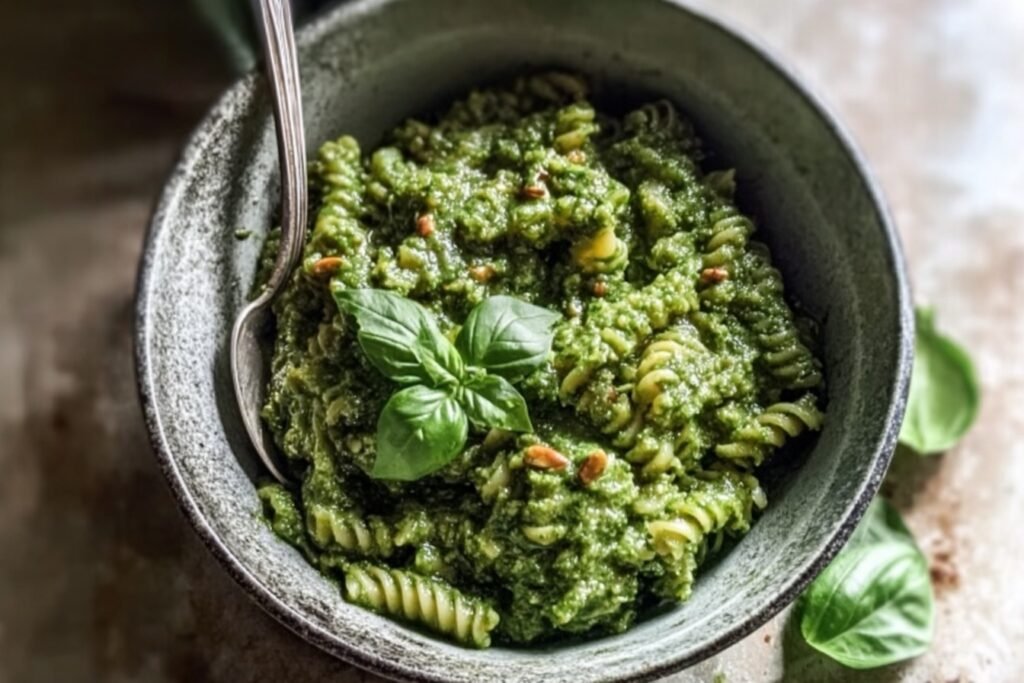
Serve the pesto in a small bowl with a few basil leaves on top and a light drizzle of oil. If you are using it with pasta or noodles, toss it just before serving so the color stays bright. A few chopped peanuts on top add crunch and make the plate look finished.
Make-ahead options
This recipe is great for busy parents, students, and working professionals because you can make it ahead in one short session. Double the batch and keep one portion in the fridge for quick meals. You can also freeze it in small portions so you have fast flavor ready when needed.
How to Store Thai Basil Pesto: Best Practices
Refrigeration
Store leftover Thai basil pesto sauce in an airtight jar in the fridge for up to 5 to 7 days. For best color, press plastic wrap directly on the surface before sealing the lid. This helps slow oxidation and keeps the top layer from turning dark too fast.
Freezing
Freeze the pesto in ice cube trays or small containers for longer storage. Once frozen, transfer the cubes to a freezer bag. This method is handy when you want just a spoonful for noodles, rice, or a quick marinade.
Reheating
Pesto does not need much reheating. If it is very cold, let it sit at room temperature for a few minutes before serving. If you mix it into hot pasta or rice, add it after cooking so the fresh herbs keep their flavor.
Meal prep considerations
For batch cooking, portion the pesto into small jars so you can grab one serving at a time. It works well for school lunches, quick dinners, or a last-minute sauce when the fridge looks bare.

FAQs: Frequently Asked Questions About Thai Basil Pesto
What is Thai basil pesto?
What’s the difference between Thai basil and regular basil?
How do you make Thai basil pesto at home?
Can I use regular basil instead of Thai basil in pesto?
What can I serve Thai basil pesto with?
Thai Basil Pesto
🌿 Transform meals with vibrant, spicy Thai basil pesto – fresher and bolder than Italian classic!
🥜 Nutty, zesty sauce ready in minutes, vegan-friendly for pasta, rice, or grilled meats.
- Total Time: 10 minutes
- Yield: 1 cup (8 servings)
Ingredients
– 2 cups Thai basil leaves, packed, washed, and dried
– 2 tablespoons cashew nuts, roasted and unsalted
– 2 tablespoons peanuts, roasted and unsalted
– 2 garlic cloves, crushed
– 1/2 teaspoon chili flakes
– 60 milliliters olive oil or sesame oil
– 1/2 teaspoon sea salt or 1 teaspoon soya sauce or tamari
– 1 teaspoon rice wine vinegar
– 1 teaspoon caster sugar
– Lime juice from 1/2 lime, to taste
Instructions
1-First Step: Prep everything before blending Wash the Thai basil leaves and dry them well with a clean towel or salad spinner. This matters because extra water can make the pesto thin and muddy. Measure out the cashews, peanuts, garlic, chili flakes, oil, salt or tamari, vinegar, sugar, and lime juice so everything is ready to go. If you are serving the pesto later, prepare a small jar or airtight container now. Having everything set up makes the process faster and keeps the final texture smooth.
2-Second Step: Start with the nuts and garlic Add the roasted cashews, roasted peanuts, and crushed garlic to a food processor or small blender. Pulse several times until the nuts break down into small pieces. This gives the pesto a better texture and helps the garlic spread through the sauce more evenly. Do not blend too long at this stage. You want a coarse mixture first, not a paste. That way the final sauce stays lively and not gummy.
3-Third Step: Add the Thai basil leaves Add the packed Thai basil leaves on top of the nut mixture. If your blender is small, add them in two batches. Pulse again until the basil starts to break down and turn into a rough green mixture. Scrape down the sides if needed so every leaf gets mixed in. Thai basil has a stronger flavor than regular basil, so this is where the sauce starts to take on its signature taste. The leaves should look chopped and dark green before the oil goes in.
4-Fourth Step: Pour in the liquids and seasonings Add the olive oil or sesame oil, sea salt or tamari, rice wine vinegar, caster sugar, chili flakes, and lime juice from half a lime. Blend again, starting with short pulses and then moving to a steady blend. Stop and scrape the sides if the sauce sticks to the jar. At this point, the pesto should look thick but spreadable. If it seems too stiff, add a small splash more oil or a teaspoon of water. If it seems too loose, add a few more basil leaves or a bit more nut mixture.
5-Fifth Step: Taste and adjust Taste the pesto and check the balance. Add more lime juice if you want more sharpness, a little more sugar if it tastes too harsh, or a pinch more salt or tamari if it needs depth. If you want more heat, add a small extra pinch of chili flakes. This is where you can make the sauce match your own taste. Some people like their Thai pesto bright and citrusy, while others prefer it richer and more savory. A quick taste test makes all the difference.
6-Final Step: Serve right away or store for later Use the pesto immediately with noodles, rice, grilled vegetables, tofu, or protein of choice. If you are not serving it right away, transfer it to a clean jar and press a piece of plastic wrap directly onto the surface before sealing. This helps slow browning and keeps the color fresher. For a family dinner, toss it with warm rice noodles and extra vegetables. For a fast lunch, spread it over toast or mix it into a grain bowl. This Thai basil pesto sauce is flexible enough for busy weeknights, meal prep, or a simple snack.
Last Step:
Please leave a rating and comment letting us know how you liked this recipe! This helps our business to thrive and continue providing free, high-quality recipes for you.Notes
🌿 Hunt for fresh Thai basil at Asian markets for authentic licorice-anise flavor.
🔥 Adjust chili flakes to your heat preference – start mild for kids.
🫙 Freeze in ice cube trays for easy portions; thaw as needed for quick meals.
- Prep Time: 10 minutes
- Cook Time: 0 minutes
- Category: Sauce
- Method: Blender
- Cuisine: Thai Fusion
- Diet: Vegan, Gluten-Free, Vegetarian
Nutrition
- Serving Size: 2 tablespoons
- Calories: 180 kcal
- Sugar: 1g
- Sodium: 200mg
- Fat: 18g
- Saturated Fat: 2g
- Unsaturated Fat: 16g
- Trans Fat: 0g
- Carbohydrates: 3g
- Fiber: 1g
- Protein: 2g
- Cholesterol: 0mg