
Why You’ll Love This Pancit Bihon Recipe
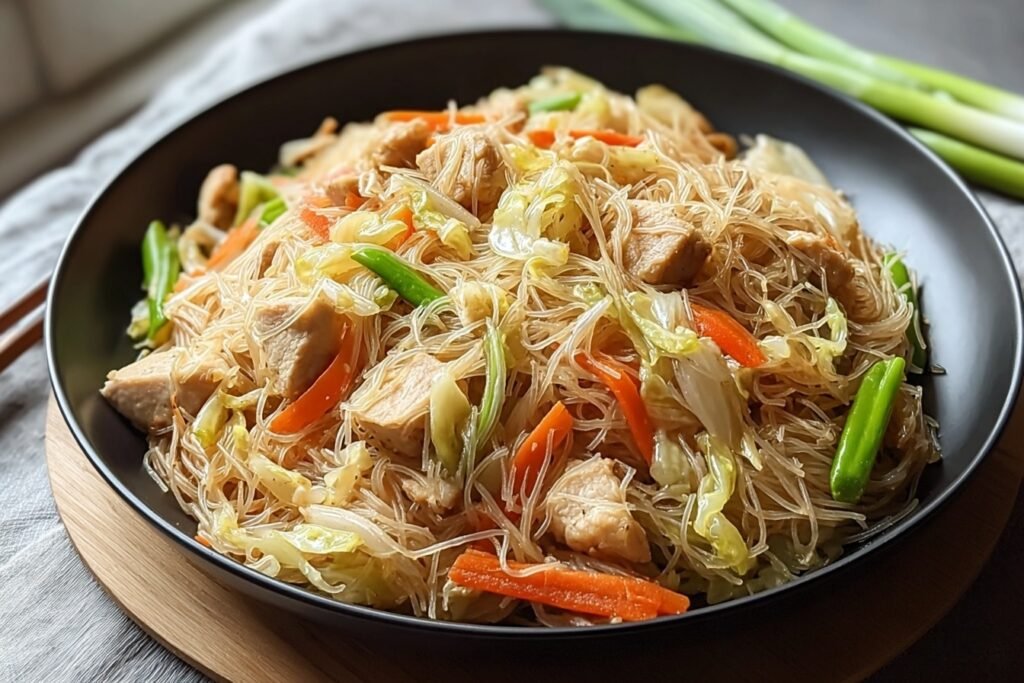
Pancit Bihon is one of those dishes that just works for almost any day of the week. It is fast, filling, and packed with familiar flavors that home cooks love. If you need a meal that feels comforting but still comes together without a lot of fuss, this Pancit Bihon Recipe is a great pick.
- Easy to make: This easy Pancit Bihon recipe uses simple steps, one wok, and everyday ingredients. The noodles cook quickly, so dinner is ready in about 55 minutes total.
- Good for busy days: With rice noodles, pork, chicken, and vegetables all cooked in one pan, this Filipino noodle stir fry is a smart choice for busy parents, students, and working professionals.
- Flexible and filling: Pancit Guisado can fit many diets and tastes. You can swap the meat, change the vegetables, or make it plant-based with tofu and vegan broth.
- Full of savory flavor: Garlic, onion, soy sauce, chicken powder, and tender noodles create the classic taste that makes traditional Pancit Bihon Guisado so loved at family meals and celebrations.
This dish is proof that simple food can still taste special. A warm bowl of Filipino Pancit can turn an ordinary day into something memorable.
If you enjoy comforting noodle dishes, you may also like our collection of Filipino recipes and our easy dinner ideas for busy nights.
Jump to:
- Why You’ll Love This Pancit Bihon Recipe
- Essential Ingredients for Pancit Bihon
- Main ingredients
- Why each ingredient matters
- Special dietary options
- How to Prepare the Perfect Pancit Bihon: Step-by-Step Guide
- First step: soak the noodles and get everything ready
- Second step: sauté the aromatics
- Third step: cook the pork and chicken
- Fourth step: add chicken powder and water
- Fifth step: cook the vegetables briefly
- Sixth step: season the cooking liquid
- Seventh step: cook the soaked bihon
- Eighth step: put everything back and finish
- Quick cooking timeline
- Dietary Substitutions to Customize Your Pancit Bihon
- Protein and main component alternatives
- Vegetable, sauce, and seasoning modifications
- Mastering Pancit Bihon: Advanced Tips and Variations
- Pro cooking techniques
- Flavor variations
- Presentation tips
- Make-ahead options
- How to Store Pancit Bihon: Best Practices
- Nutrition Information for Pancit Bihon
- FAQs: Frequently Asked Questions About Pancit Bihon
- What is pancit bihon?
- What ingredients are needed for pancit bihon?
- How do you make pancit bihon at home?
- How do you store leftover pancit bihon?
- Can you freeze pancit bihon?
- Pancit Bihon
- Ingredients
- Instructions
- Last Step:
- Notes
- Nutrition
- Did you make this recipe?
Essential Ingredients for Pancit Bihon
Before you start cooking, gather everything first. This Pancit Bihon Guisado Recipe uses a good mix of noodles, meat, vegetables, and seasoning to build rich flavor. The list below includes every ingredient you need, with exact measurements.
Main ingredients
- 1 lb pancit bihon rice noodles
- 1/2 lb pork, cut into small thin slices
- 1/2 lb chicken, cooked, deboned, and cut into thin slices
- 1/8 lb snow peas
- 1 cup carrot
- 1/2 small cabbage, chopped
- 1 cup celery leaves, chopped finely
- 1 onion, chopped
- 1/2 tablespoon garlic, minced
- 2 teaspoons chicken powder
- 5 tablespoons soy sauce
- 3 to 4 cups water
- 3 tablespoons cooking oil
Why each ingredient matters
- Pancit bihon rice noodles: These thin rice noodles are the base of the dish and soak up the savory sauce well.
- Pork and chicken: The two proteins add body and make the dish hearty enough for lunch or dinner.
- Snow peas, carrot, cabbage, and celery leaves: These vegetables bring color, crunch, and freshness to every bite.
- Onion and garlic: They form the flavor base and give the dish that classic home-cooked aroma.
- Chicken powder, soy sauce, and water: Together, they create the light sauce that coats the noodles.
- Cooking oil: It helps sauté the aromatics and brown the meat properly.
Special dietary options
- Vegan: Replace pork and chicken with tofu, and use vegan broth instead of chicken powder.
- Gluten-free: Use certified gluten-free soy sauce and check that your chicken powder or broth is gluten-free.
- Low-calorie: Use more vegetables, a little less oil, and reduce the noodles slightly for a lighter bowl.
For more ingredient ideas and smart swaps, you can also read our kitchen tips for home cooks.
How to Prepare the Perfect Pancit Bihon: Step-by-Step Guide
This how to make Pancit Bihon guide keeps things simple and clear. Follow the steps in order, and you will end up with noodles that are flavorful, tender, and full of color. If you are new to Pancit Bihon Recipe cooking, do not worry. The process is easy once you break it into small steps.
First step: soak the noodles and get everything ready
Start by soaking the pancit bihon rice noodles in water for about 10 minutes before cooking. This softens them so they cook evenly later. While the noodles soak, chop the onion, mince the garlic, slice the pork, prepare the chicken, and cut the vegetables. Having everything ready before the wok heats up makes this Filipino noodle stir fry much easier to manage.
Second step: sauté the aromatics
Heat 3 tablespoons cooking oil in a large wok over medium heat. Add the minced garlic and chopped onion, then sauté until fragrant and slightly soft. This step builds the base flavor for the whole dish. Stir often so the garlic does not burn, since burnt garlic can make the sauce taste bitter.
Third step: cook the pork and chicken
Add the 1/2 lb pork and 1/2 lb chicken to the wok. Cook for about 2 minutes, stirring so the meat gets coated with the garlic and onion mixture. The pork should start to turn opaque, and the chicken should take on a light golden color. If you are using a plant-based version, this is the point where you would add tofu instead of meat.
Fourth step: add chicken powder and water
Sprinkle in 2 teaspoons chicken powder, then pour in 3 to 4 cups water. Stir well and bring the mixture to a simmer. Let it cook for about 15 minutes so the pork becomes tender and the flavors start to blend. This is also when the broth gets a deeper savory taste, which helps the noodles later.
Fifth step: cook the vegetables briefly
Add the carrots, snow peas, cabbage, and celery leaves to the simmering pot. Let them cook for just a few minutes. You want them tender but still bright and crisp. After that, remove the vegetables and set them aside. This keeps the vegetables from getting soggy while the noodles finish cooking.
Sixth step: season the cooking liquid
Now add the 5 tablespoons soy sauce to the pot with the remaining liquid. Mix well so the broth turns evenly savory. This is the sauce that will coat the rice noodles, so taste it if needed and adjust lightly if you want a stronger flavor. If you are watching sodium, you can use a lower-sodium soy sauce, but keep the balance of flavor in mind.
Seventh step: cook the soaked bihon
Add the soaked pancit bihon to the pot. Stir gently so the rice noodles can absorb the sauce without breaking apart. Keep cooking until the liquid evaporates completely. This part is important because the noodles should be moist but not soupy. If the pan looks dry too fast, add a small splash of water.
Eighth step: put everything back and finish
Return the vegetables and meat to the wok. Toss everything together and simmer for 1 to 2 minutes so all the flavors blend. The final result should look colorful, with noodles coated in savory sauce and vegetables mixed through the dish. Serve hot right away for the best texture.
Tip: If the noodles still seem a little firm, give them another quick toss with a spoonful of water. Rice noodles can go from perfect to overdone fast, so keep an eye on them.
Quick cooking timeline
| Step | Time |
|---|---|
| Prep | 15 minutes |
| Cook | 40 minutes |
| Total | 55 minutes |

Dietary Substitutions to Customize Your Pancit Bihon
Protein and main component alternatives
You can easily adjust Pancit Bihon to fit different diets or whatever you have in the fridge. If you want more protein, add extra meat or mix in shrimp. Chinese sausage also works well and gives the dish a sweeter, richer flavor. For a plant-based version, use tofu and skip the meat completely.
If you prefer a lighter meal, reduce the amount of pork or chicken and add more vegetables. That keeps the dish satisfying while cutting some fat and calories. For people who want a stronger meaty flavor, adding more chicken is a good move, especially if you are making this for a big family meal.
Vegetable, sauce, and seasoning modifications
The vegetables in this Bihon Guisado recipe are flexible. Snap peas can stand in for snow peas, and bell peppers add a sweet crunch. You can also add green beans or more cabbage if you want a fuller pan of noodles. These swaps are helpful when you are using seasonal produce.
For the sauce, use vegan broth if you are making a meatless version. If you want a deeper taste, a little extra soy sauce can help, but add it slowly so the dish does not get too salty. For gluten-free cooking, use gluten-free soy sauce and check labels on the broth or seasoning powder. These small changes let you enjoy Filipino Pancit in a way that works for your needs.
Mastering Pancit Bihon: Advanced Tips and Variations
Once you have made Pancit Bihon a few times, you can start fine-tuning it to match your style. Small changes in timing and ingredient choice can make a big difference in taste and texture. This dish is easy to personalize, which is one reason so many families keep making it over and over.
Pro cooking techniques
One of the best tips is to soak the bihon for about 10 minutes before cooking. This helps the noodles soften evenly and absorb the sauce better. Another key trick is not to overcook the vegetables. Keep them tender and vibrant so the final dish looks fresh and tastes bright.
Also, cook the meat just until it is done in the broth phase. Overcooking can make pork chewy and chicken dry. If you are cooking for a crowd, make the sauce in batches so the noodles have enough room to absorb liquid without clumping.
Flavor variations
You can switch things up by adding Chinese sausage, snap peas, or bell peppers. These ingredients bring new textures and flavors to the classic Pancit Bihon Recipe. If you like a richer dish, add more meat. If you want a more veggie-forward bowl, double the cabbage and carrots.
Some cooks also like to finish the dish with a squeeze of calamansi or lemon for a fresh, tangy note. That little burst of acid can wake up the whole pan.
Presentation tips
To serve, pile the noodles on a large platter and top with the meat and vegetables evenly across the surface. This makes the dish look festive and helps every serving get a bit of everything. A simple garnish of extra celery leaves can add color without extra work.
Make-ahead options
You can chop the vegetables and slice the meat earlier in the day to save time later. If you are planning for a party or family gathering, soaking the noodles ahead of time also helps. Just keep them covered so they do not dry out before cooking.
How to Store Pancit Bihon: Best Practices
Leftover Pancit Bihon stores well, which makes it great for meal prep. Let it cool before packing it away, then place it in an airtight container. Stored in the refrigerator, it will keep for up to 5 days. For the best texture, divide it into smaller portions so you can reheat only what you need.
If you want to keep it longer, freeze the noodles in freezer-safe containers or bags. Press out extra air before sealing. Frozen Filipino Pancit can last for a longer time, and it is a handy option for busy weeks. When you are ready to eat, thaw it first in the fridge if possible.
To reheat, microwave for 1 to 2 minutes after thawing, or warm it in a skillet with a splash of water. A skillet usually gives better texture because it helps the noodles loosen up again. For meal prep, label each container with the date so you can use the oldest batch first.
Nutrition Information for Pancit Bihon
This dish gives you a balanced mix of carbs, protein, and vegetables in one bowl. Here is the nutrition information for the recipe as provided.
| Nutrient | Per 8g serving |
|---|---|
| Calories | 240 |
| Carbohydrates | 23g |
| Protein | 13g |
| Fat | 11g |
| Saturated fat | 4g |
| Polyunsaturated fat | 2g |
| Monounsaturated fat | 5g |
| Trans fat | 0.03g |
| Cholesterol | 42mg |
| Sodium | 845mg |
| Potassium | 423mg |
| Fiber | 3g |
| Sugar | 4g |
| Vitamin A | 2980IU |
| Vitamin C | 29mg |
| Calcium | 62mg |
| Iron | 1mg |
Because Pancit Bihon includes noodles, meat, and vegetables, it can fit a wide range of meal plans. The vegetables add fiber and color, while the chicken and pork help bring in protein. If you want to make it a little lighter, you can use more cabbage and carrots and slightly less noodle.
FAQs: Frequently Asked Questions About Pancit Bihon
What is pancit bihon?
What ingredients are needed for pancit bihon?
How do you make pancit bihon at home?
How do you store leftover pancit bihon?
Can you freeze pancit bihon?
Pancit Bihon
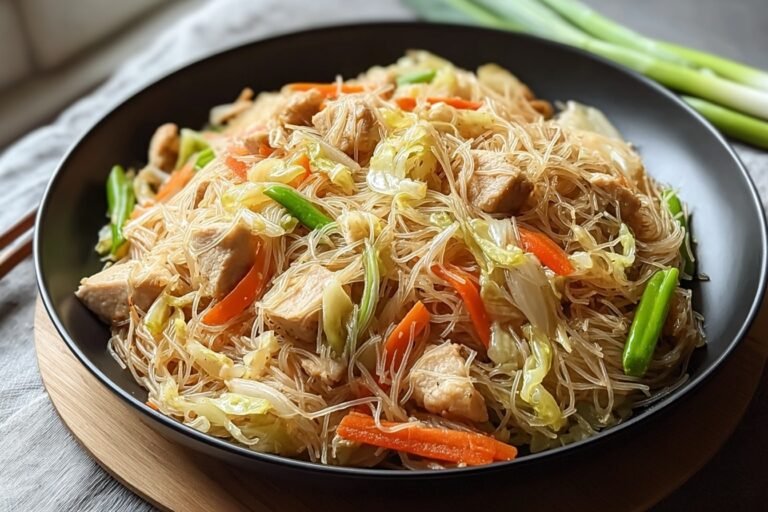
🍜 Simple one-wok Filipino rice noodles loaded with pork, chicken, and fresh veggies – hearty, flavorful everyday meal!
🥕 Vibrant, crisp vegetables and customizable proteins make it versatile for quick lunches or gatherings.
- Total Time: 55 minutes
- Yield: 8 servings
Ingredients
– 1 lb pancit bihon rice noodles
– 1/2 lb pork, cut into small thin slices
– 1/2 lb chicken, cooked, deboned, and cut into thin slices
– 1/8 lb snow peas
– 1 cup carrot
– 1/2 small cabbage, chopped
– 1 cup celery leaves, chopped finely
– 1 onion, chopped
– 1/2 tablespoon garlic, minced
– 2 teaspoons chicken powder
– 5 tablespoons soy sauce
– 3 to 4 cups water
– 3 tablespoons cooking oil
Instructions
1-First step: soak the noodles and get everything ready Start by soaking the pancit bihon rice noodles in water for about 10 minutes before cooking. This softens them so they cook evenly later. While the noodles soak, chop the onion, mince the garlic, slice the pork, prepare the chicken, and cut the vegetables. Having everything ready before the wok heats up makes this Filipino noodle stir fry much easier to manage.
2-Second step: sauté the aromatics Heat 3 tablespoons cooking oil in a large wok over medium heat. Add the minced garlic and chopped onion, then sauté until fragrant and slightly soft. This step builds the base flavor for the whole dish. Stir often so the garlic does not burn, since burnt garlic can make the sauce taste bitter.
3-Third step: cook the pork and chicken Add the 1/2 lb pork and 1/2 lb chicken to the wok. Cook for about 2 minutes, stirring so the meat gets coated with the garlic and onion mixture. The pork should start to turn opaque, and the chicken should take on a light golden color. If you are using a plant-based version, this is the point where you would add tofu instead of meat.
4-Fourth step: add chicken powder and water Sprinkle in 2 teaspoons chicken powder, then pour in 3 to 4 cups water. Stir well and bring the mixture to a simmer. Let it cook for about 15 minutes so the pork becomes tender and the flavors start to blend. This is also when the broth gets a deeper savory taste, which helps the noodles later.
5-Fifth step: cook the vegetables briefly Add the carrots, snow peas, cabbage, and celery leaves to the simmering pot. Let them cook for just a few minutes. You want them tender but still bright and crisp. After that, remove the vegetables and set them aside. This keeps the vegetables from getting soggy while the noodles finish cooking.
6-Sixth step: season the cooking liquid Now add the 5 tablespoons soy sauce to the pot with the remaining liquid. Mix well so the broth turns evenly savory. This is the sauce that will coat the rice noodles, so taste it if needed and adjust lightly if you want a stronger flavor. If you are watching sodium, you can use a lower-sodium soy sauce, but keep the balance of flavor in mind.
7-Seventh step: cook the soaked bihon Add the soaked pancit bihon to the pot. Stir gently so the rice noodles can absorb the sauce without breaking apart. Keep cooking until the liquid evaporates completely. This part is important because the noodles should be moist but not soupy. If the pan looks dry too fast, add a small splash of water.
8-Eighth step: put everything back and finish Return the vegetables and meat to the wok. Toss everything together and simmer for 1 to 2 minutes so all the flavors blend. The final result should look colorful, with noodles coated in savory sauce and vegetables mixed through the dish. Serve hot right away for the best texture.
Last Step:
Please leave a rating and comment letting us know how you liked this recipe! This helps our business to thrive and continue providing free, high-quality recipes for you.Notes
🍜 Soak noodles briefly to ensure they cook evenly without breaking apart.
🥦 Simmer veggies just until tender-crisp to retain color and crunch.
❄️ Refrigerate leftovers in airtight container up to 5 days; reheat with a splash of water.
- Prep Time: 15 minutes
- Cook Time: 40 minutes
- Category: Main Dishes
- Method: Stir Fry
- Cuisine: Filipino
Nutrition
- Serving Size: 1 serving
- Calories: 240
- Sugar: 4g
- Sodium: 845mg
- Fat: 11g
- Saturated Fat: 4g
- Unsaturated Fat: 7g
- Trans Fat: 0.03g
- Carbohydrates: 23g
- Fiber: 3g
- Protein: 13g
- Cholesterol: 42mg