
Why You’ll Love This Nasi Dagang
Coconut milk and its nutrition profile is one reason this dish has such lasting appeal. Nasi Dagang is a Malaysian rice dish known for its fragrant rice, rich curry, and sharp pickles. It is filling, practical, and deeply tied to regional food traditions.
- Easy to prepare in stages: The rice, curry, and sides can be made one by one, which makes the recipe manageable for home cooks and busy parents.
- Balanced meal: It brings together carbohydrates from rice, protein from fish or other meats, and vegetables from the pickles and garnishes.
- Flexible: You can make it with tuna, mackerel, chicken, or prawns, depending on what you have on hand.
- Distinct flavor: Coconut milk, fenugreek seeds, turmeric, lemongrass, and chilli paste create a savory aroma that sets this dish apart.
For readers who like rice dishes with a strong identity, Nasi Dagang stands out because it is both comforting and memorable. The creamy steamed rice and spiced curry work well for breakfast, lunch, or dinner, and the pickled cucumber and carrots add a clean, bright contrast.
Tip: If you enjoy rice dishes from Southeast Asia, you may also like browsing the recipe collection at Recipes Valentina for more everyday meal ideas.
Jump to:
- Why You’ll Love This Nasi Dagang
- Nasi Dagang Ingredients
- Rice and coconut base
- Fish curry
- Pickles and toppings
- How to Prepare the Perfect Nasi Dagang: Step-by-Step Guide
- First Step: Soak the rice
- Second Step: Prepare the rice mixture
- Third Step: Steam the rice until half-cooked
- Fourth Step: Add more coconut milk and finish steaming
- Fifth Step: Cook the fish curry
- Sixth Step: Fry the shaved coconut
- Seventh Step: Make the pickled vegetables
- Eighth Step: Boil and slice the eggs
- Final Step: Assemble and serve
- Dietary Substitutions to Customize Your Nasi Dagang
- Protein and main component alternatives
- Vegetable, sauce, and seasoning modifications
- Mastering Nasi Dagang: Advanced Tips and Variations
- Pro cooking techniques
- Flavor variations
- Presentation tips
- Make-ahead options
- How to Store Nasi Dagang: Best Practices
- Refrigeration
- Freezing
- Reheating
- Meal prep considerations
- FAQs: Frequently Asked Questions About Nasi Dagang
- Nasi Dagang
- Ingredients
- Instructions
- Last Step:
- Notes
- Nutrition
- Did you make this recipe?
Nasi Dagang Ingredients
The ingredients below reflect the full recipe summary, with all items listed in a structured format for easy shopping and prep. Since the source does not give exact measurements, the quantities here are practical estimates for a home kitchen.
Rice and coconut base
- 2 cups rice, white rice for Terengganu style or purple glutinous rice for Kelantanese style
- 1 1/2 cups coconut milk, plus extra for steaming
- 1 tablespoon fenugreek seeds
- 4 sliced shallots
Fish curry
- 500 g tuna, mackerel, chicken, or prawns
- 2 stalks lemongrass, bruised
- 1 tablespoon ginger, grated
- 3 tablespoons chilli paste
- 1 teaspoon turmeric
- 1 to 2 cups coconut milk, as needed for the curry
Pickles and toppings
- 1 cucumber, sliced
- 2 carrots, sliced into thin strips
- 2 tablespoons vinegar
- 1 tablespoon sugar
- 3 eggs, hard-boiled and sliced
- 1 cup shaved coconut
- 2 sliced shallots for frying with the coconut
- Optional sambal, for serving
How to Prepare the Perfect Nasi Dagang: Step-by-Step Guide
Nasi Dagang is built from several parts, but the process is simple when broken into stages. The rice is soaked first, then steamed twice with coconut milk and fenugreek seeds. While the rice cooks, you can prepare the curry, the fried coconut garnish, the pickled vegetables, and the eggs.
First Step: Soak the rice
Start by rinsing the rice, then soak it in water for several hours. This step helps the grains soften and gives the final dish a better texture. For purple glutinous rice, soaking is especially useful because it helps the grains steam evenly.
Second Step: Prepare the rice mixture
Drain the soaked rice and mix it with coconut milk, sliced shallots, and fenugreek seeds. Stir well so the grains are coated evenly. The fenugreek adds the classic aroma that many people associate with Nasi Dagang.
Third Step: Steam the rice until half-cooked
Transfer the rice mixture to a steamer and steam it until it is half-cooked. This usually takes around 20 to 25 minutes, depending on the rice type and your steamer. Stir lightly if needed so the grains cook evenly.
Fourth Step: Add more coconut milk and finish steaming
Once the rice is half-cooked, add more coconut milk and steam again until the rice is tender and creamy. This second steaming stage is what gives Nasi Dagang its rich, soft texture. The rice should be fully cooked but still separate enough to hold its shape.
Fifth Step: Cook the fish curry
To make the curry, place the fish, chicken, or prawns in a pot with coconut milk, lemongrass, ginger, chilli paste, and turmeric. Bring it to a gentle simmer over medium heat. If using fish, cook until just done so it stays tender. If using chicken, simmer until fully cooked and the sauce has a smooth, fragrant taste.
You can use tuna if that is what you have available, but mackerel is also a very common choice. The curry should be rich, spicy, and balanced by the sweetness of the coconut milk.
Sixth Step: Fry the shaved coconut
Mix the shaved coconut with sliced shallots and fry it in a dry pan or a small amount of oil until golden brown. Stir often so it does not burn. This garnish adds a toasted, savory crunch that works well with the soft rice.
Seventh Step: Make the pickled vegetables
Place the cucumber and carrots in a bowl with vinegar and sugar. Toss them lightly and let them sit while the other components finish cooking. The pickles should taste sweet, tangy, and crisp. They help balance the richness of the rice and curry.
Eighth Step: Boil and slice the eggs
Hard-boil the eggs, cool them under running water, then peel and slice them. Eggs are a common side in many versions of this dish and add extra protein and richness.
Final Step: Assemble and serve
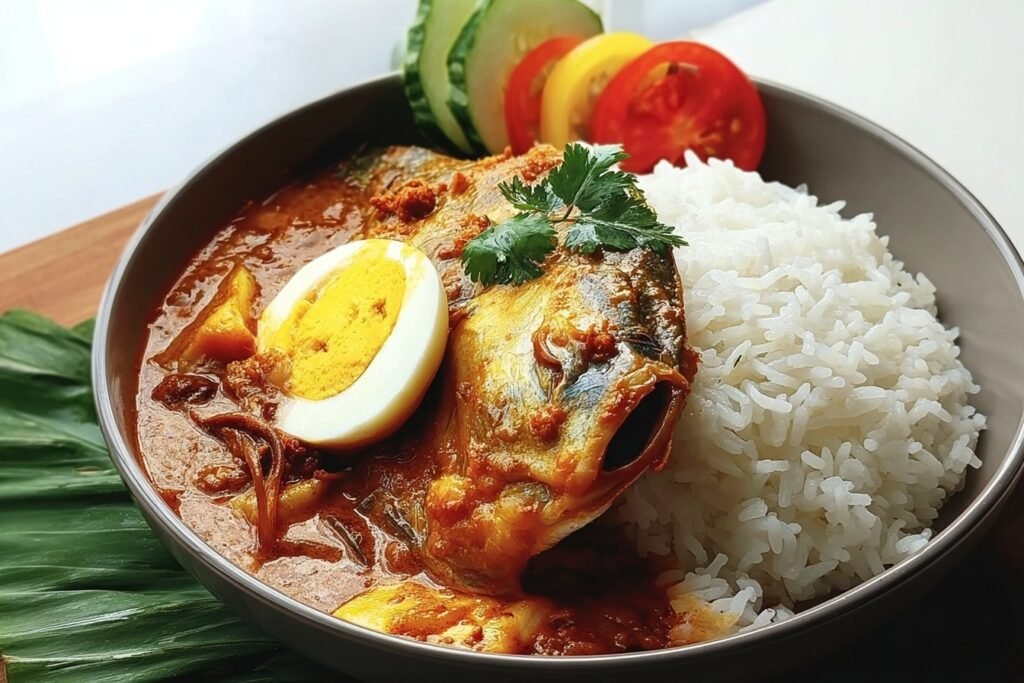
Spoon the steamed rice onto plates or into bowls. Add the fish curry alongside it, then arrange the pickled cucumber and carrots, egg slices, and fried coconut on top or around the rice. Serve with optional sambal if you want more heat. The contrast of creamy rice, spicy curry, crunchy garnish, and bright pickles is what gives this dish its character.
For a wider understanding of fish as a protein source, you may also find this guide to tuna nutrition and health benefits helpful when choosing your curry protein.

Dietary Substitutions to Customize Your Nasi Dagang
Protein and main component alternatives
Nasi Dagang can be adapted to suit different diets and pantry needs. If tuna is not available, use mackerel for a stronger flavor or prawns for a lighter seafood version. Chicken works well for families that prefer poultry, and it gives the curry a gentler taste.
For the rice, Terengganu style uses white rice, while Kelantanese style often uses purple glutinous rice. You can choose either based on texture and preference. White rice gives a lighter feel, while purple glutinous rice is more chewy and visually striking.
Vegetable, sauce, and seasoning modifications
If you want a milder dish, reduce the chilli paste and serve sambal on the side. You can also add more pickled cucumber and carrots for extra crunch and freshness. Some cooks like to add herb-boiled eggs in Thai-inspired versions, which gives the meal a different aroma while keeping the same serving style.
For a lighter plate, use less coconut milk in the curry while keeping the rice creamy. If you need a vegetarian version, replace the fish or chicken with tofu or mushrooms, though this changes the traditional profile. Fenugreek, turmeric, ginger, and lemongrass should still remain because they define much of the dish’s flavor.
Mastering Nasi Dagang: Advanced Tips and Variations
Pro cooking techniques
Steam the rice twice for the best texture. The first steaming starts the grains, and the second steaming after adding more coconut milk gives the rice a soft, creamy finish. Keep the heat steady so the grains do not dry out.
When cooking the curry, simmer gently rather than boiling hard. This keeps the coconut milk smooth and prevents the fish from breaking apart too much. Bruising the lemongrass before cooking also helps release more fragrance.
Flavor variations
Some cooks prefer a deeper curry by adding a little more turmeric or chilli paste. Others keep the curry lighter so the coconut flavor stays central. You can also swap between tuna and mackerel based on the taste you want. Mackerel gives a stronger, fuller flavor, while tuna is milder.
Presentation tips
Serve the rice in a neat mound, then place the curry beside it rather than pouring it over the top. Add the sliced eggs, pickles, and fried coconut in separate sections so each part stays visible. This makes the plate look cleaner and helps each texture stand out.
Make-ahead options
The curry can be cooked a day ahead and reheated gently. The pickled vegetables can also rest in the fridge for a few hours before serving. If you are planning for a busy day, soak the rice earlier in the morning and prepare the other ingredients while it sits.
How to Store Nasi Dagang: Best Practices
Refrigeration
Store the rice, curry, pickles, and toppings in separate airtight containers. The rice and curry will keep well in the refrigerator for up to 3 days. Pickled cucumber and carrots may last a little longer because of the vinegar.
Freezing
The curry freezes better than the rice. Freeze it in a sealed container for up to 2 months, then thaw it in the refrigerator before reheating. Rice can be frozen too, but its texture may change slightly after thawing.
Reheating
Reheat the rice with a splash of coconut milk or water to bring back softness. Warm the curry slowly over low heat until hot. Add the fried coconut and sliced eggs only after reheating so they stay fresh in texture.
Meal prep considerations
If you plan to make this dish for several meals, prepare the pickles and curry first, then steam the rice close to serving time. This keeps the final plate tasting fresh and prevents the rice from drying out.
FAQs: Frequently Asked Questions About Nasi Dagang
Print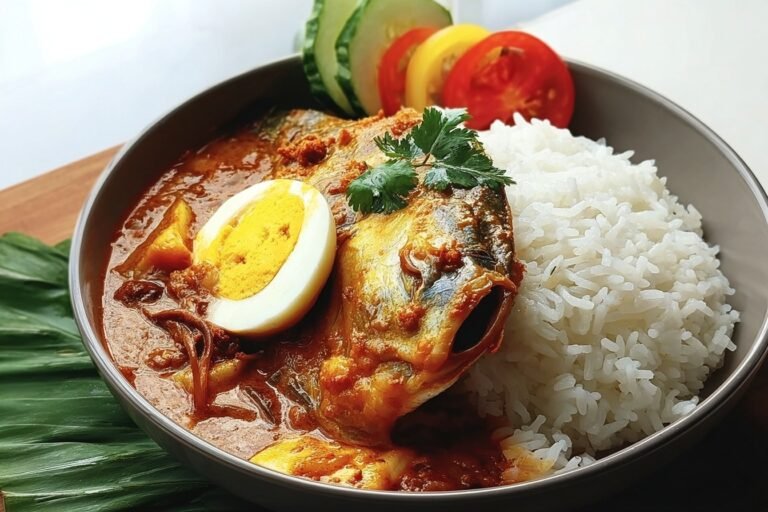
Nasi Dagang
🍚 Creamy glutinous rice steamed in coconut milk with aromatic fenugreek – pairs perfectly with spicy fish curry for an authentic Malaysian feast!
🐟 Rich, flavorful tuna curry with fresh pickles and eggs – nourishing, aromatic dish ideal for breakfast, lunch, or special occasions.
- Total Time: 5 hours 15 minutes
- Yield: 4 servings
Ingredients
Instructions
1-First Step: Soak the rice Start by rinsing the rice, then soak it in water for several hours. This step helps the grains soften and gives the final dish a better texture. For purple glutinous rice, soaking is especially useful because it helps the grains steam evenly.
2-Second Step: Prepare the rice mixture Drain the soaked rice and mix it with coconut milk, sliced shallots, and fenugreek seeds. Stir well so the grains are coated evenly. The fenugreek adds the classic aroma that many people associate with Nasi Dagang.
3-Third Step: Steam the rice until half-cooked Transfer the rice mixture to a steamer and steam it until it is half-cooked. This usually takes around 20 to 25 minutes, depending on the rice type and your steamer. Stir lightly if needed so the grains cook evenly.
4-Fourth Step: Add more coconut milk and finish steaming Once the rice is half-cooked, add more coconut milk and steam again until the rice is tender and creamy. This second steaming stage is what gives Nasi Dagang its rich, soft texture. The rice should be fully cooked but still separate enough to hold its shape.
5-Fifth Step: Cook the fish curry To make the curry, place the fish, chicken, or prawns in a pot with coconut milk, lemongrass, ginger, chilli paste, and turmeric. Bring it to a gentle simmer over medium heat. If using fish, cook until just done so it stays tender. If using chicken, simmer until fully cooked and the sauce has a smooth, fragrant taste. You can use tuna if that is what you have available, but mackerel is also a very common choice. The curry should be rich, spicy, and balanced by the sweetness of the coconut milk.
6-Sixth Step: Fry the shaved coconut Mix the shaved coconut with sliced shallots and fry it in a dry pan or a small amount of oil until golden brown. Stir often so it does not burn. This garnish adds a toasted, savory crunch that works well with the soft rice.
7-Seventh Step: Make the pickled vegetables Place the cucumber and carrots in a bowl with vinegar and sugar. Toss them lightly and let them sit while the other components finish cooking. The pickles should taste sweet, tangy, and crisp. They help balance the richness of the rice and curry.
8-Eighth Step: Boil and slice the eggs Hard-boil the eggs, cool them under running water, then peel and slice them. Eggs are a common side in many versions of this dish and add extra protein and richness.
9-Final Step: Assemble and serve Spoon the steamed rice onto plates or into bowls. Add the fish curry alongside it, then arrange the pickled cucumber and carrots, egg slices, and fried coconut on top or around the rice. Serve with optional sambal if you want more heat. The contrast of creamy rice, spicy curry, crunchy garnish, and bright pickles is what gives this dish its character.
Last Step:
Please leave a rating and comment letting us know how you liked this recipe! This helps our business to thrive and continue providing free, high-quality recipes for you.Notes
⏲️ Soak rice for at least 4 hours (or overnight) for perfect soft, glutinous texture.
🐟 Use fresh mackerel or tuna; simmer curry gently to avoid breaking the fish apart.
🥒 Prepare pickles ahead and chill for maximum crunch and tangy contrast.
- Prep Time: 30 minutes
- Soaking Time: 4 hours
- Cook Time: 45 minutes
- Category: Main Dishes
- Method: Steam
- Cuisine: Malaysian
Nutrition
- Serving Size: 1 serving
- Calories: 650
- Sugar: 5g
- Sodium: 800mg
- Fat: 25g
- Saturated Fat: 15g
- Unsaturated Fat: 10g
- Trans Fat: 0g
- Carbohydrates: 80g
- Fiber: 4g
- Protein: 25g
- Cholesterol: 100mg